
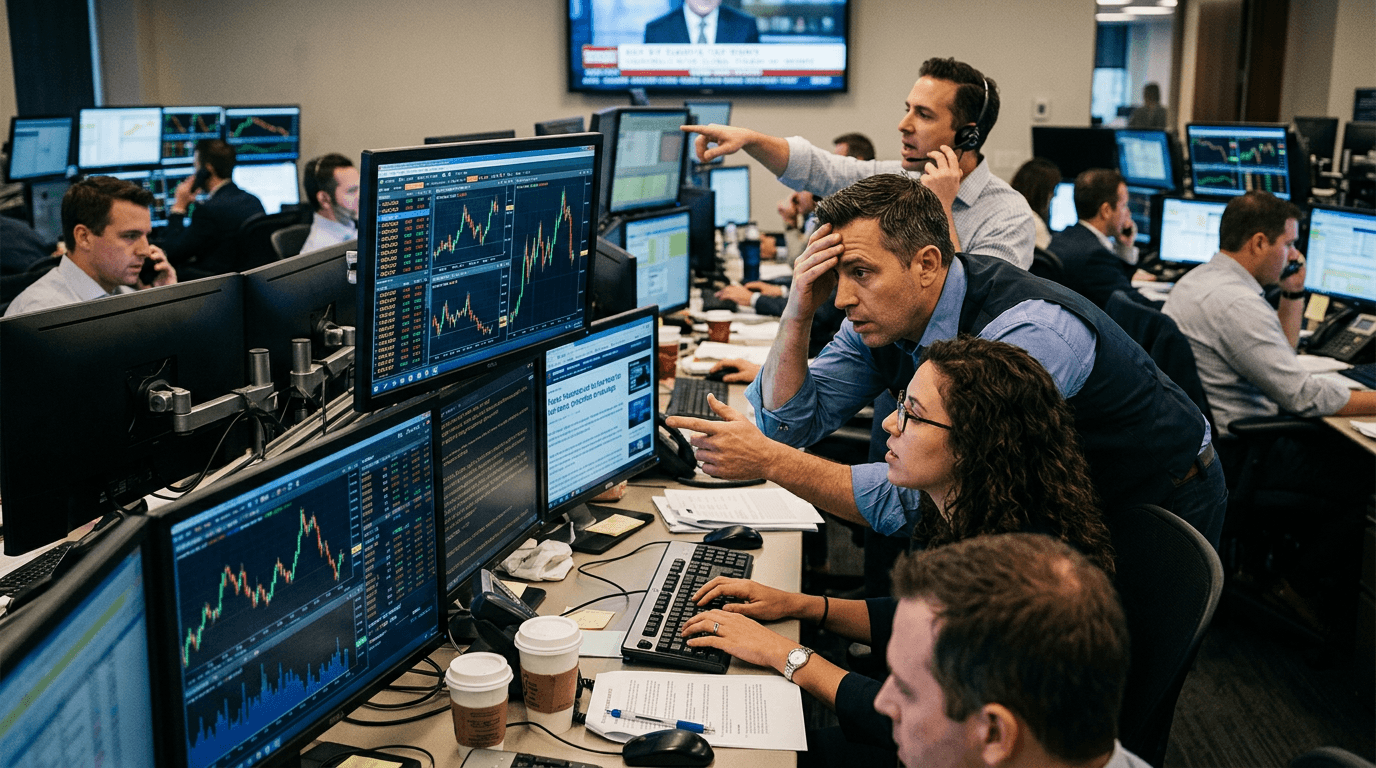
Oil traders were reminded again how brutally fast sentiment can flip as front‑month WTI and Brent futures surged nearly 9% on US‑Iran war headlines before giving back much of the move when reports of a potential understanding between Washington and Tehran hit the tape.[1] The result was a classic volatility spike: prices whipsawed within hours, options markets repriced risk, and energy‑sensitive currencies such as CAD and NOK lurched in tandem.[1] For active traders, this was not just noise – it was a live stress test of their strategy, risk management, and discipline.
WHAT DROVE THE WHIPSAW IN OIL FUTURES?
The initial leg higher was driven by escalating US‑Iran tensions and fears of a broader regional conflict that could threaten key energy infrastructure and shipping routes.[1][5] When crude markets suddenly have to price in the risk that barrels might not reach consumers, they add a “geopolitical risk premium” on top of existing fundamentals like inventories and demand.
Front‑month WTI briefly pushed toward the low‑$80s per barrel while Brent neared the mid‑$80s, levels not seen since 2024, as traders rushed to hedge potential supply disruptions.[1] Similar episodes during prior US‑Iran flare‑ups have seen WTI trade in intraday ranges of nearly $20 per barrel, underscoring how sensitive the market is when the Middle East is in focus.[2]
Then the narrative shifted. Headlines suggesting progress toward a draft US‑Iran understanding quickly cooled the panic bid in crude.[1] A large part of the intraday rally faded as traders reassessed the balance between war risk and diplomacy. But even as spot prices eased, short‑dated crude options stayed expensive, signaling that markets still expected bigger‑than‑normal moves in the near term.[1] In other words, realized prices calmed down faster than perceived risk.
The Geopolitical Risk Premium Explained
The whipsaw was a textbook example of the geopolitical risk premium in action. This premium reflects what traders are willing to pay for the possibility of future disruptions, even if no barrels have been lost yet.[3] Analysts during past US‑Iran flare‑ups have estimated that several dollars per barrel of crude’s price could be attributed purely to this risk premium.[3]
Much of the anxiety centers on chokepoints like the Strait of Hormuz, through which roughly a fifth of global seaborne crude flows.[2][3] Any hint that this artery could be constrained forces markets to re‑price the probability of supply outages, higher shipping costs, and inventory drawdowns – all of which justify higher crude prices.
Crucially, the latest moves came despite no confirmed large‑scale loss of supply, echoing previous episodes where prices climbed mainly on perceived risk rather than physical scarcity.[3] That makes the premium fragile: peace‑talk headlines, ceasefire rumors, or even a single tweet can rapidly deflate it, leaving late buyers exposed to violent reversals.
For traders, the lesson is clear: geopolitically driven moves can be swift, sentiment‑based, and prone to sharp mean reversion once the news flow shifts.
CROSS‑ASSET RIPPLE EFFECTS: INFLATION, FX, AND BONDS
The oil spike did not stay confined to the crude complex. Higher energy prices fed directly into inflation expectations, as traders marked up the likely path of headline CPI given oil’s outsized role in transport, heating, and production costs.[1] This was reflected in moves in inflation‑linked bonds and breakeven rates, which tend to rise when markets anticipate more persistent price pressures.
FX markets reacted as well. Energy‑sensitive currencies such as the Canadian dollar (CAD) and Norwegian krone (NOK) typically strengthen when oil prices surge, given both economies’ dependence on energy exports.[1] During the latest volatility episode, these currencies rallied alongside crude before retracing as talk of a US‑Iran understanding tempered the oil spike.[1] Traders who were slow to reassess the geopolitical narrative risked being whipsawed not just in oil, but across their FX exposure.
Equity markets, particularly energy sector indices, also felt the shock. Historically, sudden oil spikes tend to pressure broader equity benchmarks while supporting oil majors and some oilfield service names, although correlations can become unstable when volatility is extreme.[1][2] The upshot: oil is a core macro variable, and its volatility tends to propagate through multiple asset classes almost in real time.
Trading Lessons From The Volatility Spike
Episodes like this offer several practical takeaways for both discretionary and systematic traders:
- Build an event framework in advance Have a clear playbook for how you expect oil, energy equities, and related FX to respond under escalation vs. de‑escalation scenarios.[1] This includes predefined levels, position sizes, and conditions under which you will step back rather than chase.
- Avoid chasing headline‑driven spikes Moves based primarily on headlines rather than confirmed fundamental shifts are notorious for sharp reversals.[1] Buying at the top of a panic spike or shorting at the bottom of a relief move is one of the most common and costly errors.
- Watch the options market for clues Short‑dated implied volatility, skew, and term structure can reveal whether the market is pricing bigger upside or downside shocks.[1] Elevated front‑end vol with bid call skew, for example, suggests traders anticipate more upside surprise risk.
- Respect correlation – but don’t overtrust it Using CAD, NOK, or energy equities to express an oil view can diversify exposure, but correlations often break down in stress.[1] Backtesting and scenario analysis around prior geopolitical shocks can help calibrate how robust these relationships really are.
- Size for gaps, not just normal days When headlines drive trading, gaps through stops, slippage, and wider spreads become the norm rather than the exception. That calls for smaller position sizes, wider but more thoughtful stop placement, and strict overall portfolio risk limits.
Using Simulated Trading To Build A Robust Playbook
One advantage modern traders have is the ability to rehearse these environments in a risk‑free, simulated setting before real money is on the line. A SimFi platform allows you to replay fast markets, test your event framework, and stress‑test your psychology under conditions similar to the recent oil whipsaw.
You can, for example, build scenarios that mimic a 5–10% intraday move in WTI on war headlines, followed by a sharp reversal on peace‑deal news. Within that environment, you can practice:
- Executing entries and exits without over‑trading when volatility spikes.
- Adjusting positions in correlated assets like CAD, NOK, or energy indices as your oil thesis evolves.
- Managing overnight risk and gap risk around scheduled diplomatic events or key speeches.
- Recording decisions and outcomes to refine your rules and checklists over time.
Treating simulated trades with the same seriousness as live exposure helps internalize good habits: respecting risk limits, avoiding impulsive headlines‑driven trades, and leaning on your pre‑defined framework instead of emotions.
Ultimately, preparation beats prediction. You will never forecast every geopolitical twist, but you can control how your process responds when the market reacts.