
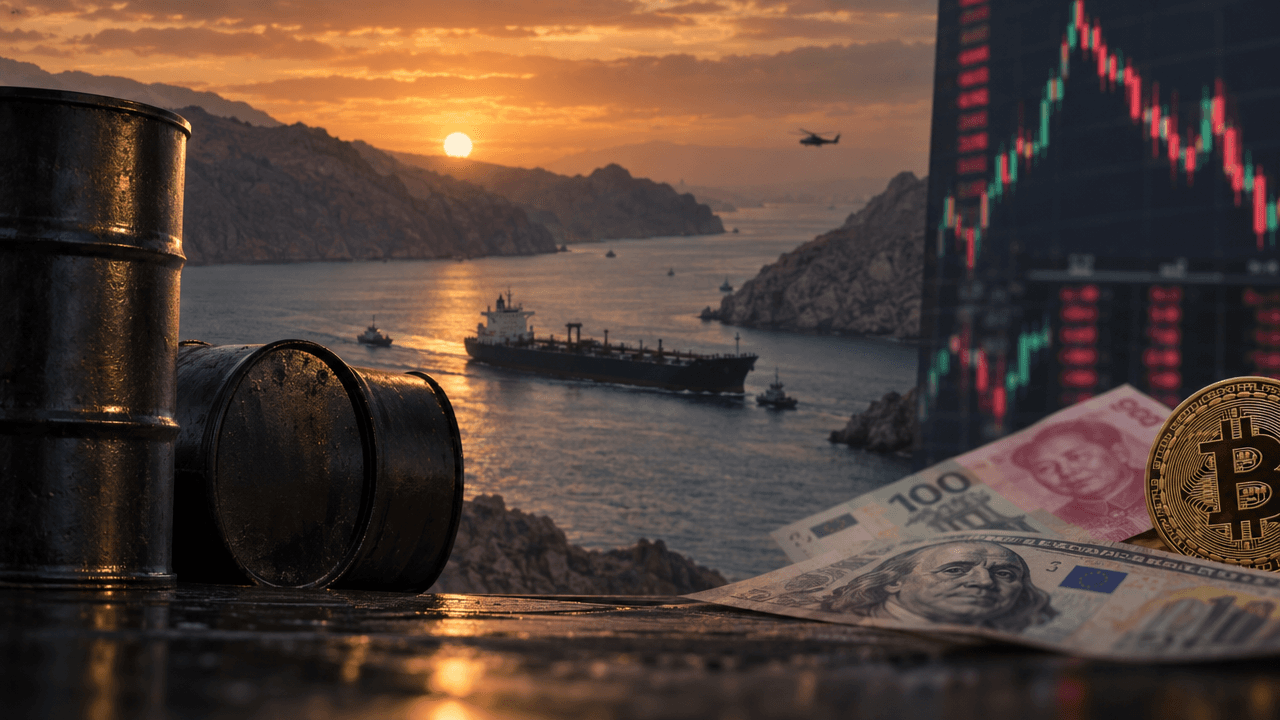
Oil markets are once again at the center of global risk, with Brent crude pushing toward the psychologically important $100 per barrel level as tensions around Iran and the Strait of Hormuz intensify[1][2][15]. Higher energy prices are not just a story for commodity traders; they ripple through inflation expectations, currency markets, bond yields, equity valuations, and even crypto, turning geopolitical headlines into a cross‑asset threat that every trader needs to understand[9][12].
Global Energy Shocks And Geopolitics
The Strait of Hormuz is one of the world’s most critical chokepoints, traditionally handling close to 20% of global oil and gas shipments[4][6][15]. Recent conflict between the United States and Iran, naval blockades, and attacks on commercial shipping have repeatedly raised questions about the security of this route[4][10][15]. While escorted convoys and rerouted pipelines have helped keep crude flows surprisingly resilient—at times returning to prewar levels—markets continue to price in a meaningful risk premium for disruption[1][5][8].
Geopolitical risk is not a simple binary of “open” versus “closed” for a key waterway like Hormuz; it is a continuum of threat levels, ranging from harassment of shipping to outright closure[2][14][15]. For traders, what matters is that each escalation step can drive sharp repricing in energy and related assets, often in a nonlinear way. A limited attack might add a few dollars to Brent, while a credible threat of closure can spark sudden moves of $10–20 per barrel as risk premia and hedging flows surge[9][12].
In this environment, macro trading becomes a game of scenario analysis. Simulated trading environments allow participants to rehearse how portfolios respond to different degrees of disruption—partial flow reductions, full embargoes, or diplomatic de‑escalation—and to quantify how quickly energy shocks spill into other asset classes[12].
The Inflation Channel: Oil, Dollar, And Bonds
Higher oil prices feed directly into headline inflation through fuel, transportation, and production costs, and indirectly into core inflation via second‑round effects on wages and corporate pricing power[9][12]. When markets see Brent near $100 with a credible geopolitical risk premium, they often revise inflation expectations higher, particularly over the next one to three years[9][12].
Those revised expectations matter for bond markets. Investors demand greater compensation for inflation risk, pushing nominal yields higher and steepening the curve, even if central banks initially try to look through energy‑driven price spikes[9][12]. This can weigh on long‑duration assets such as investment‑grade bonds and high‑growth equities, which are more sensitive to changes in discount rates.
The currency channel amplifies the effect. Energy shocks tend to support the U.S. dollar as global investors seek safe‑haven assets and price in tighter financial conditions[9][12]. A stronger dollar can pressure emerging‑market currencies and local‑currency bonds, especially in net energy‑importing economies that face worsening trade balances and imported inflation. In simulated environments, traders can see how a single geopolitical trigger—such as an announcement of new attacks in Hormuz—might simultaneously push Brent higher, lift U.S. yields, and strengthen the dollar.
For portfolio construction, this means inflation hedges (commodities, inflation‑linked bonds, certain value sectors) become more important when geopolitical energy risks are elevated. SimFi traders can experiment with shifting duration, adding inflation protection, or rotating sector exposure to see how different combinations respond to higher‑for‑longer energy prices.
Equities, Crypto, And Risk Sentiment
Equity markets respond to oil and geopolitical shocks through multiple channels: earnings, valuation, and risk sentiment. Higher energy costs compress margins for energy‑intensive sectors such as airlines, logistics, and parts of manufacturing, while simultaneously boosting cash flows for integrated oil majors and some commodity producers[9][12]. Market‑wide indices can struggle when rising discount rates and weaker growth prospects outweigh the boost to energy earnings.
Risk sentiment adds another layer. Episodes of heightened geopolitical tension, especially involving strategic chokepoints and major powers, often trigger risk‑off moves: investors rotate out of cyclical and high‑beta assets and into defensive sectors and safe‑haven instruments such as U.S. Treasuries and cash[9][12]. When those tensions are tied to inflationary shocks, however, the traditional correlations can break down—bonds may not rally if higher yields are driven by inflation fears rather than growth concerns[9].
Crypto futures are increasingly part of this cross‑asset picture. While some investors view crypto as a hedge against monetary debasement, in practice major crypto assets often trade as high‑beta risk assets, selling off when global risk aversion spikes and liquidity tightens[9][12]. In an environment of rising energy prices, higher yields, and a stronger dollar, crypto can struggle to sustain rallies, particularly if broader risk assets are under pressure.
Simulated trading is well suited to exploring these shifting correlations. Participants can back‑test how equity sectors, regional indices, and crypto futures behaved in past energy shocks, and then stress‑test current strategies against scenarios where oil spikes, yields rise, and risk assets de‑rate simultaneously[9][12].
Cross-asset Positioning For Simulated Traders
For traders on SimFi platforms, the key is to think in terms of cross‑asset contagion rather than isolated moves in oil. A geopolitical headline that lifts Brent is also likely to move inflation breakevens, implied volatility, risk‑off currencies, and sector spreads in equities[9][12].
Practical positioning in a simulated environment might include:
1. Building scenario trees around geopolitical events (e.g., partial shipping disruption, naval blockade, negotiated truce) and mapping expected moves in oil, yields, FX, and equity sectors for each case[4][10][15].
2. Testing portfolio resilience to higher‑for‑longer energy prices by shocking Brent and related energy benchmarks and measuring impacts on P&L across asset classes[9][12].
3. Exploring hedging strategies such as long energy exposure against short indexes most sensitive to higher rates, or adding inflation‑linked instruments to balance duration risk in bonds[9][12].
4. Monitoring how correlations shift under stress. Research shows that geopolitical risk is not priced uniformly across assets and that its transmission varies by regime, highlighting the need for dynamic, regime‑aware risk management[12].
In simulated markets, traders can iterate quickly through these designs without capital at risk, building an intuitive understanding of how a single geopolitical flashpoint can cascade through pricing and correlations.
Conclusion
Oil and geopolitical risk around the Strait of Hormuz are more than regional headlines; they are global macro variables that can reshape cross‑asset performance when tensions escalate and energy prices climb toward triple digits[1][4][15]. By viewing energy shocks through the lenses of inflation, rates, currencies, and risk sentiment, traders can better anticipate how portfolios might behave when the next geopolitical surprise hits.
Simulated finance platforms provide a low‑risk laboratory to test these ideas in practice—rehearsing responses to oil spikes, stress‑testing cross‑asset exposures, and refining hedging strategies before deploying real capital. In a world where geopolitical risk and oil remain persistent threats, the combination of disciplined scenario analysis and cross‑asset thinking is no longer optional; it is a core edge for modern traders[9][12].