
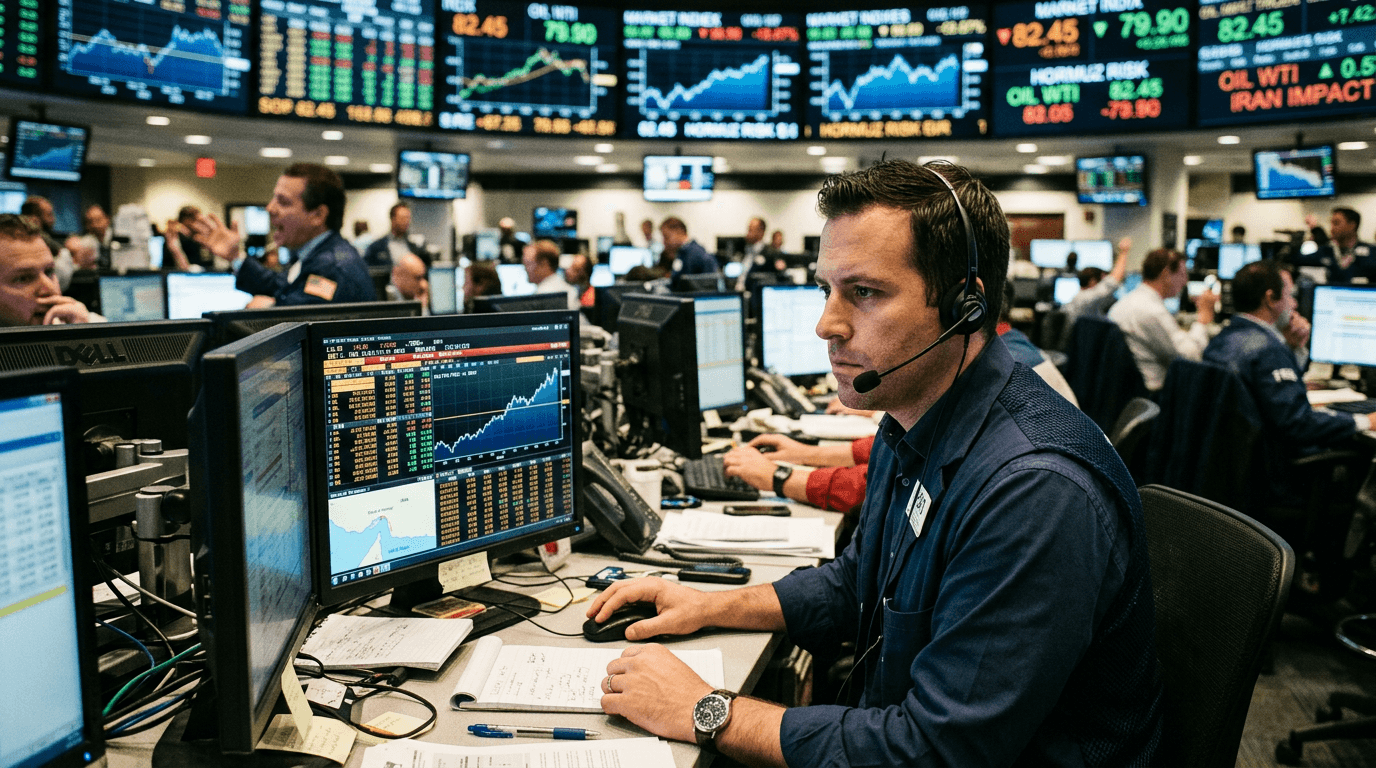
Oil futures are holding their ground above $80 per barrel as traders weigh the impact of expanded U.S. sanctions on Iran against emerging signs of a temporary shipping arrangement through the Strait of Hormuz.[3][10][11] West Texas Intermediate (WTI) front-month futures are trading in the low $80s, while Brent crude is anchored in the high $80s, reflecting a market that has cooled from recent volatility but still carries a meaningful geopolitical risk premium.[2][3][12]
MARKET SNAPSHOT: OIL HOLDS ABOVE $80
After sharp moves around the latest sanctions announcements, both WTI and Brent have eased off recent highs, with prices settling into a relatively tight range above the $80 mark.[3][10][11] Recent sessions saw oil drop more than 3% at one point as investors took profits and reassessed whether economic pressure on Iran equates to sustained supply disruption, rather than a short-lived shock.[5][10][13] The result is a market that appears less panicked than headline risk might suggest, but still sensitive to any sign that flows from the Gulf could be impeded.
For traders, a steady tape above $80 is a signal that the market has partially priced in the sanctions story but is not ready to give up the risk premium tied to Middle East tensions.[7][10] In practical terms, this environment favors strategies that respect the potential for sharp, event-driven moves without assuming that a full-blown supply crisis is imminent.
Iran Sanctions And Global Supply Risk
Expanded U.S. sanctions on Iran target petroleum-related transactions and trading partners, pushing more Iranian barrels out of mainstream channels and tightening effective global supply.[5][7][15] Past episodes of sanctions “snapbacks” have shown that even the expectation of reduced Iranian exports can add dollars to crude benchmarks as refiners and traders scramble to secure alternative barrels.[9][15] Recent measures have already contributed to higher prices for importers, with ripple effects on fuel and food costs in consumer economies.[7]
Yet the latest price action underscores an important distinction: markets often treat economic sanctions as less dangerous than kinetic conflict when it comes to physical supply.[7][10] Investors have, at times, shrugged off new measures, sending Brent and WTI lower despite tougher rhetoric, indicating that a meaningful portion of Iranian disruption risk may already be embedded in current prices.[5][10][13] For traders, the lesson is that sanctions headlines can drive short-term volatility, but the long-term impact hinges on whether flows are truly curtailed, rerouted through opaque channels, or offset by other producers.
Hormuz Deal Headlines: Cooling Fears, Not Eliminating Risk
The Strait of Hormuz remains one of the world’s most critical energy chokepoints, with a large share of seaborne crude and condensate passing through its narrow waters.[1][4][8] Recent reports that Iran and Oman are discussing, and in some cases agreeing on, a temporary joint transit corridor have helped ease fears of prolonged, binary disruption to shipping routes.[1][4][8] Iranian officials describe a seven‑mile wide route that would run partly through their territorial waters, framed as a provisional solution while technical talks continue on a longer‑term arrangement.[1][4]
These developments have been accompanied by proposals for mine‑clearing projects and joint navigation protocols, all aimed at reducing operational uncertainty for vessels transiting the strait.[4][8] However, the corridor is explicitly temporary, and Iran’s continued leverage over the waterway ensures that geopolitical risk is not eliminated, only managed.[1][8] For markets, this combination of a narrow, jointly controlled path and ongoing negotiations translates into reduced tail‑risk of an outright closure, but sustained sensitivity to diplomatic setbacks or security incidents.
What Steady Futures Signal About Market Expectations
When front‑month futures hold steady in the low $80s for WTI and high $80s for Brent after major geopolitical headlines, it suggests that traders see current tensions as serious but not yet transformational for global balances.[2][3][10][12] Previous sessions where prices spiked into the 90s on sanctions threats and then retraced highlight how quickly perceived scarcity can be reassessed when actual flows are not materially disrupted.[5][10][13][15] This pattern often reflects a market where risk is priced more in volatility than in sustained directional moves.
In such environments, the term structure of futures can show modest backwardation, with near‑dated contracts carrying a premium for immediate risk while longer‑dated prices assume eventual normalization.[11][12] Options markets typically respond with elevated implied volatility around key dates—sanctions announcements, diplomatic meetings, or milestones in Hormuz negotiations—as traders hedge against headline‑driven price gaps.[10][15] For both directional and relative‑value strategies, understanding these expectations is as important as tracking the spot price itself.
Practical Takeaways For Simulated Traders
For traders using SimFi platforms such as E8 Markets, the current oil backdrop is a live case study in how geopolitics, policy, and logistics converge in futures pricing. Simulated environments allow participants to test how portfolios respond to scenarios like tighter sanctions enforcement or a breakdown in Hormuz talks without real capital at risk. A practical first step is to build stress tests around key variables: a sudden $5–$10 move driven by a security incident, a rapid drop if a durable transit corridor is secured, or a grind higher if sanctions steadily remove more barrels from transparent markets.[5][7][10][15]
Risk management should focus on position sizing and diversification rather than trying to predict each headline. Using smaller, staggered entries across maturities—or combining crude futures with related exposures such as energy equities or refined products—can help smooth the impact of surprise events. Simulated traders can also practice adjusting stop‑loss levels and profit targets when implied volatility rises around known catalysts, mirroring conditions seen during recent sanctions and Hormuz negotiations.[10][15]
Finally, incorporating macro data and cross‑asset signals into oil trading plans is essential. Moves in currencies of major importers, changes in inflation expectations, and shifts in equity sector performance often reflect how the broader market is digesting energy price swings triggered by Middle East developments.[7][10] SimFi environments provide a sandbox to explore these linkages, teaching traders to interpret oil not as an isolated instrument, but as a core node in the global risk network.
Conclusion: Navigating Oil Risk In A Geopolitical Market
Oil’s resilience above $80 per barrel in the face of fresh Iran sanctions and evolving Hormuz headlines reflects a market that has learned to live with chronic geopolitical tension, pricing in risk without assuming catastrophe.[3][10][11] The emerging temporary transit arrangements between Iran and Oman are cooling the most extreme fears about supply disruption, yet they also reinforce the strategic importance of the strait and the ongoing influence of regional diplomacy on energy flows.[1][4][8] For traders—especially those honing skills in simulated environments—the key is not predicting each twist in the story, but building robust frameworks that can adapt to sudden price moves, shifting expectations, and the persistent interplay between policy and markets.