
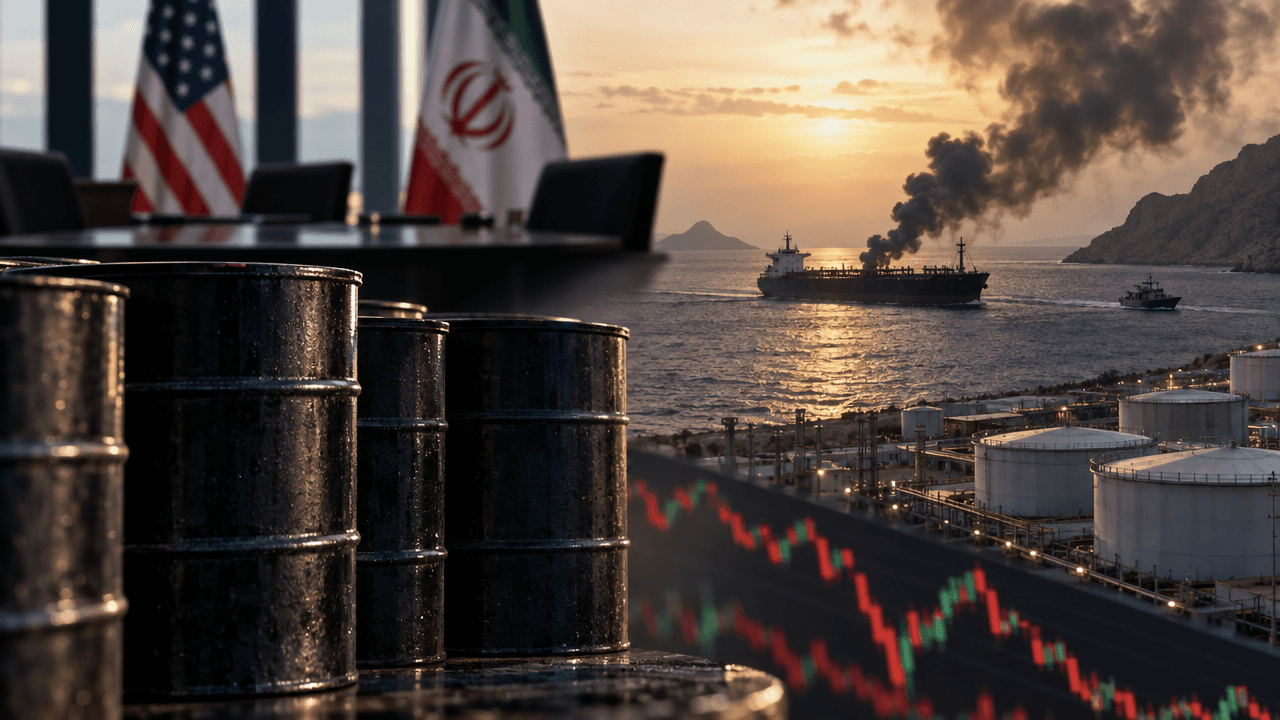
Oil markets remain volatile as traders weigh two opposing forces: the possibility of diplomatic progress between the United States and Iran, and the continuing threat to commercial shipping around the Strait of Hormuz. Prices recently fell toward two-month lows when U.S. officials signaled that additional military action might not be necessary, but crude quickly recovered as reports questioned whether meaningful negotiations were actually taking place. [2][14]
This sharp reaction shows how heavily geopolitical risk is influencing oil prices. In a market already shaped by constrained shipping capacity and reduced inventories, each headline can alter expectations for supply, transportation costs, and future demand. For traders, the challenge is not simply predicting whether prices will rise or fall. It is understanding which developments can change the market’s risk premium—and how quickly that premium can disappear.
Geopolitics Is Driving The Risk Premium
The Strait of Hormuz remains central to the oil outlook because it is one of the world’s most important energy shipping routes. Recent reports indicated that 37 ships were attacked in the strait and surrounding waterways during October, the highest monthly total since the conflict began. Ten additional attacks were reportedly recorded in November by November 11. [2]
These incidents do not need to stop all oil exports to affect prices. Shipowners may reroute vessels, delay departures, or demand higher insurance premiums before entering the region. Those additional costs can reduce the efficiency of global supply chains and create concerns about whether crude will arrive where it is needed on schedule.
The market is therefore pricing uncertainty rather than only confirmed physical shortages. If U.S.–Iran negotiations produce a credible and enforceable agreement, the geopolitical premium could decline quickly. However, a diplomatic announcement alone may not immediately restore normal shipping. Mine clearance, insurance availability, security conditions, and shipowners’ willingness to accept risk could all delay a return to regular traffic. [7]
For SimFi traders, this creates an important lesson: geopolitical headlines often generate fast price moves, but the most durable trends usually require confirmation through physical market data.
Inventories Provide A Second Signal
U.S. inventory data has added another layer of volatility. Market sources citing American Petroleum Institute data reported that U.S. crude stocks increased by approximately 9 million barrels in the week ending November 6. A large build can be interpreted as bearish because it may indicate weaker refinery demand, stronger domestic production, increased imports, or reduced export activity. [2][5]
Yet inventory figures should not be treated as an automatic trading signal. Weekly data can be affected by timing, shipping schedules, refinery maintenance, and changes in strategic or commercial storage. Traders also compare crude inventories with gasoline and distillate stocks, refinery utilization, imports, exports, and implied demand.
The more important question is whether an inventory build becomes a trend. One weekly increase may pressure prices temporarily, especially when geopolitical fears are easing. Several consecutive builds, however, could suggest that supply is outpacing demand and may weaken the underlying market structure.
The Energy Information Administration expects global inventories to begin rebuilding in the fourth quarter of 2026 after falling by an estimated average of 1.2 million barrels per day in the third quarter. It also forecasts Brent prices near $100 per barrel through November and December, while warning that continued shipping disruptions could create short-term swings. [1][3]
How Traders Can Read The Conflicting Signals
The current market illustrates why crude oil trading requires a framework rather than a reaction to a single headline. Traders can organize the information into three categories.
The first is immediate supply risk. Attacks on tankers, damage to infrastructure, or restrictions on Hormuz traffic can support prices rapidly because the market must account for possible delivery disruptions.
The second is diplomatic direction. Clear evidence of negotiations, a ceasefire, or improved regional security could remove part of the risk premium. Conversely, statements denying negotiations or signaling escalation can restore it.
The third is fundamental confirmation. Inventory trends, refinery demand, production levels, shipping rates, and the Brent-WTI spread help determine whether a headline-driven move is supported by broader market conditions.
A practical approach is to define scenarios before entering a position. In a de-escalation scenario, crude may fall as the risk premium contracts. In a prolonged impasse, prices may remain elevated even if inventories begin to recover. In an escalation scenario, shipping disruption could overwhelm bearish inventory data and push prices higher.
Risk management is especially important in this environment. Wider stops may prevent premature exits, but they also increase potential losses. Smaller position sizes, clearly defined invalidation levels, and limits on overnight exposure can help traders manage headline risk. SimFi participants should also test how their strategies perform during rapid gaps, reversals, and periods of unusually high volatility.
What To Watch Next
The next major catalysts are likely to include verified statements about U.S.–Iran negotiations, developments affecting shipping through the Strait of Hormuz, official U.S. inventory data, and evidence of whether global stockpiles are beginning to rebuild.
Traders should also monitor the relationship between Brent and WTI. The Energy Information Administration expects ongoing tightness in the global tanker market to support a wide, although narrowing, Brent-WTI spread. [8] A widening spread may indicate that international supply risks are becoming more severe relative to conditions in the U.S. market.
The key takeaway is that oil prices are responding to a contest between potential supply relief and persistent logistical danger. Diplomatic progress could lower prices quickly, but physical shipping conditions may prevent an immediate return to normal. Meanwhile, rising U.S. inventories offer a bearish counterweight, but one weekly report is not enough to establish a lasting trend.
For traders, the best response is disciplined scenario planning. Track the headline, verify it against physical data, assess whether the market has changed structurally, and size positions for uncertainty rather than certainty. In a volatile oil market, patience and risk control can be just as valuable as getting the direction right.