
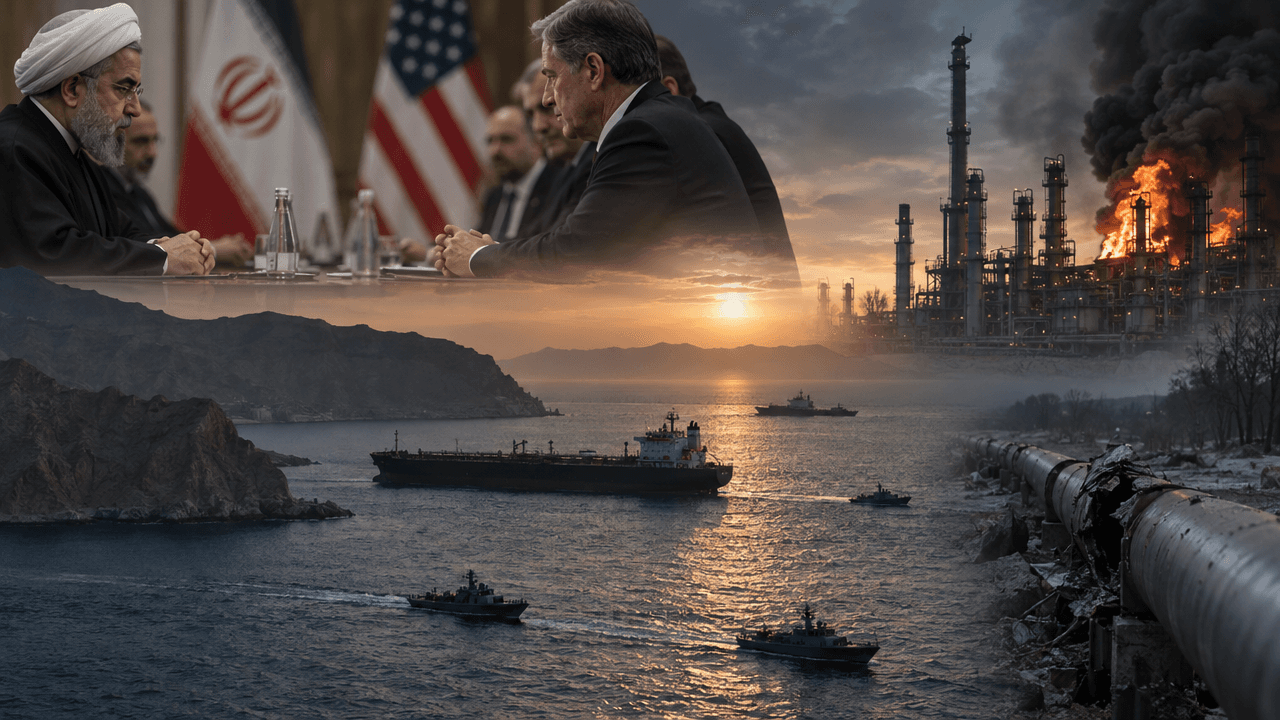
Oil markets are being pulled in opposite directions as hopes for diplomatic progress with Iran collide with evidence that physical supply risks remain elevated. Prices recovered modestly after Tehran rejected a key condition for negotiations, while attacks on shipping near the Strait of Hormuz and damage to Russian port infrastructure added fresh uncertainty to an already fragile supply outlook. Brent crude settled at $92.76 a barrel on November 11, up $1.27, or 1.39%, after falling to a two-month low in the previous session. [3]
The Diplomatic Signal That Moved Prices
Oil traders have been closely watching discussions aimed at ending the US-Iran conflict. Any credible agreement could reduce the risk premium embedded in crude prices by reopening shipping routes, restoring exports, and easing fears of a wider regional escalation.
However, negotiations remain difficult. Iran’s security chief said Tehran would not permit enriched nuclear material to leave the country, directly challenging a central US demand for talks. Iran has also linked the reopening of the Strait of Hormuz to broader concessions, including an end to the US naval blockade and sanctions relief. [1]
This explains why oil prices have reacted sharply to apparently conflicting headlines. Progress toward a ceasefire can trigger a rapid decline as traders anticipate more supply. Conversely, a breakdown in negotiations can produce a rebound as the market prices in prolonged disruption. The result is a market driven not only by barrels currently available, but also by expectations about what may become available next.
The Strait Of Hormuz Remains The Key Risk
The Strait of Hormuz is one of the world’s most important energy corridors, connecting the Persian Gulf with global shipping routes. Any sustained disruption would affect crude, refined products, and liquefied natural gas flows, while also raising freight, insurance, and delivery costs.
Recent attacks suggest that the risk is not merely theoretical. Data from the Washington Institute for Near East Policy indicated that 37 ships were attacked in October, the highest monthly total since the conflict began. Iranian forces have also targeted ship-navigation systems on Oman’s Didamar island, demonstrating the ability to disrupt infrastructure used to restore commercial traffic through the waterway. [3]
For oil traders, the number of attacks matters, but so does their effect on behavior. Tankers may delay voyages, reroute, seek military escorts, or demand higher insurance premiums. Even if crude production continues, fewer cargoes moving through the region can tighten prompt supply and lift nearby futures contracts.
This distinction is important for understanding market reactions. A supply disruption does not require oil fields to stop producing. If transportation becomes slower, more expensive, or less reliable, buyers can still bid prices higher to secure available cargoes.
Russia Adds A Second Supply Concern
The Middle East is not the only source of pressure. Ukrainian drone attacks have damaged Russian energy infrastructure, including the Baltic port of Ust-Luga. A fire reportedly damaged part of the port’s storage-tank network, while industry sources estimated that Russian oil-refining capacity had fallen by about 30% since late October following renewed attacks. [2]
Damage to refining capacity can affect markets differently from damage to crude production. Refinery outages may reduce demand for crude in the short term, potentially weighing on crude prices. At the same time, they can restrict supplies of gasoline, diesel, and other refined products, pushing product prices higher and creating regional shortages.
Port damage creates another complication. Export terminals are essential links between production and consumers. If storage tanks, loading equipment, or marine infrastructure are impaired, crude may remain stranded even when upstream production continues. Traders therefore monitor both production figures and the operational condition of export facilities.
Why Prices Have Not Surged Even Higher
Despite serious geopolitical risks, oil prices have not moved in a straight line. One reason is that traders are balancing disruption fears against the possibility of additional supply from producers and a diplomatic resolution.
Market participants are also assessing OPEC+ output. The group’s production increased sharply in October, led by higher Saudi Arabian output, providing some additional supply cushion. Yet extra production does not fully eliminate transportation risk. Barrels that cannot move safely through critical waterways may not provide immediate relief to refiners and importers. [2]
Demand expectations also matter. If traders believe economic growth is weakening, they may expect lower fuel consumption and a more manageable supply balance. That can limit the upside from geopolitical headlines. Conversely, strong refining margins, seasonal demand, or declining inventories could amplify the impact of any disruption.
This creates a market characterized by volatility rather than a simple bullish or bearish trend. Prices can fall quickly on ceasefire hopes and rebound just as quickly when attacks continue.
Practical Takeaways For Traders
First, separate headline risk from physical market evidence. A diplomatic statement may move prices immediately, but sustained trends depend on whether shipping resumes, exports increase, and inventories change.
Second, monitor the forward curve. A rise in near-term contracts relative to later deliveries can signal that traders are placing a higher value on immediate supply. A flatter or weaker structure may indicate that the market expects disruption to fade.
Third, watch refined products as well as crude. Gasoline, diesel, and jet fuel can react more sharply when refinery or shipping infrastructure is damaged. Crude prices alone may not capture the full impact on energy markets.
Finally, manage leverage carefully. Geopolitical markets can reverse abruptly when a ceasefire, military escalation, or infrastructure repair changes expectations. Position sizing, predefined exit levels, and awareness of overnight risk are essential.
Conclusion
Oil markets are currently pricing an unresolved contest between diplomacy and disruption. Iran’s refusal to accept a key negotiating condition has reduced confidence in a quick settlement, while continuing attacks near the Strait of Hormuz have kept transportation risks elevated. Damage to Russian port and refining infrastructure adds another layer of uncertainty.
For traders, the central question is not simply whether oil production is rising or falling. It is whether barrels can be transported reliably to the consumers who need them. Until diplomatic progress is matched by safer shipping and repaired infrastructure, supply-risk premiums are likely to remain an important force in crude prices.