
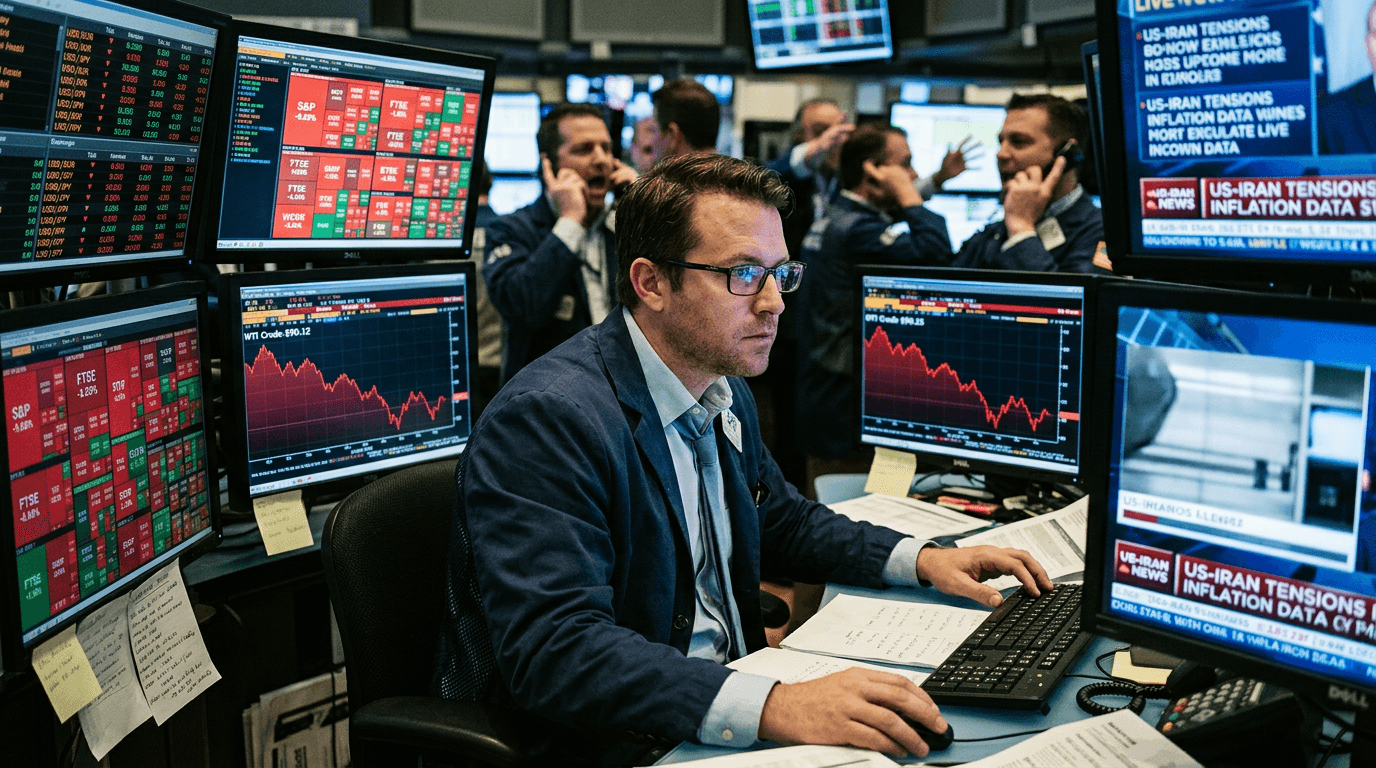
Oil futures are holding close to the $90 per barrel mark as renewed US–Iran tensions around the Strait of Hormuz keep supply risks front and center[4][9][14][15]. Recent reports of tanker incidents and intermittent blockades in this critical waterway have reinforced a geopolitical risk premium in crude prices, even as broader risk assets struggle with heightened uncertainty[1][5][6][14]. For traders, this environment combines classic commodity shock dynamics with modern cross‑asset contagion, making oil a core driver of global market sentiment.
Global Oil Market Snapshot
Brent crude futures have been trading in the high‑80s to low‑90s per barrel, supported by recurring disruptions and threats to shipping in the Strait of Hormuz[9][14][15]. Prices briefly tested the $100 region during earlier spikes in hostilities before easing back below $90 as temporary pauses in strikes opened the door to diplomacy[4][7]. Even with these pullbacks, the market has not returned to pre‑crisis levels, signaling that traders expect prolonged instability rather than a quick normalization[9][14].
West Texas Intermediate (WTI) has followed a similar trajectory, trading several dollars below Brent but reflecting the same geopolitical risk premium[9][10][15]. Volatility has picked up around key headlines, with single‑day moves of 3–5% seen when new attacks on ships or military strikes are reported[4][5][10][14]. For energy futures and related equities, elevated prices translate into stronger earnings expectations and relative outperformance, even as broader equity indices show signs of strain.
Strait Of Hormuz: A Chokepoint With Global Consequences
The Strait of Hormuz is one of the world’s most critical energy corridors, typically handling around 20% of global oil and liquefied natural gas shipments in normal times[4][12][14]. Since the onset of renewed US–Iran conflict in 2026, Iran has intermittently restricted or threatened traffic through the strait using naval blockades, drone attacks, and mine warfare, while the US has responded with its own naval presence and occasional blockades[1][5][12][13]. Each flare‑up raises the probability of more severe supply disruptions, which markets quickly price into crude and product futures.
Recent tanker incidents and attacks on commercial vessels have slowed traffic and, at times, brought transit close to a standstill[1][6][9][11]. These disruptions do not need to fully halt flows to move prices; the mere threat of escalation forces refiners, traders, and end‑users to reassess inventory strategies and hedging needs[9][13][14]. As long as control over Hormuz remains contested, traders should expect a persistent geopolitical premium embedded in oil futures curves.
INFLATION, RATES, AND CROSS‑ASSET RIPPLE EFFECTS
Elevated oil prices feed directly into headline inflation via fuel, transport, and input costs, and indirectly into core inflation over time[9][13][14]. With Brent near $90, markets are already factoring in higher energy‑related CPI prints, complicating central bank decisions and steepening inflation expectations in bond markets[9][14][15]. Rate‑sensitive assets, from high‑growth equities to long‑duration bonds, tend to underperform in this environment as investors demand greater compensation for inflation and policy uncertainty.
Equity index futures have reacted by pricing in more volatility and, in some cases, lower forward earnings multiples, especially in sectors heavily exposed to consumer spending and input costs. Emerging‑market currencies linked to energy imports and external funding needs have faced pressure as higher oil prices worsen trade balances and raise inflation risks[9][13][14]. By contrast, energy producers and commodity‑linked FX have seen relative support, illustrating how a single geopolitical shock can generate divergent outcomes across regions and sectors.
For traders operating in simulated finance environments, such as on platforms like E8 Markets, this creates rich opportunities to explore how an oil shock propagates through indices, FX, and rates. Scenario‑based simulations can help reveal non‑obvious correlations and stress points that may not be visible in calm markets.
What Traders Should Watch In Oil And Simulated Markets
Short‑term price action in oil is being driven less by traditional supply‑demand statistics and more by three key variables: military developments in and around Hormuz, diplomatic progress between the US and Iran, and the operational state of shipping lanes[1][4][6][9][13]. Traders should track:
- Reports of tanker incidents, blockades, or missile and drone attacks on commercial shipping[1][5][6][11][14]
- Statements or moves by US and Iranian leadership regarding ceasefires, negotiations, or naval deployments[1][3][4][13]
- Shifts in implied volatility and options skew in crude and energy equities, which often move ahead of spot prices[9][10][15]
In a SimFi environment, these drivers can be transformed into structured trading scenarios. For example, traders might simulate:
- A sustained blockade pushing Brent back above $100 and testing inflation‑sensitive sectors
- A negotiated reopening of Hormuz reducing the geopolitical premium and compressing energy equity valuations
- A mixed scenario where partial flows resume but frequent skirmishes keep volatility elevated
By working through these scenarios with virtual capital, traders can develop playbooks for real‑world risk management without exposing live funds to headline risk.
Scenario Planning, Risk Management, And Practical Takeaways
Geopolitical shocks like the US–Iran confrontation in Hormuz highlight the need for robust risk frameworks. For directional oil traders, elevated prices and volatility offer opportunity but demand disciplined position sizing and clear exit rules. Scenario planning around key catalysts—such as new attacks, ceasefire announcements, or sanctions changes—can help avoid emotional, headline‑driven decisions[1][4][5][9][13].
Cross‑asset traders should focus on correlation structures that often shift during energy shocks. Historically defensively‑positioned sectors may become more sensitive to fuel costs, while traditionally cyclical assets can temporarily decouple from macro indicators. Monitoring spreads between energy and non‑energy equities, between producer and consumer currencies, and between nominal and inflation‑linked bonds can reveal when markets are over‑ or under‑pricing the oil risk premium[9][13][14][15].
SimFi platforms provide a controlled environment to test such strategies under stress. Traders can:
- Build multi‑asset portfolios that hedge oil exposure via FX, indices, or rates
- Practice rapid rebalancing in response to simulated geopolitical headlines
- Analyze how different leverage levels behave when volatility spikes in commodities
These exercises help translate abstract macro narratives into concrete, repeatable trading processes.
Conclusion
Oil futures remaining elevated near $90 reflect a market that now treats US–Iran tensions and the Strait of Hormuz as a structural, not temporary, source of risk[4][9][14][15]. As long as tanker incidents, military skirmishes, and contested control over this choke point persist, the geopolitical premium in energy prices is likely to remain embedded in futures curves and cross‑asset pricing[1][4][9][13]. For traders, the key is not predicting every headline, but building resilient strategies, testing them in simulated environments, and recognizing how a single regional conflict can reshape global markets. In that sense, the current oil landscape is both a risk and a classroom—offering real‑time lessons in macro, geopolitics, and disciplined trading.