
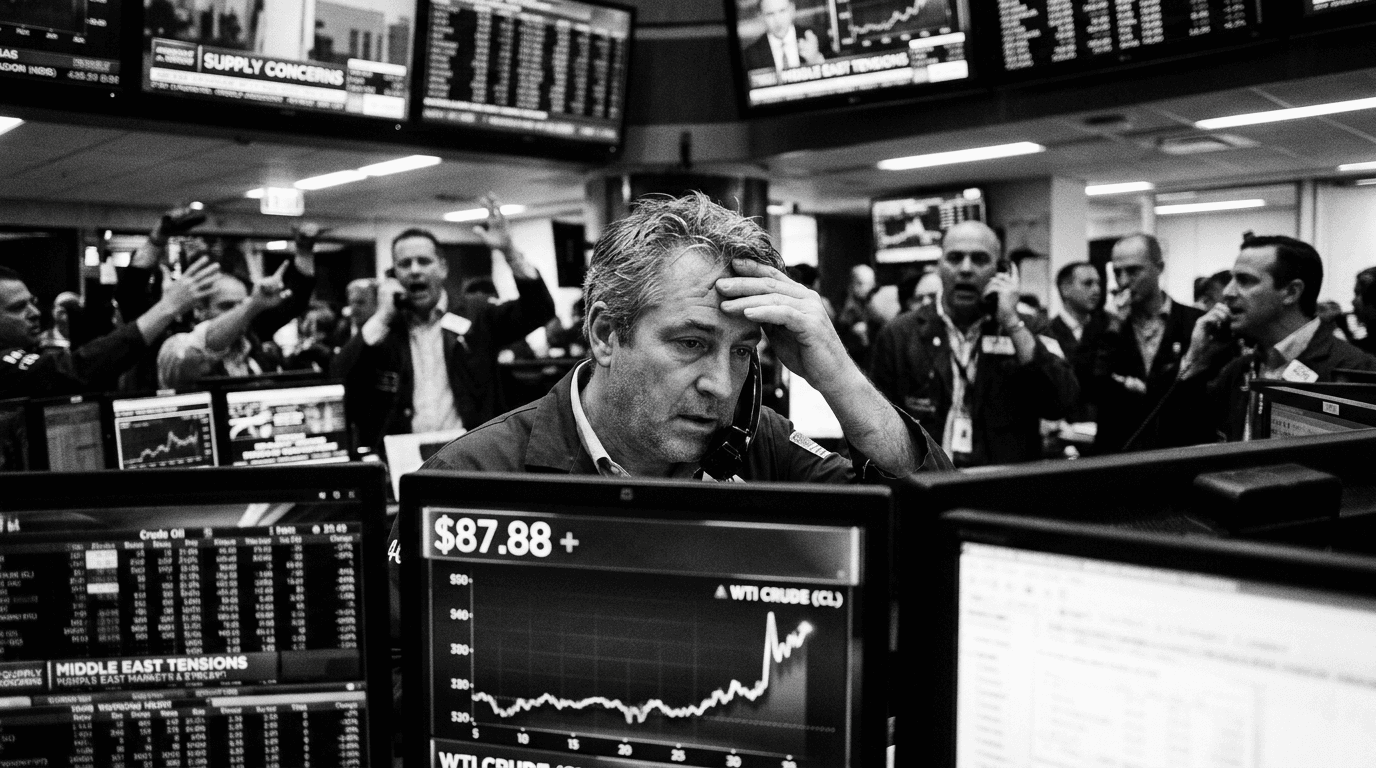
The global oil markets are currently navigating through turbulent waters as escalating geopolitical tensions in the Middle East drive crude prices up by as much as 9%. Recently, US crude oil has surged to $87.88 per barrel, while Brent crude has risen to $96.25. These substantial increases from pre-conflict levels, which hovered around $70 per barrel, are rippling across financial markets, affecting inflation expectations, equity valuations, and central bank policy directions. For traders, investors, and market participants, comprehending the forces behind these movements is crucial in this complex landscape.
The Strait Of Hormuz Crisis: The Epicenter Of Volatility
The Strait of Hormuz is at the heart of the current volatility, a critical maritime chokepoint for global energy supply. The ongoing conflict between the US and Iran has severely disrupted the passage, with both nations restricting tanker access and engaging in confrontations over shipping lanes. Tensions escalated when Iran announced plans to reopen the strait, only to reverse this decision following US President Trump's declaration to maintain a naval blockade on Iranian ports. This led to Iranian Revolutionary Guard forces firing on vessels and US forces seizing Iranian-flagged ships attempting to bypass the blockade. This uncertainty over the strait's reopening fuels market volatility, as traders grapple with the risks of extended supply disruptions.
Global Energy Supply Disruptions
The scale of the disruptions to global energy markets is unprecedented. Recent reports indicate that over 40 major energy assets have been affected by attacks across the Middle East, disrupting approximately 20% of the world's oil and seaborne liquefied natural gas supply. This constitutes one of the most severe energy crises in decades. To mitigate these supply constraints, the International Energy Agency coordinated a historic emergency oil stock release on March 11. Despite these stabilizing efforts, market volatility remains high, and prices continue to reflect ongoing uncertainties. Countries in Asia and Europe that are heavily dependent on Middle Eastern oil are experiencing significant supply disruptions, with far-reaching effects on production costs and consumer energy prices worldwide.
Implications For Traders And Investors
The oil price surge extends its impact beyond energy markets. Rising US gasoline, diesel, and jet fuel prices are affecting consumers and businesses globally. Energy Secretary Chris Wright suggested that US motorists might not see gas prices drop below $3 per gallon until the following year, despite recent declines. The surge in energy costs is exerting pressure on equity markets, threatening corporate profit margins and consumer spending power. This dynamic challenges stock valuations, with market strategists cautioning that the previous record-setting rally in US equities might face headwinds due to rising inflation expectations linked to energy costs. Additionally, diminished prospects for Federal Reserve rate cuts complicate the outlook, necessitating traders to reassess both inflation dynamics and economic growth projections in this new environment.
Risk Scenarios And Market Thresholds
Analysts are identifying critical price thresholds that could trigger more severe market reactions. Should oil prices surpass $150 per barrel, economists warn of a potential global recession, particularly if the Strait of Hormuz remains blocked post-conflict. While current prices of $96-102 per barrel are elevated, they haven't reached this critical level. However, the mere discussion of this threshold highlights the fragility of the current market conditions. Industry experts caution that even if negotiations reopen the strait, it could take months for oil shipments to normalize and for fuel prices to significantly decrease. The current ceasefire between the US and Iran is delicate, and any breakdown in talks could swiftly drive prices higher.
Key Takeaways For Traders
For traders in this environment, several considerations are paramount. First, geopolitical risk is now a primary market driver, necessitating position sizing that reflects the heightened volatility in energy markets and related assets. Second, the inverse relationship between oil prices and equity valuations underscores the value of diversifying portfolios across uncorrelated asset classes. Third, with longer-term inflation expectations being repriced higher, trading strategies around commodity plays and inflation-protected instruments could be influenced. Lastly, the timeline for the US-Iran conflict remains uncertain, making it essential to monitor peace talks and diplomatic efforts that could rapidly shift market sentiment. Traders should remain flexible and avoid overextended positions until clearer signals emerge regarding the conflict's resolution.
The current oil market scenario exemplifies the dual nature of geopolitical events, presenting both risks and opportunities for astute traders. Staying informed about developments in the Strait of Hormuz and Middle East peace negotiations is vital for effective positioning in the weeks ahead.