
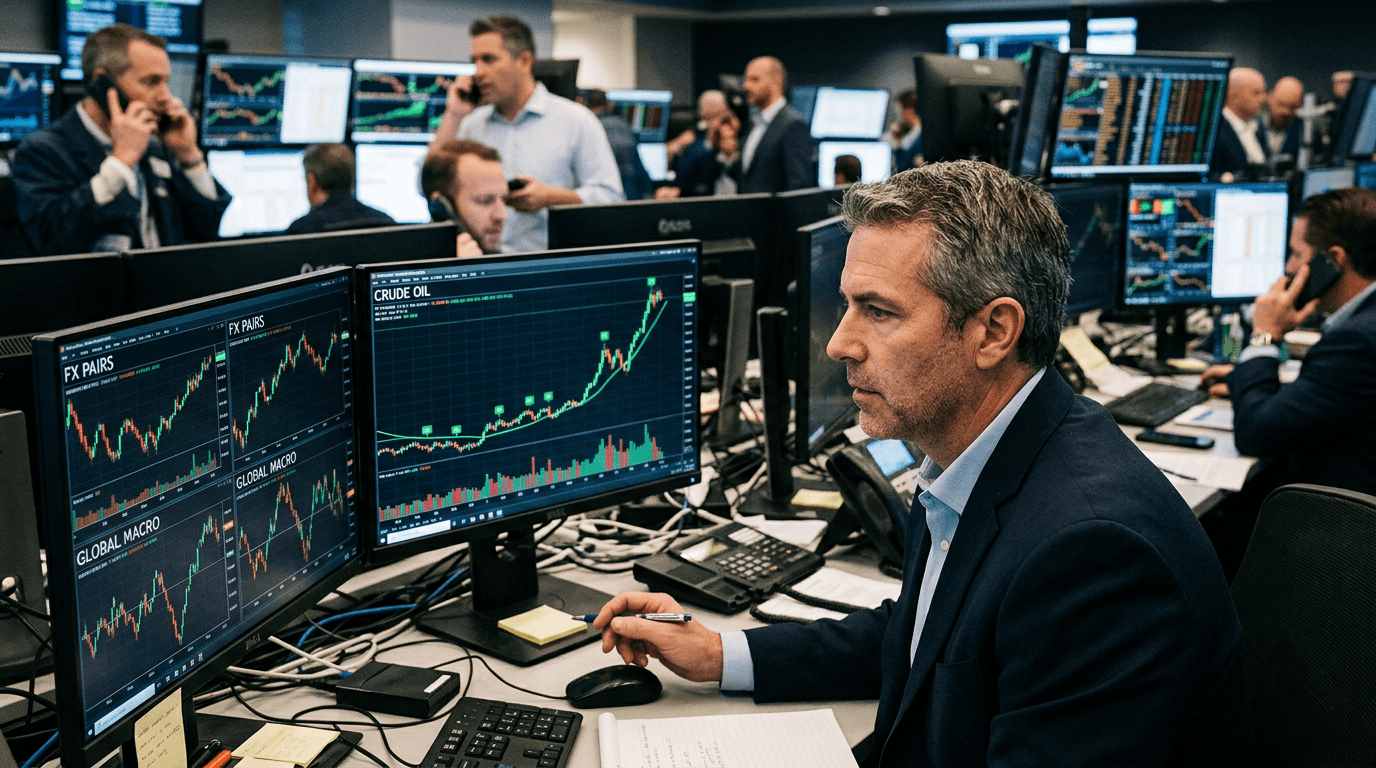
Oil prices are inching higher as traders digest the latest round of U.S. sanctions on Iran, reviving concerns about supply security and transit risks in one of the world’s most critical energy chokepoints.[1][3] The move is rippling across crude benchmarks, with both Brent and WTI finding support as markets reassess the odds of tighter flows from the Middle East.[1][10][15] Beyond crude, the shift is feeding into energy‑linked currencies such as the Canadian dollar (CAD) and Norwegian krone (NOK), which tend to move with oil prices.[15] For active traders, this is less about a one‑day price pop and more about how a new risk premium gets embedded into oil and FX markets over the coming weeks.[1][10]
Market Reaction: Oil Prices And Volatility
Fresh sanctions on Iran have given crude futures another leg up, adding to gains built on earlier supply disruptions and geopolitical tension in the region.[1][10][15] Brent has been trading firmer as investors position for potential export constraints from Iran and disruptions along regional shipping lanes.[1][8] WTI is also supported, helped by stronger refinery demand and a perception that U.S. barrels may be called upon to fill any shortfall if Middle Eastern flows are curtailed.[10][15] This combination of geopolitics and fundamentals tends to amplify volatility, creating sharper intraday swings as headlines hit the tape.[1][10]
The key nuance is that markets are not yet pricing an outright loss of Iranian barrels on the scale seen during previous crises, but rather a higher probability that something could go wrong.[2][6][12] This shows up as a modest upward drift in prices rather than a parabolic spike, with traders layering in optionality via call options and volatility strategies in case tensions escalate further.[1][10] For short‑term traders, this environment favors disciplined trend‑following and event‑driven strategies that respect headline risk, while longer‑term participants focus on whether the underlying supply‑demand balance justifies sustained higher prices.[1][10][15]
WHY U.S.–IRAN SANCTIONS MATTER FOR OIL
Iran remains a meaningful producer whose exports have often been constrained by sanctions, naval measures, and diplomatic pressure.[2][3][6] Recent U.S. actions have targeted networks that facilitate Iran’s oil exports, particularly flows to Asian buyers, with the explicit goal of limiting the regime’s energy revenue.[3][6] Earlier measures included sanctions on companies involved in transporting Iranian crude and petrochemicals, effectively tightening the screws on trade finance, insurance, and port access.[3][6] Separate steps such as a U.S. naval blockade have already squeezed Iranian shipments, forcing more crude into floating storage and reducing seaborne exports.[2][12]
From a market perspective, sanctions add layers of friction and uncertainty to Iranian supply, even if barrels technically remain available on the gray market.[2][3][6] Physical buyers must navigate legal risk, payment channels, and shipping constraints, which can delay or reroute cargoes.[2][6][12] Each incremental restriction marginally shrinks the pool of willing counterparties and increases transactional costs, effectively tightening supply relative to a sanctions‑free world.[3][6] That tightening feeds directly into risk premia embedded in Brent and WTI, particularly when global inventories are not excessively high and other producers are already close to capacity.[1][10][15]
The Strait Of Hormuz Risk Premium
Beyond sanctions on Iranian exports, traders are laser‑focused on the Strait of Hormuz, the narrow waterway linking the Persian Gulf to global markets.[8][11] Historically, around a fifth of the world’s oil and gas flows through this strait, making it one of the most strategically important maritime chokepoints on the planet.[8][11] Recent conflict and retaliatory actions in the region have at times brought tanker traffic to a near standstill, severely disrupting flows and stranding vessels.[4][8][9] Maritime security agencies have periodically raised risk levels for transiting ships to severe, citing heightened threats to commercial vessels.[5][7]
When shipping risk rises, insurers increase war‑risk premiums, charter rates jump, and some shipowners refuse to enter the area, all of which raise the delivered cost of crude.[5][7][9] Even if alternative routes and inventories soften the blow, the market typically builds in a “Hormuz risk premium” to reflect the possibility of sudden supply interruptions.[4][8][13] Traders monitor not only official announcements but also real‑time tanker tracking data and maritime advisories to gauge whether traffic is normalizing or deteriorating.[7][8][9] In this environment, any new U.S.–Iran sanctions that could affect maritime behavior add to the sense that the operating landscape remains fragile and subject to abrupt change.[7][11][13]
IMPLICATIONS FOR ENERGY‑LINKED FX AND RATES
Energy‑linked currencies like CAD and NOK often move in tandem with oil prices, reflecting the importance of petroleum exports to Canada and Norway.[15] When Brent and WTI climb on geopolitical risk, these currencies can outperform peers, especially if domestic fundamentals are reasonably solid.[15] However, the relationship is not one‑to‑one: broader risk sentiment, interest rate differentials, and local data still matter.[15] For instance, if higher oil prices raise recession fears or trigger risk‑off flows, safe‑haven currencies might strengthen even as oil‑exporter FX gains only modestly.[10][15]
On the rates side, sustained higher energy prices can complicate central bank policy by re‑inflating headline inflation and affecting inflation expectations.[10] If markets perceive that oil‑driven inflation will be temporary, bond yields may rise only modestly; if not, expectations for tighter monetary policy can creep back into the curve.[10] This interplay between energy prices, inflation, and interest rates makes crude‑driven shocks particularly relevant for macro and cross‑asset traders.[10][15] In a SimFi environment, traders can stress‑test portfolios under different oil‑price and FX scenarios, exploring how shocks to CAD, NOK, and yields might affect their overall risk.[15]
What Traders Should Watch Next
For traders, the latest sanctions are a catalyst rather than a conclusion: the path of prices will depend on whether tensions escalate, stabilize, or de‑escalate.[1][3][6] Key signposts include any evidence of reduced Iranian export volumes, changes in tanker traffic through Hormuz, and shifts in maritime threat assessments.[2][7][8] Market participants should also track responses from other major producers, including whether OPEC+ members adjust output to offset potential shortfalls.[1][10][15] On the demand side, incoming data on global growth and refined product consumption will determine how easily markets can absorb any supply disruption.[10][15]
In practical terms, active traders can focus on three core disciplines: scenario planning, risk management, and execution.[1][10] Scenario planning means mapping out paths where sanctions tighten further, remain static, or are partially rolled back, and identifying trades that express each view across oil, FX, and rates.[3][6][10] Robust risk management involves setting clear stop‑loss levels, managing leverage, and considering hedges such as options to protect against tail risks like a sudden closure of Hormuz.[4][8][13] Finally, disciplined execution requires patience—waiting for liquidity, avoiding over‑trading on every headline, and using simulated environments to refine strategies before deploying capital in live markets.[1][10][15]
Ultimately, the current move in oil is as much about risk repricing as it is about barrels on the water.[1][2][8] U.S.–Iran sanctions and elevated shipping risks keep the market on edge, supporting a higher floor for prices even if there is no immediate collapse in supply.[1][3][7] For both new and experienced traders, the opportunity lies in understanding how geopolitics, logistics, and macro forces interact—then building structured, risk‑aware strategies that can adapt as the story evolves.[1][10][15]