
1. Write 800-word blog article 2. Start DIRECTLY with first paragraph - NO preamble 3. PLAIN TEXT format (no HTML, no markdown) 4. ALL CAPS for section headings on their own line 5. Separate paragraphs with blank lines 6. Include 3-5 main sections with clear takeaways 7. Make it engaging and educational 8. At the END provide: TITLE, EXCERPT, NEWSIMPACTSCORE
The search results provide good information: - Oil jumped to $81.64 (9% surge) - Brent crude at $85.85 - US-Iran conflict disrupting ~10% of global oil supply (10-11 million barrels/day) - Strait of Hormuz closure affecting 20% of global oil supply - Gas prices jumped to $3.58/gallon (60-cent increase in one month) - WTI crude at $99.64 as of the search results - S&P 500 and major indexes down about 1% - Inflation concerns reignited - Highest oil prices since summer 2024
I need to write this in plain text with section headings in ALL CAPS on their own line. No markdown formatting. Let me structure it with engaging content that educates readers about trading and finance implications.
Let me aim for approximately 800 words and cover: 1. The Current Crisis (opening) 2. Understanding the Supply Shock 3. Inflation Implications for Your Portfolio 4. Stock Market Reverberations 5. What Traders Should Do Now (takeaways)
Let me write this in plain text format with proper paragraph breaks and ALL CAPS headings.
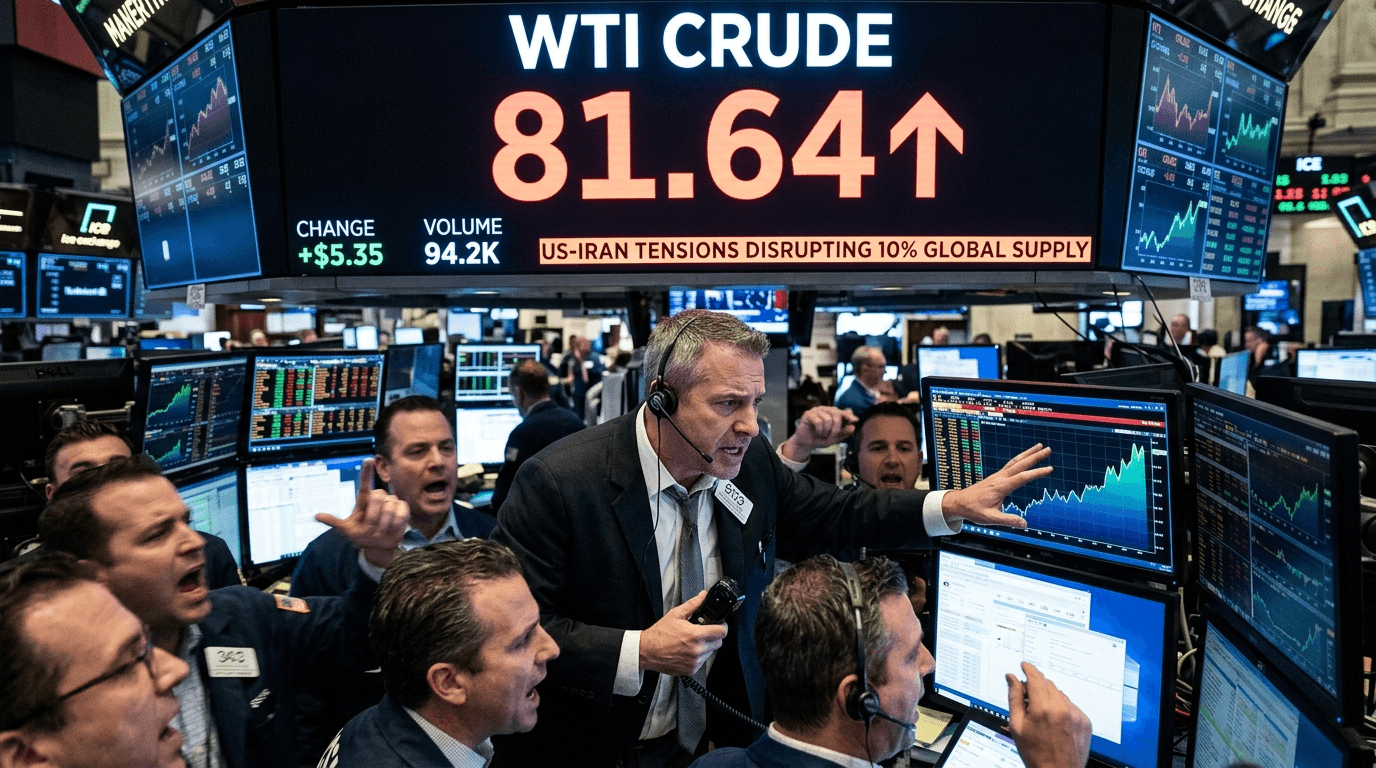
The global oil market is experiencing one of its most significant disruptions in recent years, with crude prices surging 9% to $81.64 per barrel—the highest level since summer 2024. This dramatic spike is not the result of market speculation or algorithmic trading; it stems from genuine geopolitical turmoil in the Middle East that is constraining global energy supplies and sending shockwaves through equity markets worldwide. For traders and investors, understanding the mechanics of this crisis and its cascading effects on inflation, monetary policy, and stock valuations is critical to navigating the volatile market landscape of 2026.
The Anatomy Of An Energy Crisis
The driving force behind the current oil surge is straightforward: escalating military tensions between the United States and Iran have created a genuine energy crisis. U.S. airstrikes on Iran have continued for two weeks, with Iranian forces retaliating by targeting critical oil infrastructure and vessel traffic through vital shipping lanes. Most significantly, Iran has closed the Strait of Hormuz, a chokepoint responsible for approximately 20% of the world's daily oil supply. This is not theoretical disruption—it is a tangible, immediate constraint on global energy access.
The damage to physical infrastructure has been severe. Analysts estimate that military actions have removed between 10 and 11 million barrels per day from the global market, representing roughly 10% of total daily oil supply. In a market accustomed to trading around 100 million barrels daily, this level of disruption cannot be easily offset by releasing strategic reserves or shifting to alternative sources. The closure of the Strait of Hormuz combined with damage to Iran's oil refineries has created an unprecedented supply shock that is driving both Brent crude to $85.85 per barrel and creating desperation among global refiners.
The Inflation Reckoning
The surge in crude prices is already translating into broader inflationary pressures throughout the global economy. Gasoline prices in the United States have jumped to $3.58 per gallon, representing a 60-cent increase in just one month. This rapid escalation in energy costs threatens to reignite inflation concerns that had been gradually easing through early 2026. For consumers, this means rising transportation costs, increased prices for goods that rely on delivery networks, and reduced purchasing power across discretionary spending categories.
For traders and portfolio managers, the inflation implications are equally significant. Oil price shocks have historically triggered shifts in Federal Reserve monetary policy. When energy prices spike unexpectedly, central banks face a dilemma: raise rates to combat inflation or maintain accommodative policies to prevent economic slowdown. The current market environment has already begun pricing in diminished expectations for near-term Fed rate cuts. This recalibration affects bond valuations, currency movements, and equity multiples across all sectors. The market is essentially repositioning for a "higher for longer" interest rate environment, which pressures growth stocks while potentially supporting dividend-paying equities and commodity-linked assets.
Equity Market Implications
The shock has already reverberated through stock markets. Major U.S. stock indexes dropped approximately 1% as oil surged past $90 per barrel, reflecting both the direct impact of energy cost inflation and the indirect effect of monetary policy recalibration. This correction highlights a critical dynamic in modern markets: geopolitical shocks that constrain energy supply create a policy trilemma for central banks, with no optimal solution that benefits all asset classes simultaneously.
The winners in this environment are energy companies with production exposure to high-margin barrels and companies with strong pricing power in inflation-resistant sectors. Conversely, equities with high leverage, long-duration cash flows, and limited pricing power face headwinds from both higher energy costs and higher discount rates. Technology stocks, in particular, are sensitive to rate volatility, and the repricing of rate expectations has already triggered selling in that space.
Navigating The Volatility
The key takeaway for investors and traders is clear: oil prices are unlikely to return quickly to pre-crisis levels unless geopolitical tensions resolve dramatically. This supply shock is different from previous disruptions because the underlying constraints are real, physical, and geopolitically rooted rather than speculative.
Market participants should prepare for sustained volatility by reassessing inflation expectations in their portfolio models and carefully evaluating exposure to both energy-sensitive and interest-rate-sensitive equities. Consider hedging strategies that protect against further energy price escalation while maintaining exposure to sectors that benefit from higher energy prices or inflation-resistant business models. Monitor central bank communications closely for signals about how policymakers are interpreting these inflationary pressures—their response will ultimately determine whether this becomes a temporary spike or a structural shift in the 2026 market landscape.
For active traders, this environment offers both risk and opportunity. The combination of supply-side inflation, geopolitical uncertainty, and policy recalibration creates elevated volatility that can be profitably traded through options strategies, sector rotation, and tactical currency positioning. The critical skill is distinguishing between panic-driven noise and genuine regime shifts—and this particular disruption, rooted in 10% of global oil supply removal, deserves serious strategic consideration.