
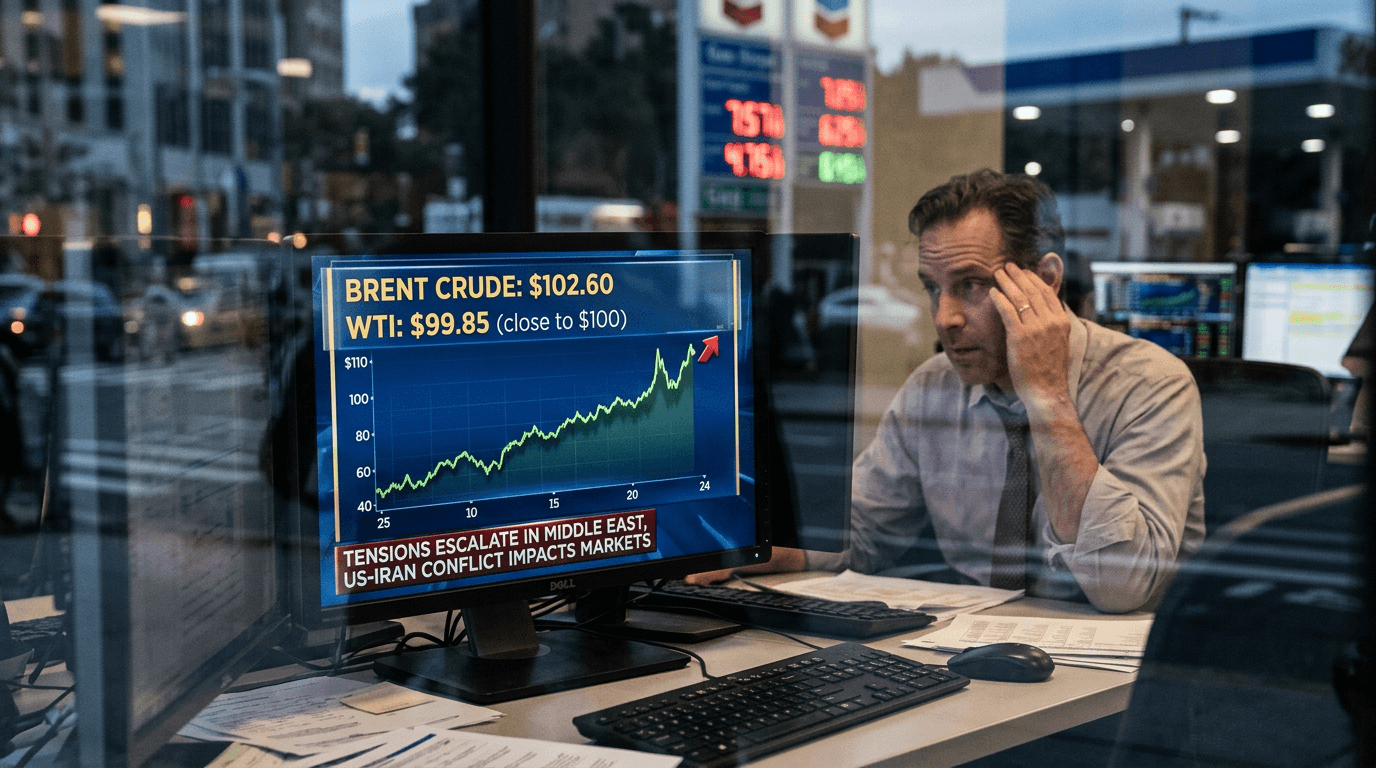
From search results: - Oil prices have surged more than 40% since the start of the Iran conflict [3] - Oil prices surged 5% on Monday as tensions between Iran and US escalated [1] - US seized Iranian cargo ships, escalating tensions [2] - Brent crude reached around $102.60 a barrel [5] - US benchmark West Texas Intermediate closed at $99.64 a barrel [3] - Strait of Hormuz has been disrupted [1][6] - This is affecting global energy markets and gas prices [3] - Peace talks remain in limbo [5] - Geopolitical uncertainty continues to drive the market [3]
The user wants: - 800 word blog article - PLAIN TEXT format only (no markdown, no HTML) - Start DIRECTLY with first paragraph (no preamble) - ALL CAPS for section headings on their own line - 3-5 main sections with clear takeaways - At the END provide: TITLE, EXCERPT, NEWSIMPACTSCORE
Important: The article content comes FIRST, then the metadata at the END.
Let me structure this: 1. Opening paragraph about the oil surge 2. Section on what's driving the surge 3. Section on market impacts 4. Section on implications for consumers/traders 5. Section on outlook/takeaways
I need to write in PLAIN TEXT with: - Paragraphs separated by blank lines - Section headings in ALL CAPS on their own line - NO markdown, NO HTML - Professional but accessible tone - Based on the search results provided - Citations using [N] format
Let me write this now.
Crude oil prices have reached their highest levels since summer 2024, driven by escalating tensions between the United States and Iran in the Middle East. With West Texas Intermediate crude climbing to $99.64 a barrel and Brent crude approaching $102.60, the recent 40% surge reflects growing geopolitical uncertainty that continues to rattle global energy markets and reshape expectations for inflation, interest rates, and consumer costs.[3][5]
The Catalyst: Middle East Escalation And Maritime Blockades
The current oil spike stems directly from deteriorating US-Iran relations, marked by military seizures and strategic blockades that threaten one of the world's most critical energy supply routes. In late April, US marines seized an Iranian cargo ship in the Gulf of Oman, escalating tensions that have already disrupted shipping through the Strait of Hormuz.[2] Iran has characterized the seizure as an act of piracy and a violation of a fragile ceasefire agreement implemented on April 7th.[2] The blockade of Iranian ports by Washington, combined with Iran's closure of the Strait of Hormuz, has created a perfect storm for energy markets—a chokepoint that typically handles a significant portion of global oil supplies now faces severe disruption.[1][4]
Despite diplomatic efforts, peace talks remain in limbo. Iran has declined to participate in proposed negotiations in Islamabad, citing the naval blockade and what it perceives as unrealistic US demands as major obstacles.[2] UK Foreign Secretary Yvette Cooper has warned that the blockade is affecting global energy, economic, and national security, emphasizing the urgent need to reopen the waterway.[1] With a ceasefire set to expire in early May and both sides showing little flexibility, analysts suggest that investors have largely priced in worst-case scenarios, though any shift in the standoff could trigger fresh volatility.[1]
Market Impact: Oil Volatility Ripples Through Equities And Inflation Expectations
The oil surge has sent shockwaves through broader financial markets, disrupting what was otherwise a record-breaking rally in US equities. The S&P 500, which had climbed more than 9% in April on strong corporate earnings and chip sector gains, experienced a halt in momentum as geopolitical concerns took center stage.[5] Futures for the S&P 500 fell 0.4% amid ongoing uncertainty, reflecting investor anxiety about the dual impact of higher energy costs and potential inflation pressures.[5]
Perhaps more significantly, elevated oil prices are complicating the Federal Reserve's inflation narrative. Just weeks earlier, policymakers had signaled openness to future rate cuts based on moderating inflation trends. Rising energy costs, however, threaten to push inflation back toward unwanted levels, potentially extending the timeline for monetary policy relief. This dynamic has reduced expectations for aggressive rate cuts, putting pressure on growth-sensitive sectors and bonds.[3]
Asian equity markets have shown more resilience, with South Korean markets recovering earlier losses despite the geopolitical backdrop, suggesting that investors are differentiating between near-term energy shocks and longer-term fundamental valuations.[1]
Consumer Implications: Pump Prices On The Rise
For consumers, the implications are increasingly visible at the gas pump. Gasoline prices have already begun climbing in response to higher crude costs, and analysts warn that the worst may be ahead.[3] Because retail fuel prices typically lag behind crude movements, the earlier spike in oil is expected to pass through the system over the coming weeks, putting additional upward pressure on pump prices for American drivers.[3] Seasonal factors are amplifying this pressure—the transition to more expensive summer gasoline blends is underway, increasing refining costs and potentially keeping fuel prices elevated even if crude prices stabilize.[3]
Scenario Analysis: What Happens Next
The path forward for oil prices depends heavily on how the US-Iran standoff evolves. If tensions ease and diplomatic progress is made, prices could decline from current levels, though analysts expect them to remain well above pre-conflict levels, likely in the $80-$95 range for WTI.[3] However, if the conflict intensifies or the Strait of Hormuz remains blocked for an extended period, crude could push significantly higher, potentially exceeding $110 a barrel and causing widespread economic disruption.
Geopolitical uncertainty will continue to drive the market in the near term. The US has extended deadlines for Iran to reopen the Strait of Hormuz while weighing additional military action, creating an environment where unexpected developments could rapidly shift market dynamics.[3]
Key Takeaways For Traders And Investors
Monitor ceasefire timelines and diplomatic developments closely, as any shift could trigger sharp market moves. Position for potential volatility in both energy and equity markets as long as the standoff persists. Consider the inflation implications—higher oil prices may extend the Fed's pause in rate cuts, supporting the US dollar and pressuring growth stocks. Watch the Strait of Hormuz for any developments; this single chokepoint controls a disproportionate share of global energy flows and represents a critical risk factor for markets worldwide.
The current environment underscores why energy prices matter to traders beyond the energy sector—they influence inflation expectations, monetary policy decisions, and equity valuations across the board. Understanding the geopolitical drivers behind crude's surge is essential for navigating markets successfully in the weeks ahead.