
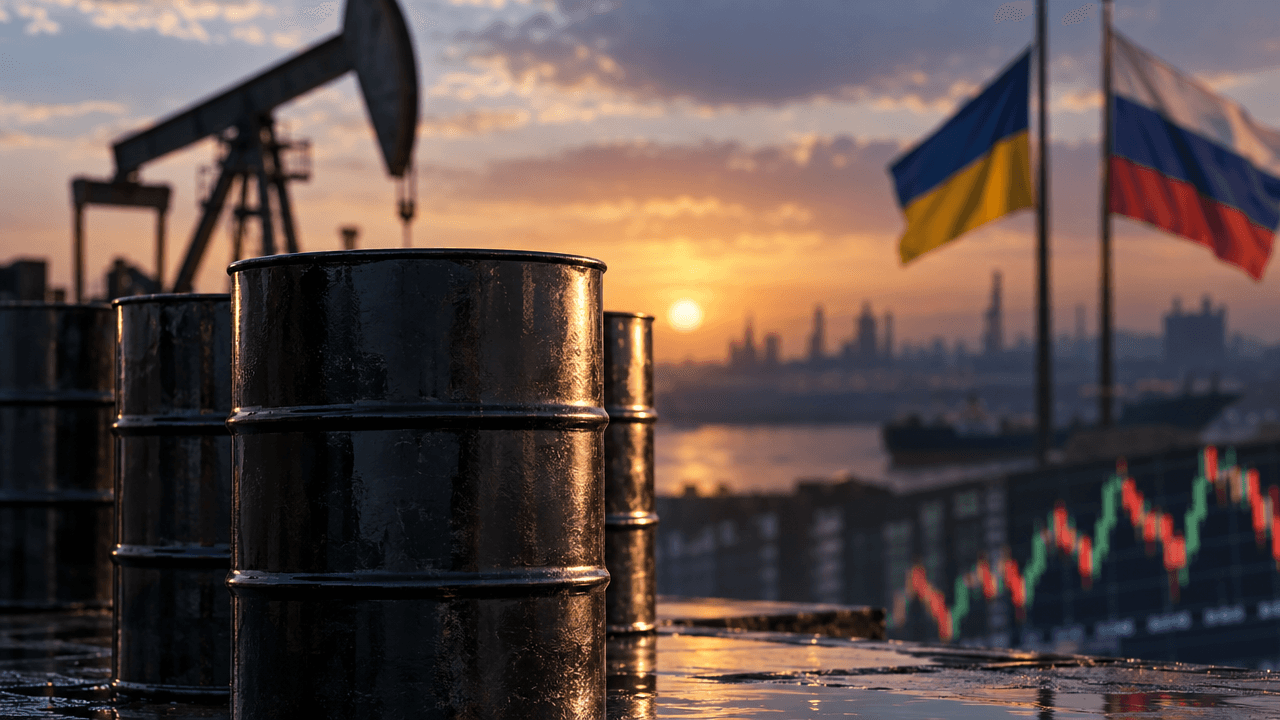
Oil’s retreat toward $103 a barrel has offered financial markets a temporary reason to breathe. After surging on fears that the United States could launch new attacks against Iran, Brent crude eased when President Donald Trump said the U.S. would not attack Iran before the November 3 midterm elections. The announcement reduced the immediate probability of a wider conflict and helped relieve pressure on equities, although energy prices remain high enough to keep inflation concerns firmly in focus. [1]
THE MARKET’S FIRST REACTION
Brent crude futures fell below $103 a barrel after rising more than 4% in the previous session, while West Texas Intermediate crude traded near $90. [3] The moves show how quickly oil markets are repricing geopolitical risk. When traders believe a conflict could disrupt production, exports, shipping routes, or regional infrastructure, they typically add a risk premium to crude prices.
That premium had expanded after reports suggested Washington was considering renewed strikes against Tehran. Brent climbed as high as approximately $106 before retreating to close around $104.28. [8] Trump’s statement that the United States was engaged in productive discussions with Iran changed the near-term calculation, even though it did not resolve the broader conflict.
For traders, the key lesson is that oil can react to expectations before any physical supply interruption occurs. A diplomatic statement may lower prices just as quickly as a military development can raise them.
Why Lower Oil Supports Risk Assets
Oil is closely connected to the performance of stocks, currencies, bonds, and commodities. When crude prices rise sharply, investors often anticipate higher transportation, manufacturing, and household energy costs. Those pressures can reduce corporate profit margins and weaken consumer spending.
Lower oil prices can therefore support risk assets in several ways. First, cheaper energy reduces the potential inflation shock facing businesses and consumers. Second, it may reduce pressure on central banks to keep interest rates elevated. Third, it can improve sentiment by lowering the probability of a severe economic slowdown caused by an energy-price spike.
Equities had been pressured when the potential for renewed U.S. strikes pushed crude higher and revived inflation fears. Government bond yields also moved higher as markets considered the possibility that sustained energy costs could delay future monetary easing. [15] The reversal in oil helped ease those concerns, giving stock markets a more favorable backdrop.
The support is not uniform, however. Energy producers may see their share prices weaken when crude falls, while transportation, airlines, logistics firms, and energy-intensive manufacturers can benefit from lower fuel costs. A trader should assess both the broad market effect and the sector-specific consequences.
Inflation Risks Have Not Disappeared
A retreat from $105 to roughly $103 is meaningful for short-term sentiment, but it does not return oil to a low-cost environment. Brent remains elevated, and the market is still dealing with an active conflict, uncertain diplomacy, and potential risks to shipping through the energy-rich Gulf region.
That distinction matters for inflation analysis. A temporary decline in oil can reduce the immediate threat of an additional price shock, but it does not necessarily reverse existing increases in fuel, freight, food, and production costs. If crude remains near current levels for an extended period, the effect can continue filtering through the economy.
Oil also affects inflation expectations. Even consumers who do not closely follow futures prices notice changes at the pump. If households begin expecting energy costs to rise further, those expectations can influence wage negotiations, spending decisions, and business pricing. Central banks may then face a more difficult policy balance: supporting growth while preventing an energy-driven inflation resurgence.
For financial markets, the important question is not simply whether oil falls on one day. It is whether prices stabilize, continue declining, or resume their climb as geopolitical developments change.
What Traders Should Watch Next
The first signal is the durability of diplomatic progress. Trump’s pledge rules out a U.S. attack before the midterm elections, but it does not guarantee a lasting agreement with Iran. Any breakdown in talks, new attacks on regional targets, or threats to shipping could quickly restore the geopolitical premium in crude. [5]
The second signal is evidence of actual supply disruption. Traders should monitor export flows, tanker activity, production facilities, and key maritime routes. Headlines can move oil rapidly, but sustained price increases generally require concern about real or impending reductions in supply.
The third signal is the response of bond markets. If oil declines while government bond yields stabilize, investors may conclude that inflation risks are easing. If yields continue rising despite lower crude, markets may be focused on broader fiscal, monetary, or growth concerns.
Finally, traders should watch market breadth. A healthier risk-on move is more credible when cyclical stocks, small-cap shares, credit-sensitive assets, and major equity indexes participate together. If only a few large technology companies rise while defensive assets remain favored, the improvement in sentiment may be narrow and fragile.
Practical Takeaways For Simfi Traders
Treat geopolitical headlines as volatility catalysts rather than complete trading systems. The initial move in oil may be fast, but the follow-through depends on confirmation from supply data, bond yields, currencies, and equities.
Use scenario planning. A diplomatic path could push Brent lower and support equities, while renewed escalation could send crude higher and pressure risk assets. Defining both scenarios before entering a trade can reduce emotional decision-making.
Pay attention to correlation changes. Oil, stocks, and bonds may move together during an inflation shock, but those relationships can weaken as the market shifts from geopolitical risk to economic data or central-bank expectations.
Most importantly, manage exposure around headline risk. A position that looks attractive during a quiet session can become vulnerable within minutes when officials comment on military action or negotiations.
Conclusion
Oil’s retreat toward $103 has relieved some immediate pressure on global markets, helping risk assets recover from fears of a larger Iran-related escalation. Yet the move is better understood as a reduction in near-term risk than a return to normal conditions. Crude remains high, inflation remains sensitive to energy prices, and diplomacy can change rapidly.
For traders, the most useful approach is to connect the headlines to measurable market signals: crude futures, bond yields, equity breadth, shipping conditions, and inflation expectations. In an environment where geopolitical news can reprice multiple asset classes at once, disciplined scenario analysis is more valuable than chasing the first market reaction.