
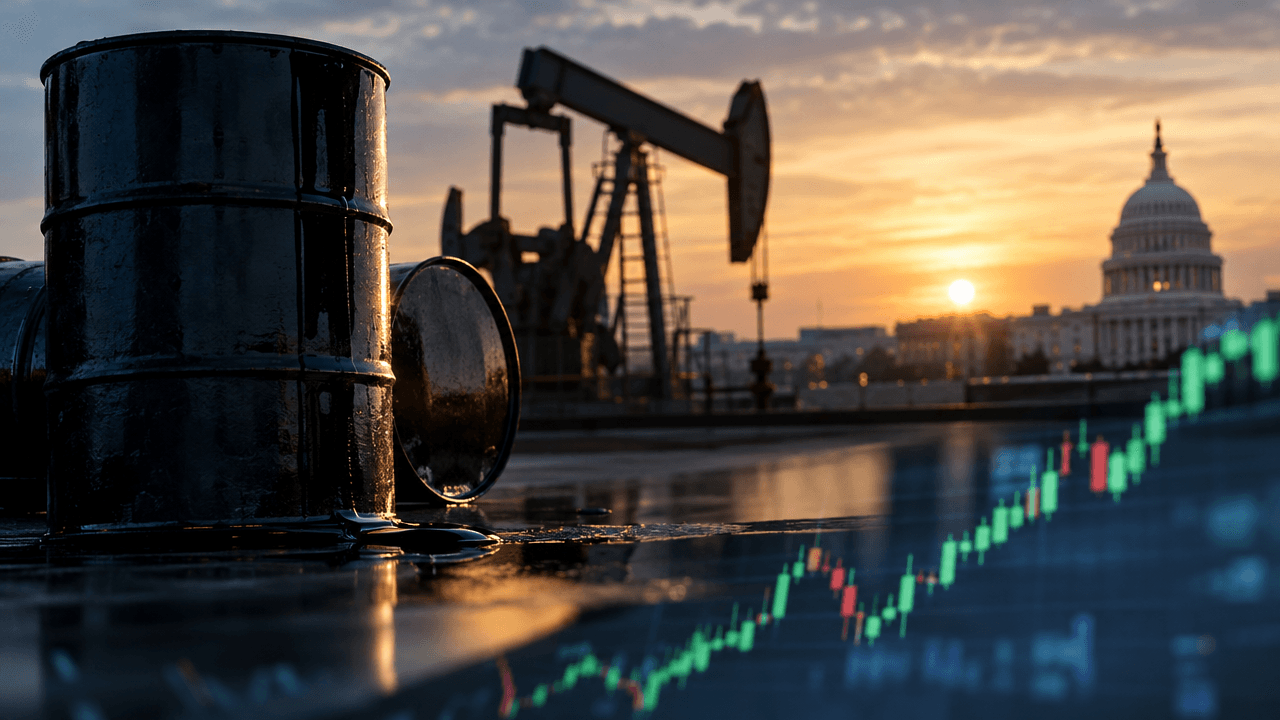
Oil’s geopolitical risk premium eased on Friday as traders responded to signs that the United States would avoid attacking Iran before the November midterm elections. President Donald Trump said Washington was engaged in productive discussions with Tehran, reducing fears of an immediate escalation that could further disrupt Middle Eastern energy flows.
The initial market reaction was clear but measured. West Texas Intermediate crude fell about 0.9% to $90.68 a barrel, while S&P 500 futures gained 0.4% and Nasdaq futures rose 0.8%. [2] The move illustrates how quickly markets can reprice when the probability of a severe supply shock changes, even though the underlying conflict and transportation risks remain unresolved.
What The Risk Premium Means
The price of crude oil reflects more than current production and consumption. It also includes a risk premium: an additional amount traders are willing to pay because future supply may be threatened.
When tensions rise around major energy-producing regions or shipping routes, buyers often bid up futures contracts. They are not necessarily forecasting an immediate shortage. Instead, they are compensating for the possibility that oil production, refinery operations, pipelines, or maritime transport could be interrupted.
That premium expanded sharply as reports suggested that military options against Iran were being considered before the November 3 elections. WTI rose strongly during the previous session, with the November contract reaching roughly $91.49 after a 3.6% gain. [7] Friday’s decline represented a partial reversal of that move rather than a complete return to calm conditions.
Trump’s statement changed the near-term probability distribution. A military confrontation before the elections appeared less likely, so traders reduced the amount they were willing to pay for immediate protection against a larger supply disruption.
Why Oil Retreated
Oil’s retreat was driven primarily by a change in perceived geopolitical risk, not by a sudden collapse in global fuel demand. Brent crude, the international benchmark, also declined, falling around 0.8% to approximately $103.45 a barrel in early trading. [3]
The distinction matters. If oil falls because demand is weakening, energy shares, inflation expectations, and economically sensitive currencies may respond differently than they would after a geopolitical relief rally. In Friday’s session, the market was largely interpreting lower crude prices as a reduction in escalation risk.
However, the market still faces significant uncertainty. Reports indicate that Middle Eastern attacks have continued to support elevated oil prices and raise concerns about prolonged supply disruptions. Brent remained near $104 a barrel, while WTI traded around $92 in broader market coverage. [1] The conflicting signals show why traders should avoid treating a single diplomatic comment as a permanent resolution.
For consumers and businesses, lower oil prices can eventually reduce fuel and transportation costs. For central banks, a sustained decline in energy prices could ease headline inflation. But those effects typically take time to pass through the economy and depend on whether crude prices remain lower.
Why Stock Futures Rebounded
The rise in equity futures reflected two related developments. First, lower oil prices reduced concerns about a renewed inflationary shock. Higher energy costs can raise transportation, manufacturing, and consumer prices, potentially forcing central banks to keep interest rates elevated for longer.
Second, reduced military escalation risk improved investor sentiment. The S&P 500 futures advance of 0.4% and the Nasdaq futures gain of 0.8% suggest that technology and growth-oriented stocks were particularly sensitive to the shift. [2] Companies valued on expectations of future earnings often benefit when investors believe inflation and interest-rate pressures may be less severe.
The rebound should nevertheless be viewed as a relief move, not confirmation that markets have entered a stable uptrend. Equity futures can rise while the market remains vulnerable to headlines involving shipping routes, military operations, diplomatic negotiations, or energy infrastructure.
Practical Takeaways For Traders
First, separate headline direction from trend confirmation. A one-day fall in WTI does not prove that the broader oil trend has turned lower. Traders should monitor whether crude remains below recent highs and whether follow-through selling appears in subsequent sessions.
Second, watch the relationship between oil and bond yields. If lower crude prices are accompanied by falling inflation expectations and softer yields, growth stocks may receive additional support. If yields remain elevated, the benefit to equities could be limited.
Third, consider volatility rather than only direction. Geopolitical markets can reverse rapidly. Position sizing, stop-loss discipline, and avoiding excessive leverage are especially important when prices are responding to political statements rather than conventional economic data.
Finally, track confirmation from physical markets. Shipping activity, regional exports, refinery utilization, and official stockpile decisions can reveal whether supply conditions are genuinely improving. A diplomatic pause may reduce the risk premium, but actual energy flows determine whether the reduction lasts.
The Bigger Market Lesson
Friday’s price action demonstrates that geopolitical risk is constantly repriced. Oil can decline and stock futures can rebound without the underlying conflict being resolved. Investors are responding to the timing and probability of future events, not simply to conditions that already exist.
For SimFi traders, the key lesson is to build scenarios instead of relying on a single forecast. A diplomatic breakthrough could push crude lower and support equities. A renewed attack or disruption to shipping could produce the opposite reaction. The strongest approach is to identify the major catalysts, define invalidation levels, and manage risk before volatility expands.
The immediate risk premium has eased, but it has not disappeared. Markets are granting diplomacy more time, while keeping a close watch on whether that time produces a durable improvement in energy security.