
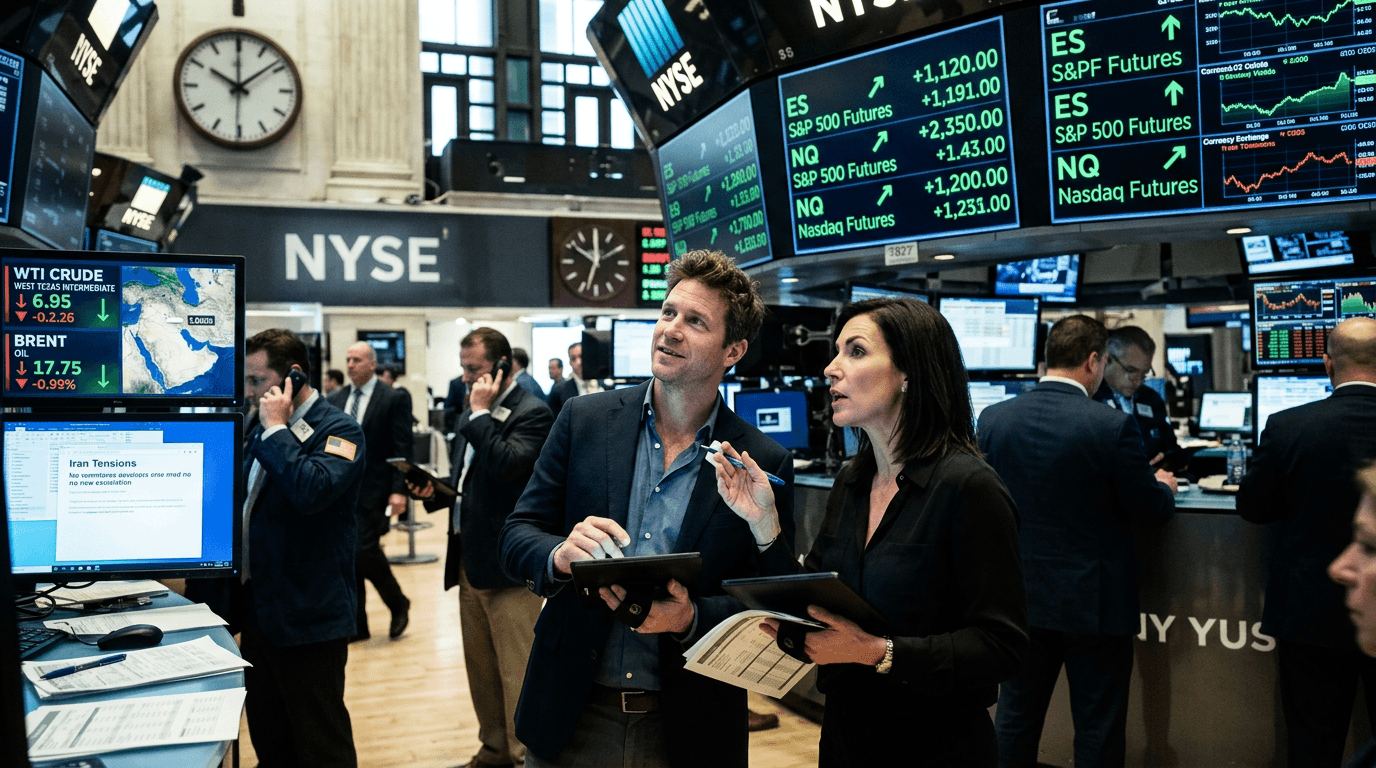
Wall Street futures are catching a bid as oil prices retreat and headlines around Iran and the broader Middle East turn slightly less ominous, giving investors a brief window to reassess risk across equities, forex, commodities, and Treasuries[2][3][8]. After days where every new development seemed to add another layer of uncertainty, the easing in geopolitical tension—however tentative—has flipped sentiment from outright fear toward cautious optimism[2][8].
Market Snapshot: Futures, Oil, And Tensions
U.S. stock index futures are pointing higher, echoing recent sessions in which the S&P 500, Nasdaq, and Dow rebounded as investors rotated back into growth and technology names after a bout of risk-off selling[2][3][10]. Chip stocks, in particular, have remained at the center of this recovery, with the Philadelphia Semiconductor Index recently posting its best quarter on record and fueling gains in the broader tech complex[2][8][10].
Oil prices, which had jumped on renewed tensions involving Iran and regional conflict risks, are now retreating as signals emerge that direct military operations are being paused and potential peace talks are on the table[2][8]. Brent futures have slipped below the mid-$70s per barrel and WTI below $70, as flows through the Strait of Hormuz recover faster than feared and traders pivot from shortage worries to talk of a possible glut[8]. This shift matters: less pressure from energy costs can ease concerns about inflation, Fed policy, and margins for energy-intensive sectors[7][9].
At the same time, headlines suggesting that Iran and Israel have halted attacks “for now” have taken some of the immediate tail risk out of the market, even as leaders stress that they will respond forcefully to any renewed aggression[2]. For futures traders, that translates into a classic relief rally: the worst-case scenario is pushed back, and pricing adjusts to a less extreme, though still uncertain, geopolitical baseline[2][3].
Why Oil And Geopolitics Move Wall Street
Oil sits at the intersection of geopolitics and macroeconomics. When tensions escalate in key producing or transit regions, traders quickly price in supply disruption risk, driving crude higher and rippling into inflation expectations, corporate cost projections, and central bank policy assumptions[7][9]. Elevated oil can compress profit margins, weigh on consumer spending, and force policymakers to consider tighter financial conditions for longer.
When those tensions ease even slightly and oil retreats, several things happen at once. First, the perceived inflation impulse from energy diminishes, making it easier for markets to envision a more benign path for interest rates[1][9]. Second, sectors that are sensitive to fuel and transport costs—airlines, logistics, manufacturing, consumer discretionary—benefit from lower input price risk. Third, risk assets in general often see improved sentiment as the probability of “stagflationary shock” decreases.
The current move in futures reflects this dynamic. Investors are not declaring the geopolitical story over; rather, they are acknowledging that the immediate risk premium was potentially overshooting reality and is now being trimmed[2][8]. For active traders, this is a reminder that the path of markets is driven not just by the level of risk, but by how that risk changes relative to expectations. A shift from “worsening fast” to “getting slightly less bad” can be enough to move futures meaningfully higher.
Ripple Effects Across Fx, Commodities, And Bonds
The rebound in equity futures is not happening in isolation. The dollar has been on a strong run, pushing currencies like the yen to multi-decade lows and prompting speculation about possible intervention from Japan[8]. A calmer oil backdrop can reinforce this strength: lower energy prices often support import-heavy economies and reduce the need for commodity-sensitive central banks to tighten aggressively, while a still-resilient U.S. economy and elevated yields keep demand for the greenback robust[7][8].
In fixed income, easing oil and cooling geopolitical stress tend to lower the perceived probability of a major inflation shock, affecting the balance between risk-off demand for Treasuries and risk-on shifts toward equities and credit[1][9]. If inflation expectations edge down, longer-dated yields can stabilize or even slip, while front-end yields remain anchored by the market’s evolving view of the Federal Reserve’s next moves[1][7].
Commodities beyond oil can also feel the impact. Industrial metals and energy-linked assets may see some unwinding of war premiums, while gold and other traditional safe havens often give back part of their gains as investors rotate out of pure protection and back into growth exposures[7][9]. For traders in forex, commodities, and rates, the lesson is that Middle East headlines rarely stay confined to one market—they cascade through global pricing, correlations, and volatility regimes.
Tech And Chips Back In Focus
One notable feature of the latest futures rebound is the renewed strength in technology and semiconductor names. In recent sessions, chip stocks have led gains, driving record quarterly performance for the sector and helping lift the Nasdaq and S&P 500 to fresh highs[2][8][10]. Big names across the chip universe have been among the top percentage movers, as investors rotate back into the artificial intelligence and data-center themes that have defined much of this year’s equity narrative[2][8].
This matters because it shows how quickly markets can pivot from macro fear to micro opportunity. When oil is spiking and conflict risk dominates the tape, traders focus on hedging, capital preservation, and downside scenarios. Once those pressures ease—even modestly—the conversation shifts to earnings, sector leadership, and valuation. Chip stocks, with their combination of secular growth stories and cyclical sensitivity, become a natural vehicle for expressing risk-on sentiment.
For traders, both in live markets and simulated environments, this is a practical example of how sector leadership can change the tone of an entire session. Monitoring indices like the Philadelphia Semiconductor Index, alongside major benchmarks such as the S&P 500 and Nasdaq, helps confirm whether a rebound in futures is broad-based or driven by a narrow group of outperformers[2][8][10].
Practical Takeaways For Simulated And Real Traders
The current backdrop offers several actionable lessons:
First, headline risk is dynamic, not static. Markets constantly reprice geopolitical events as new information arrives. Initial reactions are often extreme; subsequent reassessments, like those following signs of de-escalation between the U.S., Iran, and Israel, can be just as important for returns[2][3][8].
Second, always trace the chain from narrative to markets. In this case: Middle East tensions → oil supply fears → crude price spike → inflation and Fed worries → risk-off in equities and FX; then easing tensions → oil retreat → lower perceived inflation risk → improved sentiment in futures, tech, and cyclicals[1][7][9][10]. Thinking in these causal sequences helps traders anticipate where the next move may show up, rather than simply reacting to price screens.
Third, cross-asset awareness is critical. A trader focused solely on equities might miss early signals from oil, currency pairs like USD/JPY, or Treasury yields that the risk environment is shifting[7][8][9]. Simulated finance platforms are particularly useful here, allowing participants to practice monitoring multiple asset classes, testing correlation assumptions, and stress-testing portfolios against geopolitical and macro scenarios without real capital at risk.
Finally, distinguish between temporary relief and structural change. A pause in military operations or the prospect of peace talks can drive meaningful short-term moves, as today’s futures rebound demonstrates[2][8]. Yet unless these developments translate into durable agreements and sustained stability, the risk premium can return quickly. Effective traders treat such rallies as opportunities to reassess positions, refine hedges, and plan for both positive and adverse contingencies.