
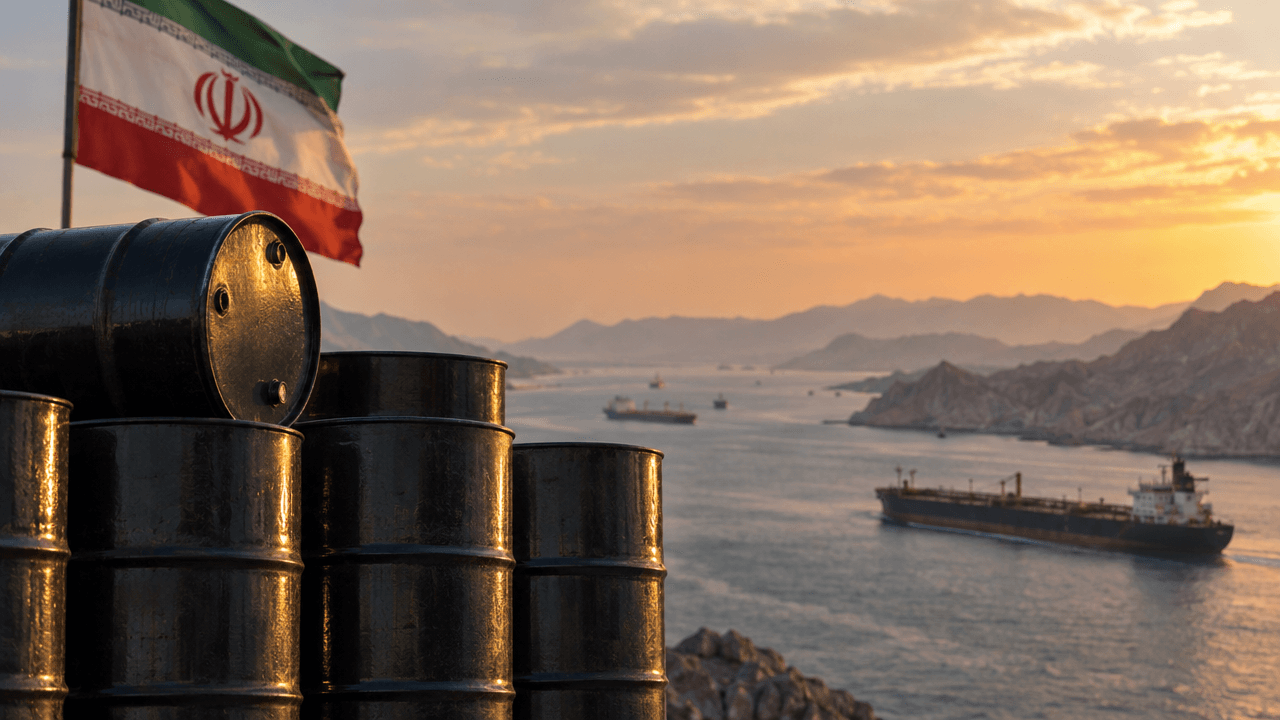
Oil prices moved higher as expectations for a near-term diplomatic breakthrough between the United States and Iran weakened. Brent crude was reported about 0.6% higher at approximately $93.34 a barrel after President Donald Trump said the United States does not need a deal with Iran. The comments revived concerns that geopolitical tensions could continue to threaten regional supply and shipping routes. [1]
For traders, the move highlights how quickly crude markets can reprice political risk. Oil is not responding only to barrels currently being produced. It is also pricing the possibility of future disruptions, tighter sanctions, delays in negotiations, and uncertainty around strategic waterways such as the Strait of Hormuz.
Why The Iran Signal Matters
Diplomatic progress can reduce the risk premium embedded in oil prices. If markets believe an agreement could ease sanctions, improve regional stability, or support the return of additional Iranian crude to global markets, prices may come under pressure from the prospect of greater supply.
The opposite is also true. When negotiations appear less likely to succeed, traders may assume that sanctions will remain in place and that military or shipping risks could persist. That does not automatically mean a supply disruption will occur, but it increases the value of insurance against one.
Trump’s statement that the United States does not need a deal with Iran therefore carried importance beyond its immediate political message. Reports said Brent initially jumped from around $92 to above $94 before paring some gains, demonstrating the market’s sensitivity to changes in diplomatic expectations. [1]
The reaction also reflects the uncertainty of the broader situation. Recent market coverage described oil as volatile amid shifting expectations for peace efforts, with Brent and West Texas Intermediate moving sharply as investors reassessed the likelihood of prolonged conflict. [6]
The Strait Of Hormuz And Supply Risk
The Strait of Hormuz is one of the world’s most important energy transit routes. A large share of global oil and liquefied natural gas shipments passes through the narrow waterway, making any threat to navigation potentially significant for prices, freight costs, and delivery schedules.
Even without a complete closure, disruptions can affect the market. Tankers may face higher insurance premiums, longer routes, security concerns, or delays at ports. Buyers may also compete more aggressively for available cargoes, pushing prices higher in the short term.
However, traders must distinguish between risk and realized loss of supply. A political statement can create a price spike, but sustained gains generally require evidence that production, exports, or transportation have been materially affected. If shipping continues normally and alternative supplies remain available, an initial risk premium can fade.
That distinction is especially important after a headline-driven move. The first reaction may reflect positioning and algorithmic trading, while the next phase depends on physical market data, government policy, military developments, and evidence from shipping markets.
What Traders Should Watch Next
The most important signal will be whether the diplomatic rhetoric is followed by concrete policy action. Traders should monitor sanctions announcements, changes in enforcement, military activity, and any reports involving tanker traffic or the Strait of Hormuz.
Price structure can provide additional information. A sharp rise in nearby futures contracts compared with later-dated contracts may indicate that traders are focused on an immediate supply concern. If later contracts rise more evenly, the market may be pricing a broader and more persistent risk premium.
Inventory data and production guidance also matter. Rising inventories, stronger output from major producers, or weaker demand can limit the effect of geopolitical headlines. Conversely, declining stockpiles and constrained spare capacity could make the market more sensitive to every new development.
The dollar and interest-rate expectations should not be overlooked. Because crude is priced in U.S. dollars, changes in the currency can influence demand and pricing. A stronger dollar may weigh on oil for international buyers, while expectations of easier monetary policy can support commodities through financial flows and improved growth sentiment.
Practical Lessons For Simfi Traders
For SimFi traders, this event is a useful example of why risk management matters more than simply predicting direction. A trader may correctly anticipate that weaker Iran deal prospects could lift oil, yet still lose money if the position is too large, the entry comes after the initial spike, or the market quickly reverses.
First, identify the catalyst and define its likely time horizon. A diplomatic headline may influence prices for minutes or hours, while a confirmed supply disruption could affect the market for weeks or months.
Second, avoid treating the first price reaction as confirmation. Wait for follow-through, volume, and related-market signals where appropriate. A move that fades quickly may indicate that traders view the event as political noise rather than a lasting change in supply expectations.
Third, use position sizing and predetermined risk limits. Geopolitical markets can experience sudden gaps, wide spreads, and rapid reversals. Protecting capital allows traders to participate in future opportunities rather than forcing a recovery after one oversized position.
Finally, consider multiple scenarios. Oil could rise if negotiations collapse, remain range-bound if tensions persist without physical disruption, or fall if talks resume and supply concerns ease. Building a plan for each outcome is more reliable than relying on a single forecast.
Conclusion
Oil’s rise after Iran deal prospects weakened shows how geopolitical expectations can influence crude prices before any physical shortage appears. Brent’s reported 0.6% gain to around $93.34 reflected a renewed risk premium, while the earlier jump above $94 illustrated how quickly sentiment can change. [1]
The next market move will depend on whether political uncertainty becomes a genuine disruption to production or transportation. Until that becomes clearer, traders should focus on confirmation, market structure, inventory trends, and disciplined exposure. For SimFi participants, the episode offers a valuable reminder: reacting intelligently to uncertainty is often more important than trying to predict every headline.