
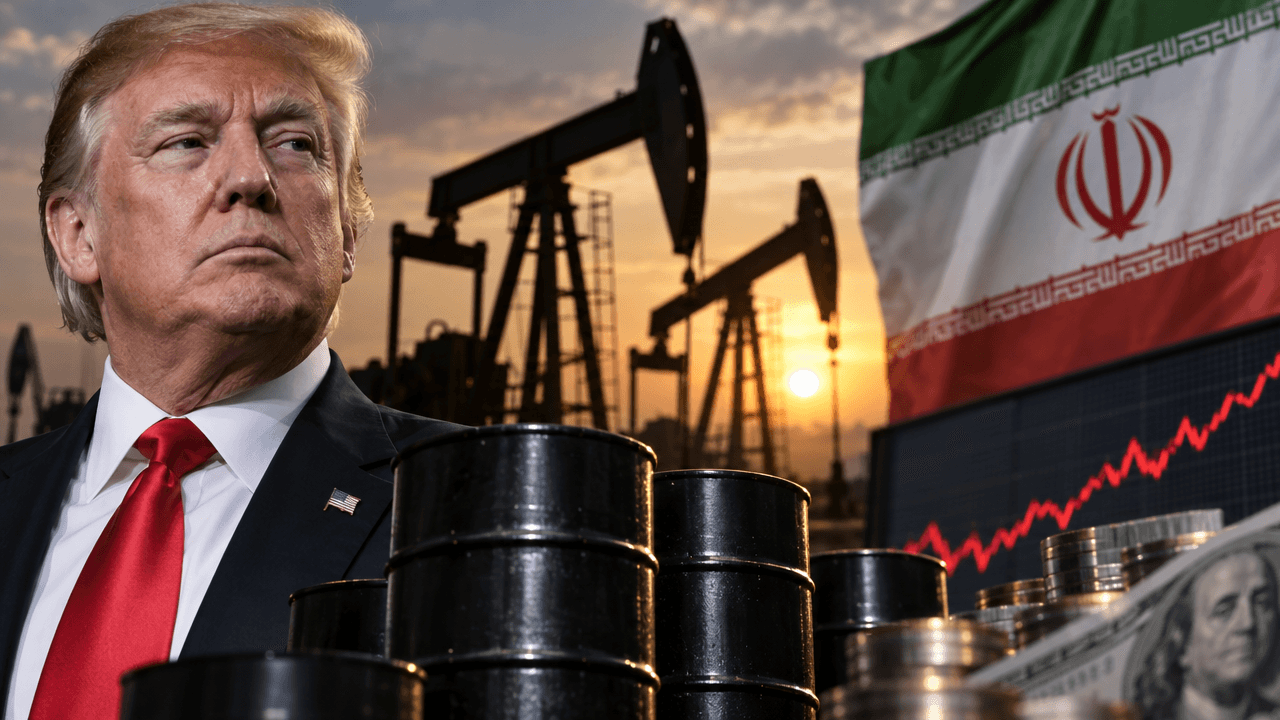
Oil’s latest rise shows how quickly geopolitics can return to the center of financial markets. Crude prices moved higher after President Donald Trump said the United States does not need a deal with Iran, weakening hopes for a near-term diplomatic resolution. Brent crude settled about 3.3% higher near $95.82 a barrel, while West Texas Intermediate rose roughly 2.55% to $88.74. [8]
The move matters beyond the energy market. More expensive oil can lift transportation, manufacturing, utility, and consumer costs, reinforcing inflation concerns just as investors reassess the Federal Reserve’s interest-rate path. The result was a simultaneous rise in Treasury yields and the U.S. dollar, a combination that can pressure stocks, bonds, and other risk-sensitive assets.
Geopolitical Risk Returns To The Oil Market
Oil prices had been reacting to changing expectations for an end to the U.S.-Iran conflict. Earlier optimism that negotiations could reduce disruption in the Middle East had helped limit crude prices. Trump’s statement reversed part of that optimism by suggesting that Washington was no longer focused on reaching an agreement.
Trump wrote that the United States did not need a deal with Iran and claimed that Washington controlled Iranian funds and the Strait of Hormuz. The comments increased uncertainty around the conflict and raised questions about whether tensions could persist without a clear diplomatic path. [1]
For oil traders, the Strait of Hormuz is especially important. The waterway is a critical route for global energy shipments, so any threat to tanker traffic, regional infrastructure, or maritime security can create a risk premium in crude futures. Even when physical supplies remain available, traders may bid prices higher to account for the possibility of future disruption.
This is why oil can rise before a supply shortage actually appears. Markets price expectations, not just current inventories. A headline that reduces confidence in diplomacy can therefore move crude prices immediately.
Why Higher Oil Reinforces Inflation Fears
Energy is both a direct and indirect inflation driver. Consumers feel the impact through gasoline, heating, and electricity costs. Businesses face higher expenses for shipping, air travel, packaging, chemicals, and industrial production. Many of those costs eventually reach consumers through higher prices.
The effect is not always immediate, but persistent increases in crude prices can influence inflation expectations. If households and companies begin to believe that energy prices will remain elevated, they may adjust wages, contracts, and pricing decisions accordingly.
That creates a difficult environment for central banks. Oil-related inflation can be especially challenging because higher interest rates do not directly produce more crude supply or resolve geopolitical disputes. However, policymakers may still need to keep rates higher for longer if energy costs begin spreading through the broader economy.
Recent market trading reflected that concern. The 10-year Treasury yield climbed to 5.03% from 4.98% after the oil move, while shorter- and intermediate-maturity yields also rose as traders increased the premium they assigned to future Federal Reserve tightening. [2]
Bonds And The Dollar Signal A Hawkish Shift
The rise in Treasury yields suggests investors were not treating the oil rally as an isolated commodity event. Instead, they were considering its potential implications for monetary policy.
Higher yields can indicate expectations for stronger inflation, more restrictive central-bank policy, or greater compensation for holding government debt. In this case, oil’s move added to concerns that inflation may prove difficult to reduce, particularly after stronger-than-expected economic data.
The dollar also benefited. The Bloomberg Dollar Spot Index rose 0.2% to a fresh 18-month high, supported by higher Treasury yields and a more hawkish repricing of Federal Reserve expectations following hot October inflation data. [15]
A stronger dollar can create mixed effects. It may make dollar-denominated oil more expensive for buyers using other currencies, potentially limiting demand. At the same time, the dollar’s safe-haven appeal can increase during periods of geopolitical stress and market uncertainty.
For traders, the combination of higher oil, higher yields, and a stronger dollar is important. It can signal tighter financial conditions, which may weigh on growth-sensitive sectors and highly valued assets.
What Traders Should Watch Next
The immediate focus will be whether the geopolitical risk premium remains embedded in crude prices. Traders should monitor developments involving Iran, the Strait of Hormuz, tanker traffic, regional military activity, and any signs of renewed negotiations.
The next question is whether higher oil prices persist long enough to influence economic data. A one-day price spike may have limited macroeconomic consequences. A sustained move, however, could affect inflation readings, consumer sentiment, corporate margins, and central-bank expectations.
Market participants should also watch the shape of the Treasury yield curve. Continued increases in short- and intermediate-term yields would suggest that traders are becoming more concerned about near-term Fed policy. A broader rise across the curve could indicate that inflation and fiscal concerns are becoming more deeply embedded in bond pricing.
Risk management is equally important. Traders should avoid assuming that crude prices will move in a straight line. The market had already experienced sharp reversals as expectations for peace shifted, and further headlines could produce rapid gains or losses. Position sizing, defined risk, and awareness of event-driven volatility are essential.
The Broader Market Takeaway
Oil’s reaction to the Iran news demonstrates how closely commodities, fixed income, currencies, and equities are connected. A geopolitical headline can begin in the energy market but quickly influence inflation expectations, interest-rate pricing, bond yields, and the dollar.
The key takeaway is not simply that oil rose. It is that the rise challenged the assumption that geopolitical tensions would fade quickly. Until investors see clearer evidence of de-escalation or stable energy flows, crude may continue to carry a significant risk premium.
For SimFi traders, this is a valuable market lesson: headlines matter most when they alter expectations. Tracking the headline alone is not enough. Traders should consider how it changes supply risks, inflation forecasts, central-bank policy, yields, and currency demand. That cross-market perspective can help separate a temporary price reaction from a broader shift in market conditions.