
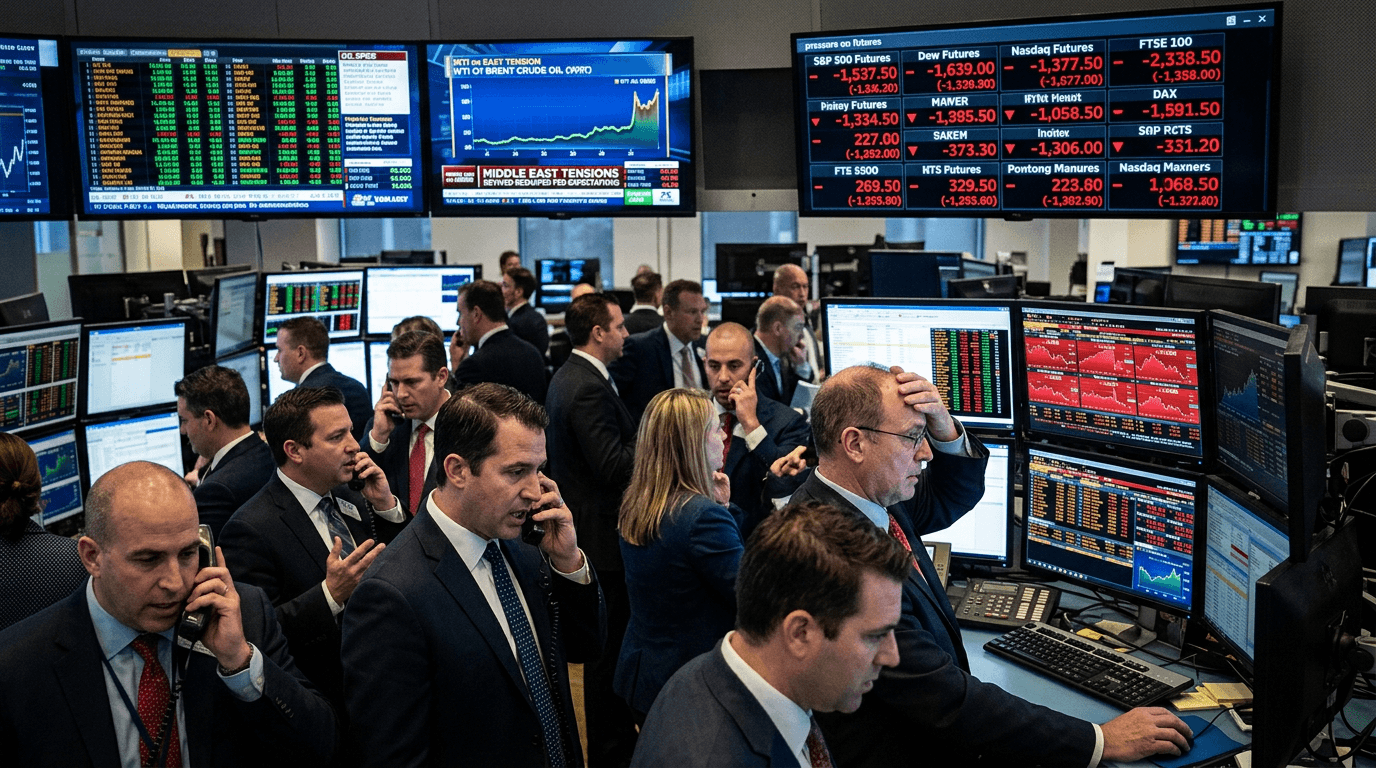
Oil’s latest surge is a stark reminder that geopolitics can still jolt markets in an instant. Crude prices have jumped to multi‑month highs as tensions flare in the Middle East, with benchmark U.S. futures spiking in double‑digit percentage moves intraday and Brent rallying sharply alongside them[2][1]. Equity futures have turned lower in response, as traders reassess the path of inflation and the likelihood of near‑term Federal Reserve easing[3]. For both real and simulated finance (SimFi) traders, this is a textbook case of how one commodity shock can ripple across asset classes.
Oil Spike And Market Reaction
The immediate catalyst for the move has been a series of military escalations involving Israel, Iran, and U.S. forces, raising fears of a broader regional conflict and potential disruptions to energy supply routes[2][3]. U.S. crude futures have jumped by as much as around 11% in a single session, while Brent has climbed roughly 8%, taking both benchmarks to levels not seen for months[2]. Earlier episodes in the same conflict saw intraday moves of over 10% before prices settled[3].
Equity markets have responded in classic risk‑off fashion. Stock futures tied to major U.S. indices such as the S&P 500 have traded lower, with declines of around 1–1.5% in early sessions[2]. At the same time, safe‑haven assets like gold have attracted inflows, and volatility gauges such as the VIX have spiked, signaling a rapid repricing of risk[3]. When oil jumps this quickly, investors are not just reacting to energy sector earnings; they are repricing the macro backdrop.
Why Higher Oil Reignites Inflation Fears
Oil is a critical input into the economy, touching everything from transportation and manufacturing to household energy bills. When crude benchmarks rise sharply, the first impact is typically visible in headline inflation, as gasoline and fuel costs feed directly into consumer price indices[3][5]. But the story doesn’t end there.
Sustained higher oil prices can leak into so‑called “core” inflation through second‑round effects. Transportation costs rise, pushing up the price of goods that rely on complex supply chains. Airlines, logistics firms, and manufacturers face margin pressure and may pass costs on to consumers. Historically, significant Middle East‑driven oil spikes have been associated with broader inflationary episodes, forcing central banks to stay cautious for longer[5].
That is why the latest spike is unnerving markets. After a period in which traders were increasingly confident that inflation was trending lower and the Fed was edging toward rate cuts, a renewed energy shock complicates the picture. If higher oil proves sticky rather than a brief spike, policymakers may worry that inflation expectations could drift higher again, limiting their ability to ease policy as quickly as markets had hoped[3][5]. Futures curves that previously priced in aggressive cuts may now shift toward a “higher for longer” stance.
Impact On Equity Futures And Risk Sentiment
Equity futures are particularly sensitive to inflation and interest rate expectations because they discount future cash flows. When traders suddenly factor in the possibility of a slower Fed pivot, the implied discount rate for equities rises, which tends to weigh on valuations—especially for longer‑duration growth stocks.
In the current episode, pressure on stock futures reflects several overlapping themes:
First, higher input costs threaten margins in energy‑intensive sectors such as airlines, shipping, and parts of manufacturing and consumer discretionary. These businesses can see earnings estimates revised lower if oil remains elevated[3].
Second, bond yields may move up in response to higher inflation expectations, increasing competition for equities. Rising real yields can reduce the appeal of risk assets, particularly speculative growth and high‑beta names.
Third, volatility traders respond quickly. A jump in oil on geopolitical news often drives options markets to reprice tail risk, pushing up implied volatility and widening bid‑ask spreads. That dynamic can amplify short‑term pressure on stock futures as systematic strategies adjust exposures.
For index futures, such as those tracking the S&P 500 or Nasdaq, this cocktail translates into initial downside moves and heavier sensitivity to subsequent headlines. Traders must recognize that moves driven by macro shocks can be fast, noisy, and prone to reversals, especially if diplomatic developments change the outlook for the region.
What Traders And Simfi Participants Should Watch
For active traders and SimFi participants on platforms such as E8 Markets, the current environment offers both risk and learning opportunity. Simulated trading allows participants to stress‑test strategies under conditions that closely mirror real‑world shocks without putting capital at risk.
Several practical focuses stand out
Monitor cross‑asset correlations. In oil‑driven risk‑off episodes, correlations between equities, commodities, and safe havens tend to rise. Watching how index futures move against crude, gold, and the dollar can help refine macro‑aware trading models[3].
Track inflation expectations and Fed pricing. Overnight index swaps, rate futures, and yield curve moves provide clues about how the market is repricing policy risk. A shift from aggressive rate‑cut expectations to a more cautious stance can change the relative attractiveness of sectors and styles across equity futures.
Assess sector sensitivity. Energy producers may benefit from higher prices, but refiners, transportation firms, and some consumer names can come under pressure. SimFi traders can use sector futures or thematic baskets to explore relative‑value ideas—long energy, short airlines, for example—while learning how macro shocks play out in multi‑leg strategies.
Manage leverage and risk. Sudden spikes in volatility can lead to outsized moves relative to historical norms. In a simulated environment, traders can practice scaling position sizes, using options for hedging, and setting dynamic risk limits that respond to volatility rather than static notional caps.
Conclusion: Navigating An Oil-shocked Market
The latest oil price spike underscores how quickly market narratives can change. A few sessions ago, the dominant story was disinflation and the prospect of central banks gradually easing off the brake. Now, a surge in crude tied to Middle East tensions has revived inflation fears, pressured equity futures, and pushed traders to reconsider the path of policy and risk assets[2][3][5].
For traders and SimFi participants alike, the key is not to predict every geopolitical twist but to understand the transmission channels: from oil to inflation, inflation to rates, and rates to equity valuations. By studying episodes like this and practicing in a simulated environment, market participants can build more resilient strategies—ones that acknowledge that the next macro shock may arrive not via economic data, but via an unexpected headline from a strategically vital region.