
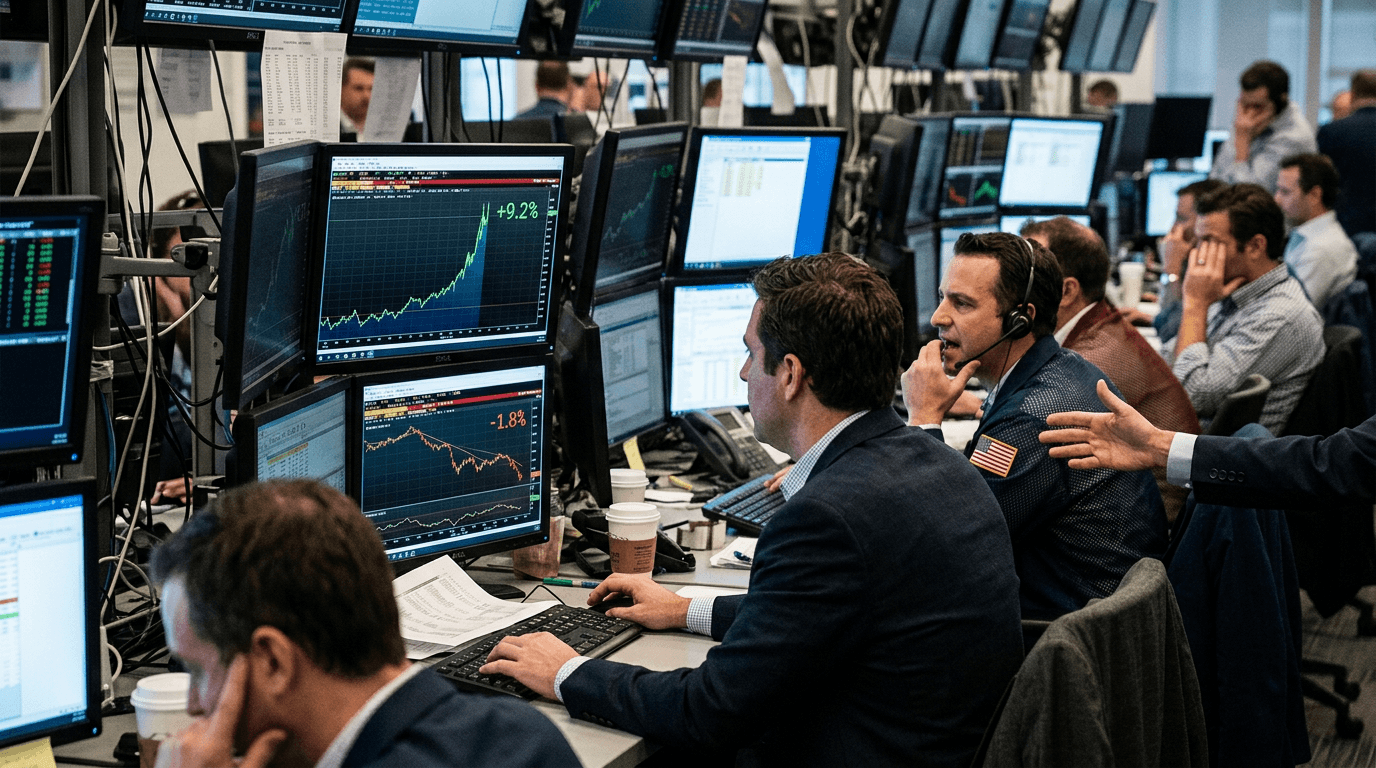
Oil markets were jolted by a roughly 9% surge, with crude settling around $78 in its biggest one‑day gain since late April, after the U.S. confirmed a naval blockade of Iran and reports emerged of Houthi attacks on Saudi energy infrastructure. At the same time, gold fell nearly 3% as traders rotated into energy and dollar‑sensitive assets, and inflation expectations moved higher, underscoring how quickly geopolitical shocks can reshape the macro landscape.
Market Reaction: Oil, Gold And Inflation Expectations
The immediate market reaction centered on crude oil, which jumped about 9% in a single session, a move more typical of crisis periods than normal trading days. The catalyst was the U.S. naval blockade targeting shipping to and from Iranian ports, heightening fears of supply disruption from a key producer and a sensitive region for global energy flows.[3][6][7]
This oil spike did not occur in isolation. Gold, often seen as a classic safe haven, dropped nearly 3% as capital shifted toward energy exposure and U.S. dollar‑linked trades. That tells you the dominant narrative, at least initially, was not “systemic panic” but “repricing of energy and inflation risk,” with investors favoring assets directly tied to changing cash flows rather than pure hedges.
Inflation breakevens—the market’s implied inflation expectations derived from nominal bonds versus inflation‑protected securities—moved higher alongside the crude rally. Rising breakevens reflect a consensus that higher energy prices could feed into headline inflation, revive pricing pressures, or delay any prospective monetary easing. For macro‑focused traders, this alignment of oil, breakevens and FX offers a clear read: the shock is being interpreted as inflationary rather than purely growth‑negative, at least for now.
FX markets tied to oil, particularly currencies of energy exporters, also saw increased activity, while import‑dependent economies face the prospect of wider trade deficits and potential pressure on their currencies if elevated oil prices persist. This combination—oil up, gold down, inflation expectations up—is a textbook example of how a single geopolitical development can trigger a multi‑asset rotation.
Why The Naval Blockade Matters For Energy Supply
To understand the magnitude of the market move, you need to appreciate the mechanics of the U.S. blockade and the geography of the Strait of Hormuz. U.S. Central Command has confirmed a naval operation restricting shipping in and out of Iranian ports in the Strait of Hormuz and nearby waters.[1][6][7] According to reports, the action is designed to encompass the entirety of Iran’s coastline and to intercept, divert or capture unauthorized vessels entering or leaving the blockaded area.[1][2]
Analysts estimate that the blockade could effectively halt around two million barrels per day of Iranian oil from reaching global markets, significantly tightening supply in an already strained environment.[3] Even partial disruption, or uncertainty about future flows, is enough to prompt a sharp repricing of forward curves and volatility.
The Strait of Hormuz is one of the world’s most critical chokepoints for energy, with a large share of global seaborne crude and liquefied natural gas transiting the corridor. Iran has threatened to curtail exports and imports across the Persian Gulf and Sea of Oman if the blockade is not lifted, reinforcing the risk that the dispute could escalate into a broader disruption of regional shipping.[7] That prospect—more than any single shipment being halted—underpins the market’s sensitivity.
At the same time, reporting suggests that enforcement is selective and targeted. U.S. officials have emphasized a focus on vessels entering or departing Iranian ports, particularly those carrying sanctioned crude and petroleum products, rather than every “Iran‑linked” ship at sea.[2] Some tankers have turned back from the blockade, while others have lingered or changed routes.[4][7] This nuance matters: markets are pricing both actual supply interruptions and the uncertainty premium around what comes next.
From Oil Shock To Inflation: The Macro Transmission
A sudden 9% jump in oil has immediate micro effects on producers and consumers, but its broader significance lies in how it filters into inflation expectations, interest rates and growth forecasts.
Higher crude prices can feed into headline consumer inflation via fuel, transport and, eventually, goods whose costs are energy‑sensitive. Markets capture these expectations through inflation breakevens: when breakevens rise after an oil shock, it signals that investors see a credible risk of inflation running hotter than previously forecast.
Central banks, in turn, must weigh the nature of the shock. If higher energy prices are viewed as temporary and supply‑driven, policymakers may “look through” the move, especially if underlying core inflation remains contained. However, if sustained oil strength lifts inflation expectations and begins to influence wage negotiations or broader pricing behavior, the risk is a more persistent inflation regime that could delay rate cuts or even reopen discussions about tightening.
Growth is the other side of the equation. Energy‑importing countries face weaker real disposable incomes and potential pressure on consumption if fuel costs stay elevated. For exporters, the shock may be more benign or even positive for fiscal revenues and external balances. This divergence creates differentiated opportunities in FX and equity indices: energy‑heavy markets can outperform, while import‑dependent ones may lag.
Gold’s decline in this context is revealing. Rather than a classic “risk‑off” flight to bullion, traders appeared to prioritize trades with more direct sensitivity to the new regime: oil producers, energy futures, and inflation‑linked instruments. Gold could regain favor if the situation escalates or confidence in monetary stability erodes, but the initial reaction underscores that safe‑haven demand is not automatic; it is conditional on the perceived nature of the shock.
Trading And Simulated Finance Takeaways
For active traders—and for those refining their skills in simulated environments—this episode offers several practical lessons.
First, geopolitical catalysts can produce outsized moves in core assets in very short windows. The crude rally and gold sell‑off highlight the importance of scenario planning: mapping how oil, gold, FX, rates and equities might respond under different escalation or de‑escalation paths, rather than treating events in isolation.
Second, cross‑asset relationships matter. The alignment of oil prices, inflation breakevens and FX rotations provides a framework for multi‑leg strategies: long energy, long inflation‑linked instruments, short currencies of oil importers, or relative value trades between gold and oil. Practicing these structures in a simulated finance (SimFi) setting allows traders to test sensitivities to gaps, slippage and correlation breakdowns without real capital at risk.
Third, risk management is critical in headline‑driven markets. Blockade news, satellite imagery of tankers turning back, and reports of infrastructure attacks can hit feeds in rapid succession.[2][4][7] Position sizing, clear stop levels, and an understanding of liquidity conditions around major news are as important as the directional view itself. Simulated environments are particularly useful for stress‑testing strategies against historical analogues, such as prior Strait of Hormuz tensions or earlier sanctions episodes.
Finally, this type of event underscores the value of integrating macro awareness into trading plans, even for short‑term participants. Knowing how central banks interpret energy shocks, how breakevens respond, and how corporate earnings in energy‑intensive sectors may be affected can help traders move beyond reaction to anticipation.
Conclusion
The U.S. naval blockade of Iran and related disruptions in the Gulf have triggered a sharp repricing across energy, precious metals and inflation‑linked markets, with crude spiking about 9%, gold dropping, and inflation expectations pushing higher. Beneath the headlines lies a complex interplay of supply risk, geopolitical strategy, and macro transmission that will continue to shape opportunities and risks across assets. For traders and investors, whether in live markets or simulated finance platforms, the key is not merely to follow the price action, but to understand the underlying drivers—and to build robust, cross‑asset strategies that can adapt as the story evolves.