
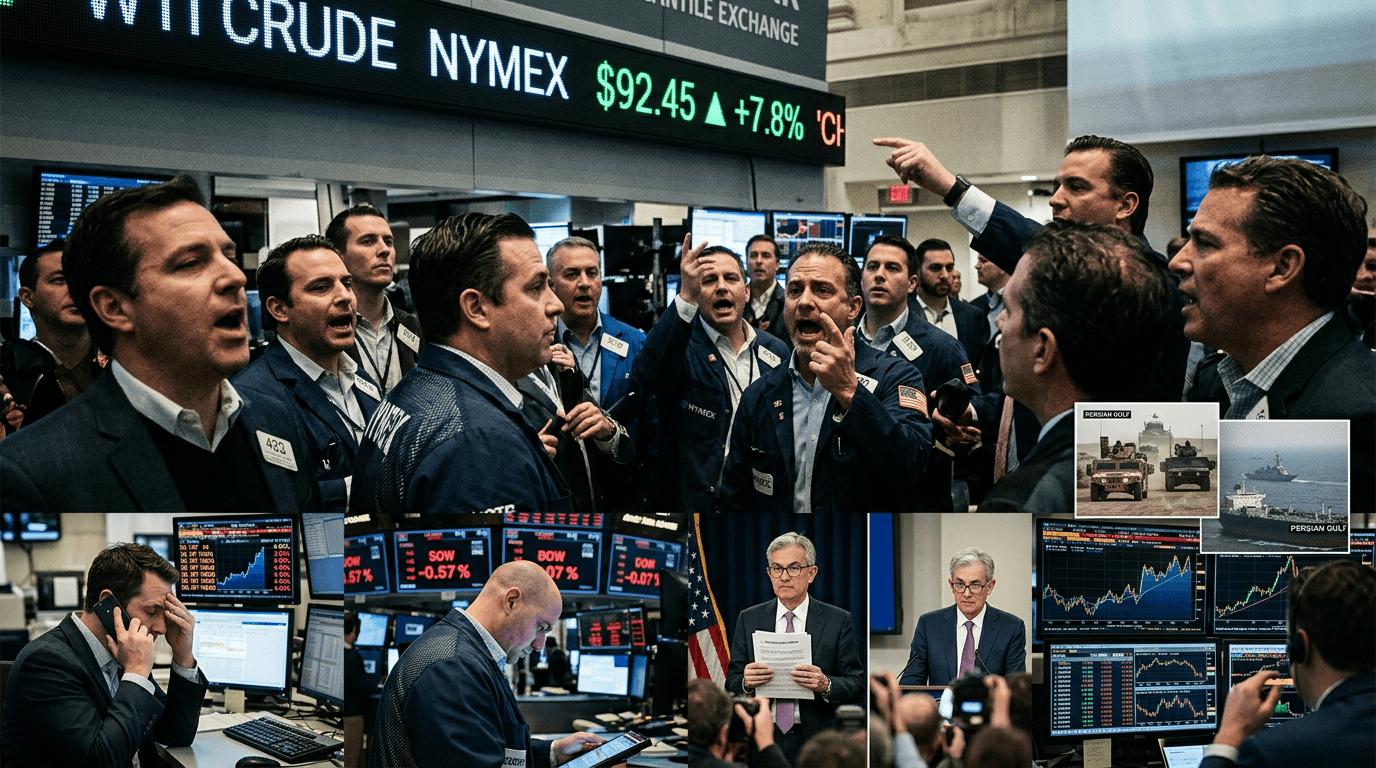
Oil’s latest surge is a stark reminder of how quickly geopolitics can ripple through markets and inflation expectations. Crude jumped as much as 9% in intraday trade, with US WTI briefly in the low $80s and Brent in the mid‑$80s, after a fresh escalation in US–Iran tensions and broader Middle East conflict risks.[3][4][9] Equity markets came under pressure, while bond markets and commodity‑linked currencies immediately repriced the prospect of more persistent inflation.[2][7][9]
Why Middle East Tensions Send Oil Prices Spiking
The Middle East remains the world’s most strategically important energy corridor, and any hint of disruption quickly shows up in crude prices. When Iran publicizes military operations in or near the Strait of Hormuz or boards commercial vessels, traders immediately reassess the probability of supply interruptions in a chokepoint that handles a large share of global seaborne oil.[1][3] Even modest signs of escalation have recently pushed prices up 2–4% in single sessions.[1][3]
In the latest flare‑up, reports of Israeli strikes on Iranian nuclear and enrichment facilities and fresh US military action have revived fears that the conflict could spill over into shipping lanes or energy infrastructure.[3][4] Earlier episodes saw intraday moves of 7–13% when markets feared a worst‑case scenario for Iranian retaliation and regional escalation.[4][9] The bulk of that move reflects a higher “geopolitical risk premium” rather than any immediate loss of barrels.
Crucially, despite the turmoil, Middle Eastern oil exports are still flowing and the Strait of Hormuz remains open, according to recent assessments.[4][8] Analysts continue to treat a full closure of the strait—a scenario that could push prices toward $120–130 per barrel—as low probability, but market‑moving if it materialized.[3][4] That combination of elevated but reversible risk is what makes price action so volatile: perceived danger can surge overnight, then partially unwind if supply proves resilient.[4][8][9]
From Oil Shock To Inflation Fears
Energy is a direct component of consumer price indices and an indirect driver of costs across the economy, so a sudden jump in crude almost automatically revives inflation worries.[6] Higher oil prices tend to pass through into gasoline and diesel, freight rates, airline tickets, and eventually the prices of goods that must be transported and manufactured.[6] When the move is as sharp as this week’s spike, markets instinctively ask whether disinflation is about to stall.
The concern is not just about the next one or two inflation prints, but about the risk of a broader second‑round effect. If households face higher fuel and transport costs, wage demands can firm, and businesses may raise prices more aggressively to protect margins. That dynamic can make central banks more cautious about cutting rates or declaring victory over inflation, even if underlying core measures had been trending lower.
Market commentary has increasingly framed these Middle East‑driven moves as a potential new source of “inflationary pressure” on the global economy.[2][6] The fear is that, after the energy shock of 2021–2022, another round of oil‑led price increases could anchor inflation expectations at levels inconsistent with 2% targets, especially if the conflict proves persistent rather than a short‑lived spike.[6]
How Bonds, Equities, Fx, And Futures Are Repricing The Shock
The first place the new oil shock shows up is in bond markets, particularly in inflation‑sensitive instruments. Breakeven inflation rates and inflation‑linked bond yields have moved higher as traders price in the possibility of more expensive energy feeding into headline CPI.[2] That, in turn, has nudged expectations for Federal Reserve and European Central Bank easing: rate cuts are now seen as more contingent on proof that the oil spike does not derail the disinflation trend.[2]
Equity markets are reacting with a familiar pattern. Broad indices have come under pressure as geopolitical risk rises, but sector performance is highly differentiated.[7][9] Energy producers and select commodity‑linked names are benefiting from higher crude, while energy‑intensive sectors such as airlines, transportation, and parts of manufacturing face renewed margin headwinds. US equities, in particular, have seen risk‑off flows as investors reassess the balance between growth and inflation.[2][7]
In foreign exchange, commodity‑linked currencies and oil importers are both experiencing elevated volatility. Currencies tied to oil exports, like the Canadian dollar or Norwegian krone, tend to see support or at least reduced downside when crude spikes, while major net importers frequently face weaker FX and wider risk premia. Emerging markets reliant on imported energy can be especially vulnerable when oil rises and US yields edge higher at the same time.
Oil‑linked futures and options markets are, unsurprisingly, at the center of the storm. Implied volatility has picked up alongside the price spike as hedgers scramble to adjust exposure and speculative capital repositions around new scenarios.[2][4] Intraday moves have been large, with prices spiking on conflict headlines and then retracing part of the gains as fresh information shows that key routes and infrastructure remain operational.[4][8][9]
What Traders Should Watch Next
For traders and investors—whether in live markets or simulated environments—the key is to focus on the variables that genuinely move the macro narrative rather than every headline. At the top of that list is any sign of actual supply disruption: damage to export infrastructure, evidence of shipping interruptions, or credible reports of increased military activity directly affecting energy flows.[1][3][4] As long as flows continue and the strait remains open, markets will treat the risk as significant but still mainly a pricing of probabilities.[4][8]
Diplomatic signals are nearly as important. Indications that Iran, Israel, the US, or regional powers are seeking de‑escalation or returning to talks have repeatedly triggered pullbacks in crude after earlier spikes.[3][4][8] Conversely, rhetoric pointing to broader regional confrontation tends to push risk premia higher. Traders should also track any response from OPEC+ and major producers, as changes in planned output can either cushion or amplify the impact of geopolitical shocks.
On the macro side, upcoming inflation releases, inflation expectations surveys, and central bank communication will help determine whether this oil spike alters the policy path or is treated as a manageable, temporary shock. If Fed and ECB officials signal that they are watching energy closely but remain confident about the medium‑term outlook, markets may fade the inflation scare. Stronger language about upside risks, by contrast, would reinforce the current repricing in bond markets.[2]
Practical Takeaways For Simulated And Live Traders
For traders using simulated finance platforms or operating in live markets, episodes like this are valuable stress tests of both strategy and psychology. Geopolitical shocks often produce sharp, headline‑driven moves that can tempt over‑trading or impulsive positioning. A better approach is to build scenarios—continued escalation, gradual de‑escalation, and actual supply disruption—and test how your strategies perform under each.
Risk management should come before conviction. Position sizing, clear invalidation levels, and diversified exposure across assets can help mitigate the inevitable volatility around oil‑related headlines. It is also important to recognize changing correlations: during energy shocks, traditional relationships between stocks, bonds, and commodities can temporarily break down, requiring traders to adapt rather than rely mechanically on historical patterns.
Finally, use the current environment to refine your process. Track how oil prices react to specific types of news, how quickly markets reprice inflation and policy expectations, and which sectors are most sensitive to energy swings. Practicing these responses in a simulated setting can build the discipline and pattern recognition needed to navigate future episodes where geopolitics, oil, and inflation intersect as powerfully as they do today.