
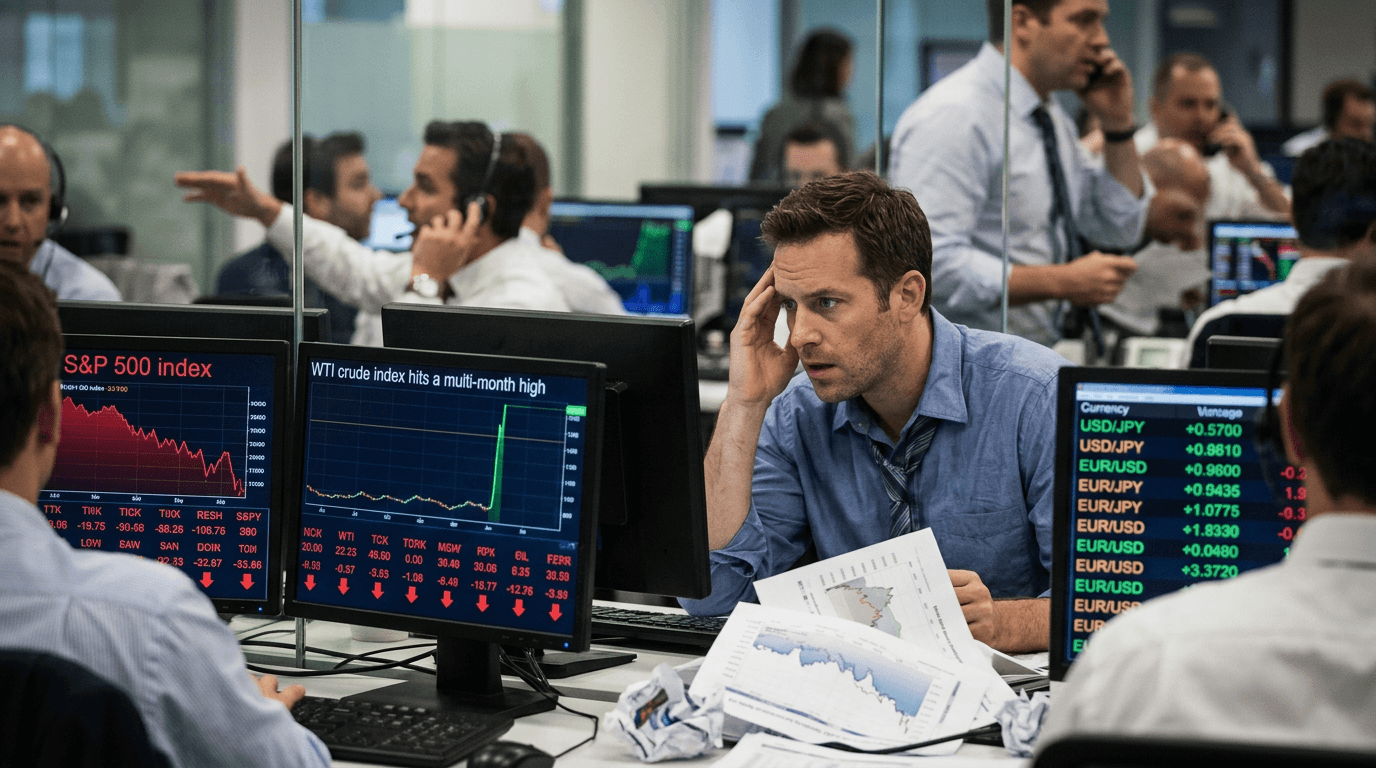
Crude oil’s latest surge has once again reminded markets how tightly risk sentiment is tied to geopolitics. As US–Iran hostilities intensified, US WTI crude briefly spiked more than 9%, trading above $81 a barrel, while Brent climbed past $85. The move jolted global assets: US equities came under pressure, volatility picked up, and flows rotated into classic “haven” trades such as the Swiss franc and gold-linked strategies, underscoring how quickly narratives can flip from growth to geopolitical risk.
WHAT’S DRIVING THE OIL SPIKE?
At the core of this move is a renewed geopolitical risk premium being priced into the energy complex. The US–Iran relationship sits at the intersection of security, energy, and regional politics. When tensions flare, markets immediately reassess the probability of supply disruptions, especially around key chokepoints like the Strait of Hormuz, through which a large share of global seaborne crude and LNG flows.
Even without an actual, confirmed loss of supply, the expectation of potential disruption is enough to reprice risk. Shipping routes can be rerouted, insurance costs rise, and some cargoes are delayed as shipowners and insurers reassess war risk. That effectively “tightens” available supply in the near term, particularly for refiners and end-users reliant on Middle Eastern crude blends.
At the same time, speculative positioning amplifies the price action. Trend-following funds and CTAs typically respond to strong momentum, while options dealers hedge gamma exposure as implied volatility spikes. The combination of higher perceived supply risk and mechanical flows can push prices far beyond what fundamentals alone might justify in the short run, creating sharp, gap-like moves similar to this week’s 9% jump.
How Higher Oil Weighs On Stocks
For equities, a sudden move higher in oil acts like an unwelcome tax on the global economy. Higher energy costs filter through in several ways:
First, they squeeze corporate margins. Transportation, manufacturing, airlines, logistics, and consumer discretionary sectors all face higher input or operating costs. Unless companies can pass those costs on to customers, profitability comes under pressure. That is especially problematic when valuations are already elevated and earnings expectations are optimistic.
Second, higher oil reinforces inflation concerns. Central banks may be focused on “core” measures that strip out food and energy, but headline inflation still matters for expectations, wage negotiations, and political pressure. If markets start to price the risk of a renewed inflation bump, bond yields can rise, tightening financial conditions and further weighing on equity valuations, particularly for long-duration growth stocks.
Third, geopolitical shocks tend to trigger a shift in risk appetite. Portfolio managers reduce exposure to cyclical and high-beta names and pivot toward more defensive sectors such as utilities, staples, and healthcare. Within the index, this shows up as broad pressure on benchmarks, even if select pockets—most obviously energy producers—benefit from the price spike.
The result is a familiar pattern: energy equities and some commodity-linked sectors may rally, but the broader equity market trades lower as investors reassess growth, inflation, and geopolitical risk premia all at once.
Why Haven Fx And Gold Are In Demand
On the currency side, episodes like this tend to favor three broad groups: traditional safe havens, oil-linked currencies, and inflation hedges.
Safe-haven currencies such as the Swiss franc typically attract inflows during geopolitical stress. Switzerland’s long-standing political neutrality, strong external balance sheet, and deep, stable financial system make the franc a natural destination when investors are looking to reduce risk. The Japanese yen often plays a similar role, though its behavior can be more mixed when US yields are volatile.
At the same time, higher oil prices support currencies of major energy exporters. The Canadian dollar and Norwegian krone historically benefit when crude rallies, as higher export revenues improve terms of trade and support their fiscal positions. These are not “havens” in the classic sense, but they are tied positively to the underlying commodity shock.
Gold and gold-linked trades, including miners and some structured products, also gain traction. Gold is simultaneously a geopolitical hedge and an inflation hedge, so a US–Iran flare-up that pushes oil and stirs inflation fears is a textbook catalyst for renewed interest. For FX traders, this can translate into flows into currencies with strong gold linkages or into pairs where gold-related assets play a major role in the balance of payments.
Implications For Traders In A Simulated Environment
For traders operating in a simulated finance (SimFi) environment, this kind of event is a valuable real-time stress test. It offers an opportunity to practice trading a multi-asset shock—one that does not respect asset-class boundaries and demands a coherent cross-market view.
Several practical lessons stand out.
First, understand correlations. During geopolitically driven oil spikes, the usual relationships can strengthen or even invert. Equities may trade inversely to crude, while haven FX and gold move together. Simulated portfolios allow traders to experiment with hedges—short equity index futures against long energy positions, or long CHF or JPY against high-beta currencies—to see what combination provides the best drawdown protection.
Second, respect liquidity and volatility. Spreads in oil futures, options, and related ETFs often widen during headline-driven surges. Stops can slip, and intraday swings can be violent. Using a simulated account, traders can test how different position sizes, leverage levels, and stop-loss strategies would have performed during the spike without risking real capital.
Third, build and test scenarios. A geopolitical shock is inherently binary: either tensions escalate further, or diplomacy gains traction. In a SimFi framework, traders can construct “escalation,” “status quo,” and “de-escalation” paths, mapping out how oil, equities, FX, and gold might behave in each case. This helps refine both directional trades and options strategies (such as buying volatility when it is still underpricing headline risk).
How To Navigate The Next Phase
Looking ahead, markets will be watching three main dimensions: the trajectory of US–Iran relations, signals from major oil producers, and central bank communication.
If tensions continue to escalate—through further strikes, threats to shipping lanes, or explicit supply disruptions—the risk premium in oil is likely to persist or rise. Equity markets would then need to digest not only higher energy costs but also heightened tail risks, which could keep volatility elevated and sustain demand for haven FX and gold.
If, however, diplomatic channels open and the conflict shows signs of containment, part of the risk premium in crude could unwind quickly. Oil might retrace a portion of its gains, equity markets could stabilize or rebound, and haven currencies might give back some of their strength as carry and growth narratives reassert themselves.
For traders, the key is to remain data- and headline-driven rather than anchored to a single macro story. Monitoring developments in shipping, official statements, and positioning data can provide early clues about whether the market is overpricing or underpricing the geopolitical risk.
In any case, this episode is a powerful reminder that in global markets, geopolitical risk is not a sideshow—it is a core driver of prices. Whether you are trading live capital or honing your strategy in a simulated environment, integrating geopolitical analysis, robust risk management, and cross-asset thinking is no longer optional; it is essential.