
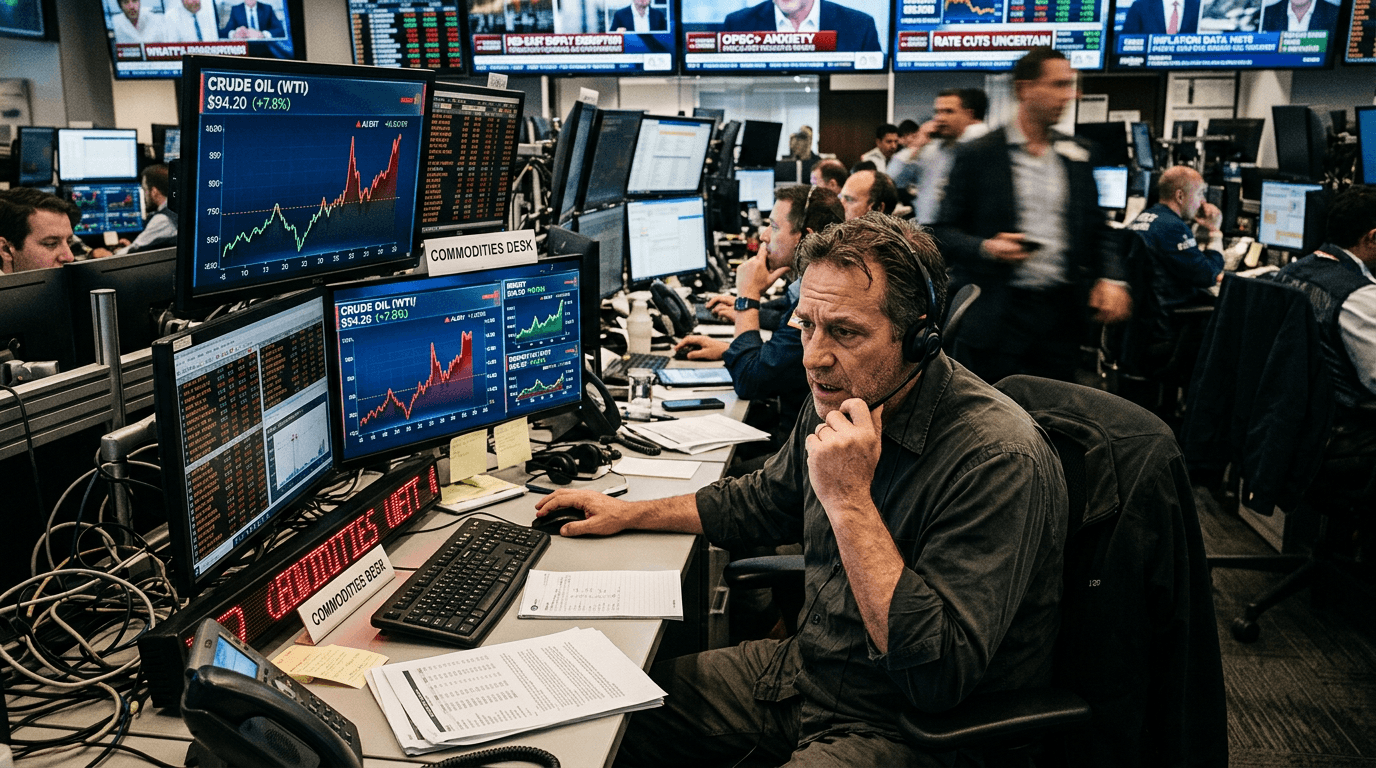
Crude oil futures experienced a sharp spike of as much as $7 per barrel as escalating military hostilities between the United States, Israel, and Iran roiled global energy markets. US WTI crude briefly topped the low-$80s while Brent crude surged into the mid-$80s, marking a significant intraday move that immediately reverberated across financial markets. This sudden surge underscores how deeply geopolitical risk has become embedded in energy prices, and how fragile the current macroeconomic backdrop truly is for investors navigating the intersection of growth, inflation, and monetary policy.
The Supply Shock From Middle East Instability
The driving force behind the crude spike is simple but powerful: a genuine disruption to global crude supply. Satellite imagery confirms that Iran's Kharg Island oil export terminals—historically one of the world's most critical energy chokepoints—are regularly sitting empty, a stark visual representation of the conflict's economic impact. Simultaneously, Saudi Arabia reported production levels to OPEC that represent the lowest output since 1990, a stunning decline that reflects both direct conflict spillover effects and the broader instability gripping the Persian Gulf region.
When two of the Middle East's largest oil producers face simultaneous supply constraints, the market moves decisively. These aren't marginal supply adjustments; they represent a structural tightening in crude availability at precisely the moment when global demand remains reasonably resilient. The resulting dynamic has kept oil prices elevated despite weak demand signals from some developed markets, creating a stagflationary backdrop—higher inflation coupled with muted growth—that central banks find deeply problematic.
Inflation Concerns Compound Monetary Policy Challenges
The oil price shock arrives at perhaps the worst possible moment for global central banks. The Turkish and Czech central banks have already raised their inflation forecasts citing the Iran conflict's direct impact on energy costs. Bangladesh's rating agency Fitch downgraded the country's outlook to negative, highlighting vulnerability to Middle East disruptions and their cascading effects through emerging-market economies. Pakistan continues to grapple with mounting energy costs as crude prices remain elevated.
For policymakers, this creates an acute dilemma. The Federal Reserve has explicitly flagged the Iran conflict as a key risk to its rate outlook, warning that persistently higher energy prices complicate efforts to engineer a soft landing for the economy. If oil remains elevated for an extended period, central banks face renewed pressure to maintain restrictive policy stances even as financial conditions already appear stretched. This directly contradicts the market's pricing of interest-rate eases, which had become increasingly priced into bonds and equities through early May.
The geopolitical premium embedded in energy markets shows no signs of disappearing quickly. With Trump administration officials repeatedly issuing military threats against Iran even as diplomatic engagements occur, the conflict carries escalation risk that investors cannot easily discount away.
The Divergent Impact On Asset Classes And Sectors
The crude spike created immediate cross-market effects. US stock index futures fell sharply as investors absorbed the stagflationary implications, while energy stocks surged in anticipation of margin expansion. This bifurcation will likely persist: energy producers and commodity exporters benefit from higher crude prices, generating stronger cash flows and supporting valuations. Conversely, energy importers and companies with price-sensitive demand face margin compression and reduced purchasing power among consumers.
More broadly, the shock threatens to cap equity multiples despite robust corporate earnings in many sectors. Growth-oriented equities face headwinds from both higher discount rates (if central banks maintain restrictive stances longer) and inflation uncertainty that typically warrants lower valuation multiples. Investors increasingly demand resilience premiums in Middle East and emerging-market assets, with those perceived as geopolitically buffered trading at relative premiums.
Safe-haven Flows And Portfolio Positioning
The oil surge has triggered the classic risk-off dynamic. Money has flowed into traditional safe-haven assets—government bonds, gold, and low-volatility currencies—as investors reassess their risk positioning. This reflects genuine concern that the geopolitical situation could deteriorate further, potentially disrupting the Strait of Hormuz or provoking additional military escalation that would dramatically curtail crude supplies.
Breakeven inflation rates have edged higher in response, with markets pricing in sustained elevated inflation if the conflict persists through mid-2026. This poses a challenge for real-asset investors seeking inflation protection, as higher real rates have made defensive posturing more economically rational.
Key Takeaways For Traders And Investors
Monitor crude supply dynamics closely, as they remain the primary driver of near-term energy prices and inflation expectations. Differentiate your portfolio exposure between commodity exporters and importers, as this conflict creates structural winners and losers. Recognize that equity multiples may face persistent headwinds if central banks maintain hawkish stances due to inflation persistence. Consider positioning for elevated volatility across cross-asset classes until geopolitical tensions ease or escalation fears subside.
The duration of the Iran conflict and the degree to which it escalates will be the defining variables shaping global inflation and monetary policy for the remainder of 2026.