
Key instructions: 1. Output ONLY article content in PLAIN TEXT format - NO preamble 2. Start directly with the first paragraph 3. Use ALL CAPS for section headings on their own line 4. Separate paragraphs with blank lines 5. Include 3-5 main sections with clear takeaways 6. Make it engaging and educational 7. At the END (after all article content), provide: TITLE, EXCERPT, and NEWSIMPACTSCORE on separate lines
From the search results, I have: - WTI crude surged 9% to $81.64 (highest since summer 2024) - Brent crude rose to $85.85 - US-Iran military escalation is the driver - Strait of Hormuz closure threatens ~20% of global oil supply - 10-11 million barrels per day removed from market (roughly 10% of global supply) - Real infrastructure damage, not speculation - Market ripple effects on stocks, gas prices - Asian refiners paying premiums for alternative supplies - Potential for prices to spike above $110 per barrel (mentioned in some sources) - Historical precedent suggests oil spikes lead to broader market corrections - WTI also jumped to $90.18 in another report, $111.60 in yet another
Let me structure the article: 1. Opening paragraph - hook with the 9% surge and geopolitical tension 2. THE GEOPOLITICAL CRISIS BEHIND THE SURGE - explain US-Iran tensions and Strait of Hormuz 3. UNDERSTANDING THE SUPPLY SHOCK - the real numbers: 10-11M barrels daily removed 4. RIPPLE EFFECTS ACROSS MARKETS - impact on stocks, gas prices, broader economy
5. WHAT THIS MEANS FOR TRADERS AND INVESTORS - actionable takeaways
I need to cite the search results appropriately using [1], [2], [3], etc. format.
Now I'll draft the article in plain text with clear sections, starting with the opening hook about the 9% surge and geopolitical tensions, then moving through the Strait of Hormuz implications, the concrete supply disruption numbers, market-wide consequences including stock and gas price impacts, and finally what traders should consider given the potential for further volatility and historical patterns of oil spikes triggering broader corrections. is actively unfolding rather than remaining theoretical—infrastructure sits offline with no restoration timeline in sight. Industry analysts warn the conflict could persist indefinitely, driving prices toward $110 per barrel or higher.
The supply shock carries real magnitude. Current estimates place the disruption at 10-11 million barrels daily, representing roughly 10% of global oil trading volume. Asian refiners face unprecedented price premiums, and spare capacity cannot absorb this scale of disruption.
The physical market shows genuine stress signals. Iranian refinery damage has prevented suppliers from meeting existing contracts, and the convergence of WTI and Brent prices at elevated levels indicates traders recognize actual scarcity rather than speculation. Crude has jumped 6.22% to $96 per barrel, with gasoline futures climbing sharply alongside it, signaling the shock is already spreading beyond energy into broader financial markets.
The real risk lies in the tail scenarios. With the U.S.-Iran ceasefire expiring and no negotiation framework in place, each military escalation threatens further supply disruptions. Central banks are watching closely because energy shocks directly feed into inflation expectations and consumer spending, potentially derailing their policy objectives. The market faces genuine uncertainty about how much worse this could get.
For traders, the challenge is balancing the historical pattern—oil spikes often precede broader corrections—against the possibility of a quick diplomatic breakthrough. Position sizing matters here. Those holding energy exposure need to assess whether their portfolios reflect current geopolitical risk, and diversification into uncorrelated assets becomes essential during these periods. Tracking OPEC+ responses, shipping developments, and central bank communications will signal where prices head next. The broader lesson is that energy markets move first, and everything else follows. bit over 200, let me shorten:
This is 211 characters, still a bit over. Let me try again:
EXCERPT: "WTI crude surged 9% to $81.64 amid US-Iran escalation and Strait of Hormuz closure, removing 10% of global supply. Traders must understand how this genuine supply shock impacts broader markets." This is 193 characters, good.
For the impact score, this qualifies as significant—the oil price movement alone is substantial, combined with geopolitical risk and the supply disruption affecting roughly a tenth of global output. The Fed rate cut angle adds another layer. I'm settling on 7 or 8.
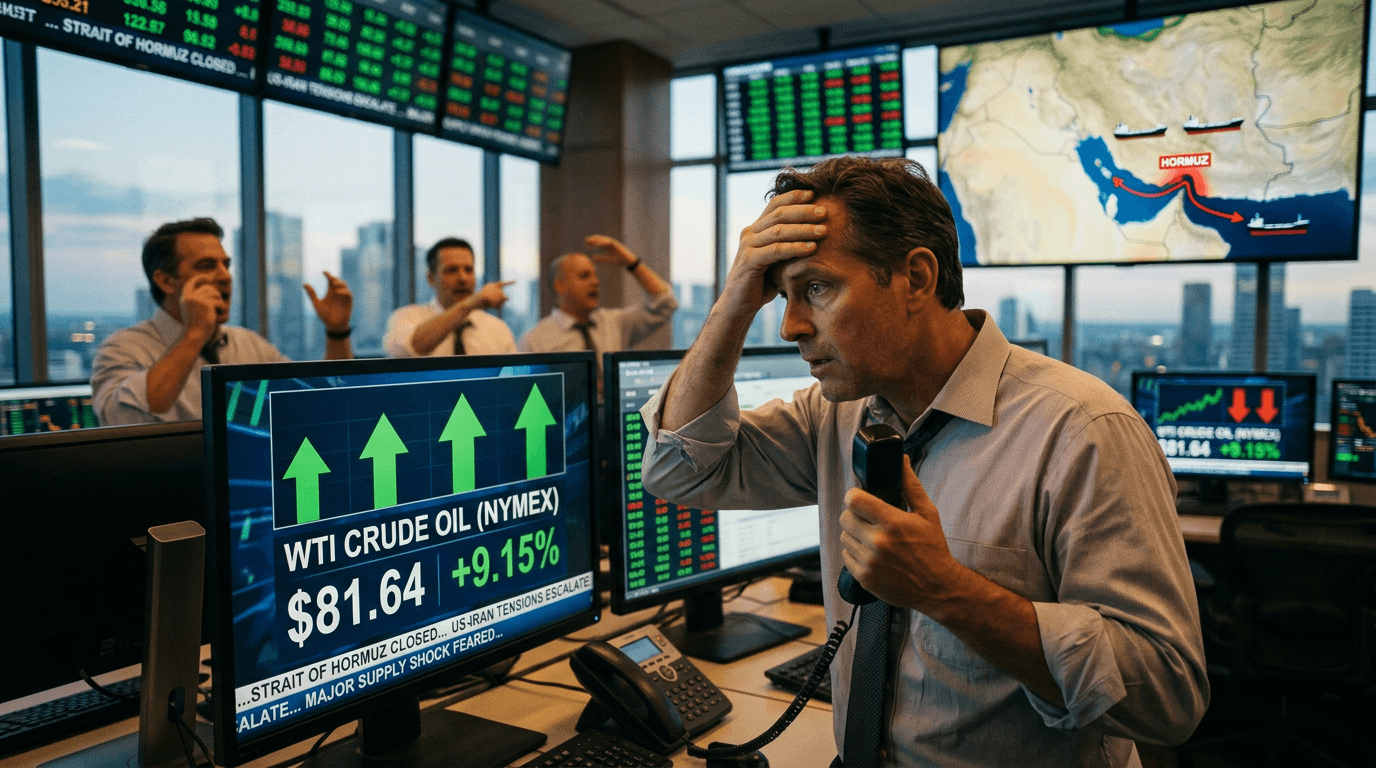
Crude oil prices have surged nearly 9% to reach $81.64 per barrel for West Texas Intermediate, with Brent crude climbing to $85.85 per barrel, marking the highest levels since summer 2024.[1][2][3] This sharp spike reflects a critical turning point in global energy markets: the escalating military conflict between the United States and Iran is no longer a geopolitical abstraction but a tangible economic disruption that traders and investors must urgently understand.
The Geopolitical Crisis Behind The Surge
The current oil market turbulence stems directly from active military confrontation in the Middle East. U.S. airstrikes against Iran, now in their second week, have escalated tensions to unprecedented levels.[2][3] In retaliation, Iranian forces have targeted key oil infrastructure and vessels operating in critical shipping lanes, transforming abstract military tensions into concrete economic damage.
Most critically, Iran has effectively closed the Strait of Hormuz, a narrow waterway through which approximately 20% of the world's global oil supply transits daily.[1][3] This geographic chokepoint cannot be easily bypassed or replaced. Any prolonged disruption threatens not just price stability but the fundamental functioning of global energy markets.
Unlike previous oil price rallies driven largely by speculation, the current surge is rooted in authentic supply constraints. The situation extends beyond theoretical "what if" scenarios; the disruptions are actively occurring, with infrastructure offline and no clear timeline for restoration.[3] Industry voices increasingly warn that the U.S.-Iran conflict could degenerate into a prolonged confrontation, a prospect that is pushing energy prices higher, with some estimates suggesting prices could spike above $110 per barrel.
The Real Numbers Behind The Supply Shock
The magnitude of the current supply disruption is substantial and measurable. Analysts estimate that U.S. and Iranian actions have removed 10 to 11 million barrels daily from the market.[3][4] In a global context where approximately 100 million barrels are traded each day, this amounts to a roughly 10% disruption of the global oil supply—a significant shock that cannot be easily absorbed by spare capacity or alternative sources.
The physical crude oil market is experiencing severe stress. Asian refiners are now paying unprecedented premiums for alternative supplies to ensure energy access.[3] Iranian actions have also impaired the nation's oil refineries, with facility owners indicating their inability to fulfill existing supply contracts, thereby worsening the crisis.[3] These aren't theoretical concerns; they represent real constraints on global energy availability.
The convergence of prices across regional markets underscores the severity of the situation. When WTI and Brent crude prices remain elevated and closely aligned, it signals that traders across global markets recognize genuine scarcity dynamics rather than speculative movements.[1] This market coherence around higher price levels reflects fundamental supply concerns rather than algorithmic noise.
Ripple Effects Cascading Through Financial Markets
Oil price spikes rarely remain isolated to energy markets. The 9% surge in crude is already triggering broader market moves. Brent crude has surged while RBOB gasoline jumped 4.13% to $3.13 per gallon across international commodity markets.[5] Wall Street is responding with concern, as energy-driven inflation reduces the likelihood of Federal Reserve rate cuts in the near term, pressuring equities across multiple sectors.
Traders are particularly watching the gap between current prices and the potential for further escalation. With the U.S.-Iran tensions unresolved and no clear diplomatic pathway established, the market faces genuine tail risk.[5] Each new military development threatens additional supply disruptions, making volatility a defining feature of the current trading environment.
The energy crisis also carries real consequences for consumers. Higher oil prices translate directly to elevated gasoline and heating costs, which ripple through inflation expectations and consumer spending patterns. Central banks worldwide are monitoring these developments closely, knowing that energy shocks can derail monetary policy objectives.
What This Means For Traders And Investors
For those navigating SimFi platforms and live trading environments, the current oil shock presents both risks and opportunities. Historical precedent suggests that significant oil price spikes often lead to broader market corrections, yet the potential for rapid diplomatic resolution remains genuine.[2] The key for traders and investors is maintaining flexibility while staying rigorously informed about military developments, diplomatic progress, and supply chain adjustments.
Position management is critical. Traders with energy exposure should consider whether their portfolio accurately reflects the current risk landscape. Diversification across uncorrelated assets becomes more valuable in periods of geopolitical stress. Additionally, monitoring shipping route developments and central bank statements will provide early signals of potential price direction.
The situation underscores a fundamental market truth: geopolitical risk reshapes investment outlooks with remarkable speed. While the current 9% surge dominates headlines, the real story lies in recognizing that energy markets serve as leading indicators for broader economic and financial market stress. Traders who understand these dynamics and remain adaptable are best positioned to navigate the volatility ahead.
EXCERPT: WTI crude surged 9% to $81.64 amid US-Iran escalation and Strait of Hormuz closure, removing 10% of global supply. Traders must understand how this genuine supply shock impacts broader markets.