
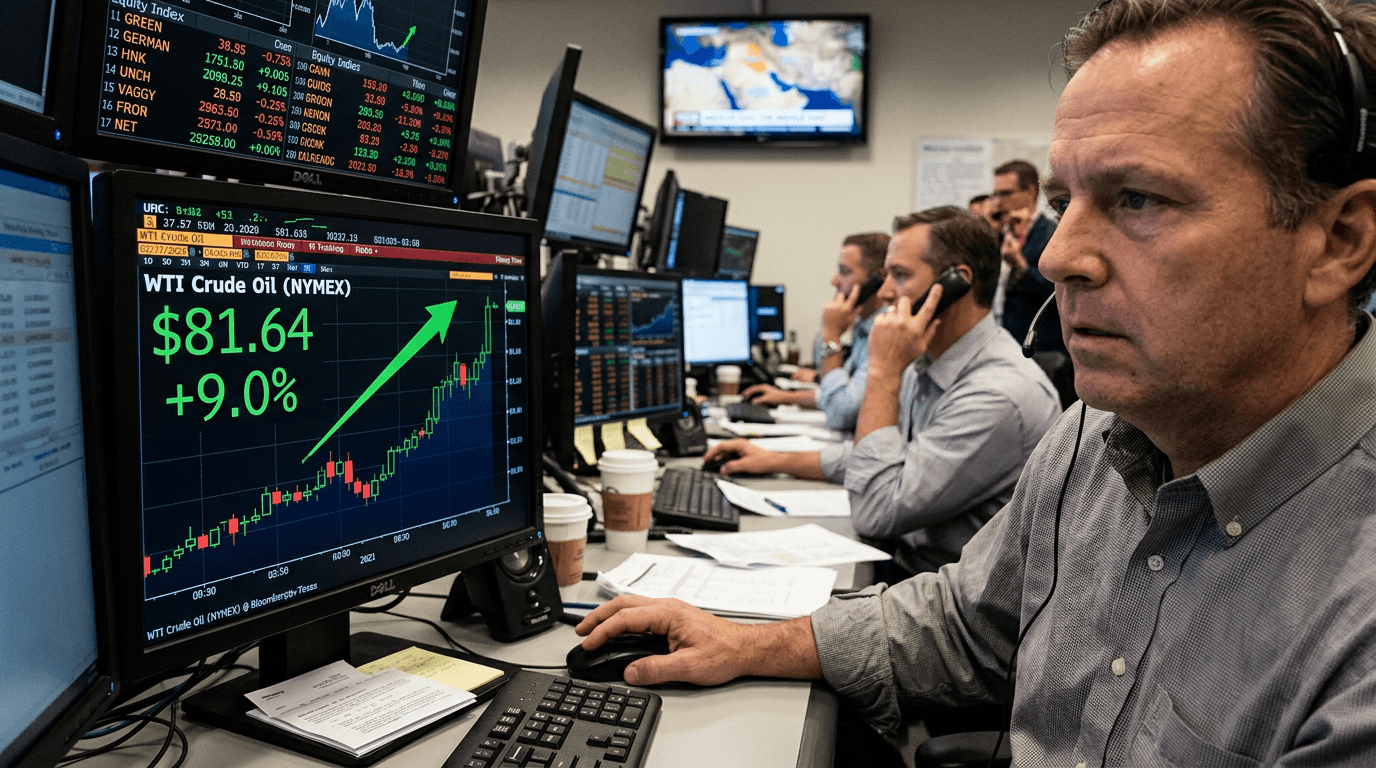
West Texas Intermediate crude has taken center stage with a dramatic 9% surge to $81.64 per barrel, marking its highest level since the summer of 2024. This surge signals a significant shift in the energy markets, driven largely by escalating geopolitical tensions. Unlike typical price fluctuations, this spike reflects the direct impact of diplomatic strife on financial markets. The intensifying conflict between the United States and Iran has created a perfect storm of supply disruptions, military uncertainties, and heightened investor anxiety, reshaping financial strategies, influencing policy decisions, and affecting household budgets in tangible ways.
The Geopolitical Trigger: Middle East Crisis Reshapes Energy Markets
The sharp increase in oil prices is primarily rooted in rising military tensions in the Middle East. U.S. airstrikes against Iran, now in their second week, have created a climate of uncertainty, prompting energy traders to adopt defensive positions. In response, Iranian forces have targeted vital oil infrastructure and crucial shipping routes, turning a military engagement into an economic struggle centered around energy resources.
At the heart of this crisis lies the Strait of Hormuz, a vital channel responsible for approximately 20% of the global oil supply. Iran's effective blockade of this strategic chokepoint has halted tanker traffic and disrupted standard trade flows. The military actions have removed an estimated 10 to 11 million barrels per day from the global market, a substantial shock to a system that typically processes around 100 million barrels daily. This represents a genuine supply disruption with tangible infrastructure damage, shifting trader sentiment from cautious optimism to urgent defensive action.
Cascading Effects: From Energy Markets To Household Budgets
The immediate aftermath of the oil price surge underscores the deep interconnection between energy markets and broader financial systems. The Dow Jones Industrial Average dropped by 2.25% on Thursday, while the S&P 500 and Nasdaq each lost over 1%, as investors grappled with the implications of sustained high energy prices. Airlines, in particular, have been hit hard, as fuel costs constitute a critical input for an industry already dealing with the broader ripple effects of Middle Eastern conflict.
For retail consumers, the translation of crude price hikes has been swift and painful. Average U.S. gasoline prices have soared to $3.25 per gallon, marking a sharp 9% increase from $2.98 just one week earlier. In some regions, prices have reached $3.58 per gallon—a 60-cent monthly surge. In especially hard-hit areas, consumers are confronting prices exceeding $4 per gallon, levels not seen since August 2022. This rapid price escalation compounds existing economic pressures and threatens to reignite inflation concerns that had only recently begun to subside.
What Traders And Investors Should Monitor
The current oil surge exemplifies how geopolitical shocks translate into immediate financial market consequences. Energy prices serve as direct channels from diplomatic crises to stock portfolios and household budgets. Traders and investors should focus on several critical variables as developments unfold.
First, the duration of the Strait of Hormuz closure should be closely monitored. The longer this strategic chokepoint remains disrupted, the more entrenched supply fears become in market pricing. Second, the effectiveness of government interventions should be tracked. OPEC has signaled plans to boost output by over 200,000 barrels per day in April, following monthly increases exceeding 400,000 barrels. However, uncertainty lingers about whether these interventions can meaningfully offset the supply shock.
Third, it is important to assess whether initial supply fears prove temporary or suggest sustained elevated pricing. Should oil prices approach or sustain levels around $100 per barrel, analysts warn that the global economy may struggle to absorb the impact. Historical precedent from the 1990 Gulf War saw crude prices double within months, triggering a 20% S&P 500 decline. Understanding whether current tensions resolve or escalate will prove critical for portfolio positioning.
Energy stocks, transportation sectors, and volatility-linked products are likely to experience substantial fluctuations as Middle Eastern developments unfold. Positioning for potential further escalation or, conversely, signals of de-escalation will be crucial for active traders managing exposure to geopolitical risk premiums embedded in crude prices.
Strategic Positioning In Uncertain Times
The 9% oil surge to $81.64 represents a watershed moment where geopolitical reality directly impacts market dynamics. Traders must balance the recognition that oil price spikes have historically sparked broader market corrections against the possibility that diplomatic resolution could occur rapidly, reshaping the outlook. The key is maintaining flexibility while staying informed about military developments, OPEC decisions, and shipping route status updates.
This energy market disruption will likely persist as a major market driver until a clearer resolution emerges. Active traders should remain engaged with geopolitical developments, diversify exposure appropriately, and adjust positions based on evolving risk assessments regarding the Strait of Hormuz, oil infrastructure integrity, and diplomatic progress toward de-escalation or further conflict expansion.