
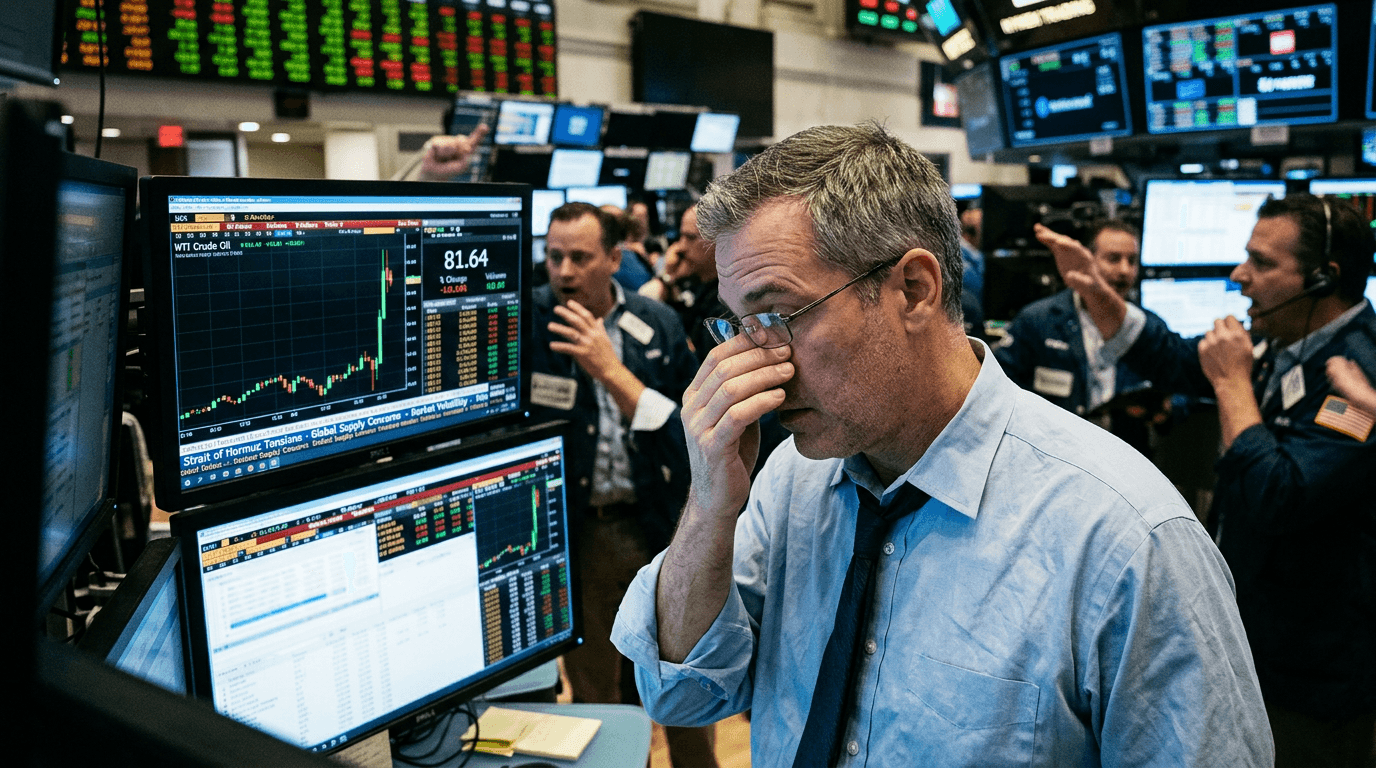
West Texas Intermediate crude has experienced a nearly 9% rise to $81.64 per barrel, reaching its highest point since summer 2024, while Brent crude has ascended to $85.85. This is not a typical market fluctuation sparked by algorithmic trading or speculative moves. Instead, it signifies a true supply shock driven by escalating military tensions between the United States and Iran. For traders, investors, and market participants, comprehending the mechanics and implications of this surge is vital for navigating an increasingly volatile energy landscape.
The global oil market is experiencing a seismic transformation as geopolitical realities supersede traditional supply-and-demand dynamics. What started as military tensions has morphed into a direct economic confrontation focused on one of the world's most crucial energy chokepoints: the Strait of Hormuz. The repercussions are resonating through equity markets, consumer prices, and inflation expectations, creating interconnected risks that extend far beyond the energy sector itself.
The Geopolitical Catalyst
The ongoing oil price surge is rooted in a genuine crisis, not market psychology. U.S. airstrikes against Iran, now in their second week, have heightened military tensions to unprecedented levels. In response, Iranian forces have targeted key oil infrastructure and vessels in essential shipping lanes, converting abstract military conflict into tangible economic disruption.
The most immediate threat arises from Iran's effective closure of the Strait of Hormuz, the narrow passage through which roughly 20% of the world's daily oil transit flows. This strategic chokepoint is irreplaceable—there is no swift alternative route to redirect the massive volume of crude that typically passes through these waters. When a nation controls this passage and shows willingness to disrupt it, the entire global energy market must reprice accordingly.
The Magnitude Of The Supply Shock
Analysts estimate that U.S. and Iranian military actions have collectively removed around 10 to 11 million barrels per day from global circulation. To grasp the severity of this disruption, consider that the world trades roughly 100 million barrels daily. This 10% reduction in available global supply represents a shock of immense magnitude that cannot be easily offset by spare capacity or alternative sources.
This supply disruption is fundamentally different from speculative price movements. The physical crude oil market is exhibiting severe stress signals. Asian refiners, facing acute supply scarcity, are compelled to pay record premiums for alternative crude sources. Norwegian Johan Sverdrup crude, for instance, trades at a premium of $11.80 per barrel over Brent crude—a dramatic spread that illustrates the desperation of buyers in a constrained market. These aren't theoretical price movements; they reflect real cash payments for actual barrels of oil that markets are struggling to secure.
Consumer Impact And Inflation Concerns
The surge in crude prices has quickly translated into pain at the gasoline pump. Average gasoline prices have increased to $3.25 per gallon, representing a sharp 9% rise from $2.98 just one week earlier. Alarmingly, prices have climbed to $3.58 per gallon by mid-March—a 60-cent rise within a single month. In particularly affected regions, consumers now face prices exceeding $4 per gallon, levels not seen since August 2022.
Energy costs represent one of the fastest transmission mechanisms for inflation to spread throughout the broader economy. When crude oil prices spike, the ripple effects are immediate and widespread. Higher transportation costs increase prices for goods across supply chains. Consumer purchasing power diminishes as households allocate more of their budgets to fuel and energy-related expenses. These dynamics directly threaten household budgets nationwide and complicate the inflation picture for policymakers.
The stock market has already begun to reflect these pressures. U.S. equities weakened as oil surged, with traders pricing in the dual risk of stagflationary headwinds—rising energy costs coupled with potential economic slowdown as consumers reduce discretionary spending.
Key Metrics For Traders To Monitor
For those navigating these volatile markets, several critical indicators deserve close attention. Track the Strait of Hormuz status obsessively; any developments regarding shipping lane access or diplomatic resolution could dramatically reshape the outlook. Monitor premium spreads between benchmark crude and alternative supplies; narrowing premiums would signal improving logistics and reduced emergency conditions.
Watch gasoline prices and consumer spending data for evidence that demand destruction is beginning to offset supply concerns. A sustained period of elevated prices eventually reduces consumption as consumers moderate driving and businesses curtail logistics.
Additionally, stay informed about OPEC policy decisions and reserve capacity announcements. Any indication that strategic petroleum reserves might enter the market or that spare production capacity is being mobilized could provide downward pressure on prices.
Looking Ahead
The 9% oil surge to $81.64 marks a pivotal moment where geopolitical realities directly influence market dynamics. The key for traders and investors is maintaining flexibility while staying informed about military developments, diplomatic progress, and supply chain adjustments. Significant oil price spikes have historically led to broader market corrections, yet the possibility of rapid diplomatic resolution remains real.
This situation underscores a fundamental market truth: geopolitical risk is not theoretical. It moves markets, impacts consumer wallets, and reshapes investment outlooks with remarkable speed. Those who understand these mechanics and adapt their strategies accordingly will navigate this volatility more effectively than those caught off guard by these essential dynamics.