
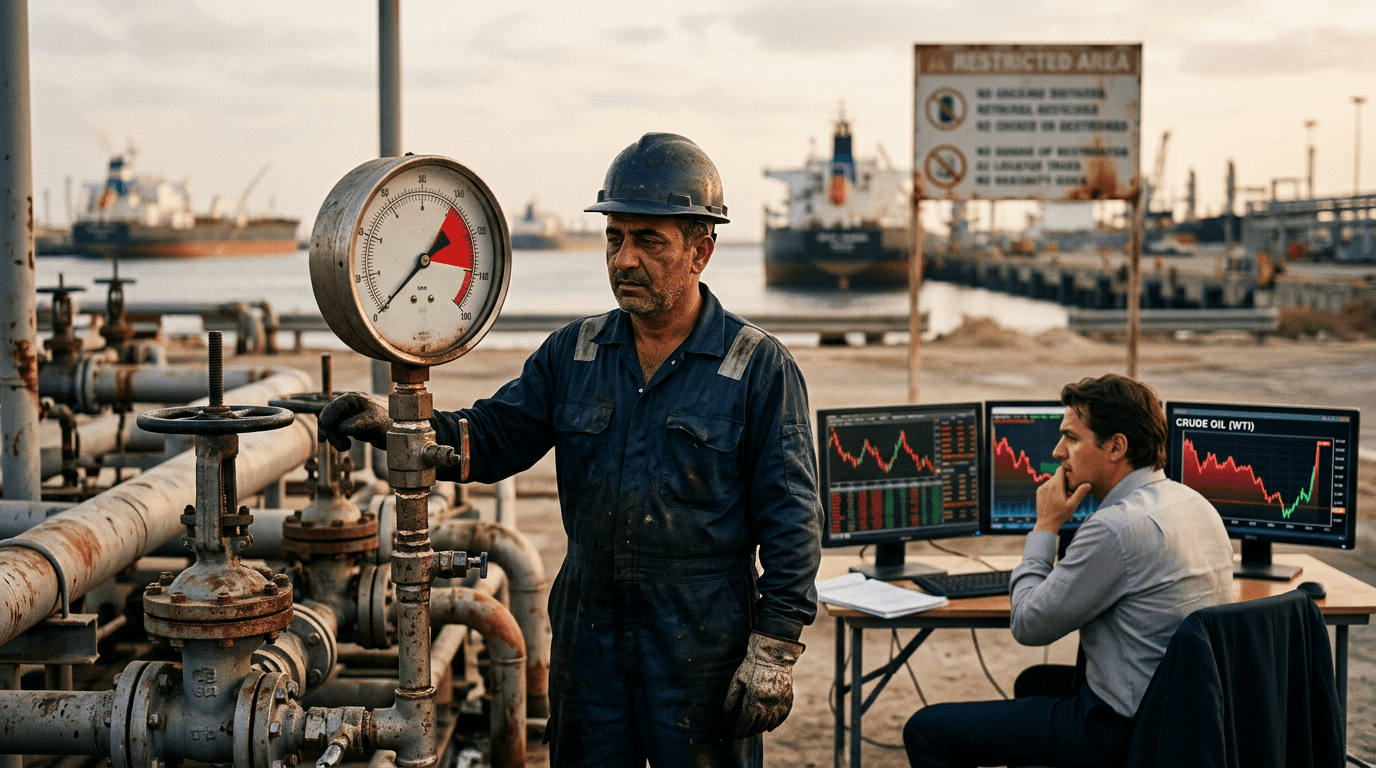
Crude oil prices have catapulted nearly 9 percent to $81.64 per barrel, marking their highest climb since summer 2024. This isn't speculation at play or a quirk of algorithmic trading. It's a stark reaction to a genuine geopolitical upheaval in one of the world's most pivotal energy chokepoints. For traders, investors, and market players navigating this tumultuous terrain, comprehending the catalysts behind these shifts and their ripple effects across stocks, currencies, and bonds is crucial. It's the key to seizing opportunities while deftly managing risks in a volatile market.
THE TRIGGER: MIDDLE EAST TENSIONS AND THE STRAIT OF HORMUZ CRISIS
The catalyst for this oil shock is clear-cut: escalating military conflict between the United States and Iran has severely disrupted critical energy infrastructure and shipping routes. Iranian forces have set their sights on vital oil installations and vessels in strategic shipping lanes, while U.S. airstrikes have persisted into their second week, perpetuating an atmosphere of uncertainty that keeps energy markets on high alert.
Most alarmingly, Iran has closed the Strait of Hormuz, a crucial artery for approximately 20 percent of the world's oil supply. This is no small disturbance; analysts estimate that the combined military actions by the U.S. and Iran have stripped the market of roughly 10 to 11 million barrels per day. In a global market that typically trades around 100 million barrels daily, this equates to a near 10 percent shock to worldwide supply—a scale of disruption not easily mitigated by alternative sources or strategic reserves.
The physical crude market is under palpable strain. Asian refiners are shelling out record premiums for alternative supplies, with Norwegian Johan Sverdrup crude trading at an unprecedented $11.80 premium over Brent. This record high underscores the desperation of global buyers scrambling to secure energy supplies amid genuine scarcity.
The Supply Crunch: Deciphering Structural Pressures
While U.S. crude production has ticked up year-over-year, exports have dipped by 3 percent compared to the same period in 2025. This seemingly paradoxical situation points to robust domestic demand, driven by elevated refinery utilization rates and strong crack spreads—the profit margin from converting crude into products like gasoline and diesel. U.S. crude is increasingly consumed domestically rather than exported, tightening global supply exactly when international markets are most in need.
Damage to Iran's own oil refineries has exacerbated the crisis. Facility owners have conceded they can no longer fulfill existing supply contracts, shifting trader sentiment from cautious to urgent. The market is now pricing in the tangible risk of losing access to a significant portion of global oil supplies for an indeterminate duration—a scenario that justifies aggressive positioning in energy futures.
Inflation Implications: The Return Of The Inflation Narrative
Higher energy costs are a swift and direct conduit for transmitting inflation into broader consumer prices. Gasoline prices have already surged significantly, hitting $3.58 per gallon by mid-March—a jump of 60 cents in just one month. This rapid escalation in fuel costs threatens to rekindle inflation concerns that had been gradually easing across developed economies.
This shift complicates the monetary policy landscape considerably. Central banks had been preparing markets for potential interest rate cuts as inflation had eased, but sustained high energy prices could compel policymakers to maintain restrictive monetary policies longer than anticipated. For equity investors, this creates a stagflation narrative—simultaneously rising inflation paired with economic weakness—that pressures valuations and underscores recent stock market weaknesses.
Policy Response: Strategic Reserve Interventions And Their Limitations
Authorities are striving to stabilize energy markets through strategic interventions. The International Energy Agency has announced that member countries will release a record 400 million barrels of oil from strategic reserves, with the United States contributing 172 million barrels from its Strategic Petroleum Reserve over four months. This coordinated release is an extraordinary policy response aimed at offsetting supply disruptions and moderating price increases.
However, these interventions are hampered by inherent timing challenges. Strategic petroleum reserve releases unfold over months and quarters, while geopolitical tensions can escalate or de-escalate on much shorter timelines. If the military conflict persists, the impact of reserve releases may prove inadequate. Moreover, government officials have expressed optimism that oil prices will decline, but no definitive timeline exists for when the military conflict might resolve.
Key Takeaways For Traders And Investors
First, genuine supply disruptions—not mere speculation—are driving current energy price dynamics, lending credibility to sustained elevation in oil and gasoline costs. This isn't a bubble waiting to burst; it reflects real infrastructure damage and production losses.
Second, the inflation implications challenge recent market narratives about economic softness and supportive monetary policy, potentially prolonging elevated interest rates and constraining equity valuations.
Third, equity market weakness reflects legitimate stagflation concerns rather than temporary volatility. Sectors vulnerable to oil price spikes and consumer demand destruction may face sustained pressure.
Finally, should oil prices climb toward or breach $100 per barrel and sustain that level, analysts warn that the global economy might struggle to absorb the impact. Traders should keep a close eye on geopolitical developments and position themselves for both near-term volatility and potential sustained elevation in energy costs.