
Key requirements: 1. Start DIRECTLY with the first paragraph - NO preamble 2. PLAIN TEXT format (no HTML, no markdown) 3. ALL CAPS section headings on their own line 4. Blank lines between paragraphs 5. 3-5 main sections 6. Engaging and educational 7. ~800 words 8. At the END: TITLE, EXCERPT, NEWSIMPACTSCORE
Let me extract the key information from the search results: - Oil prices surged 9% to $81.64 (highest since summer 2024)[1] - Brent crude at $85.85[1] - US-Iran military conflict is the cause[1][2] - Iran closed Strait of Hormuz (20% of world's oil supply)[1][2] - 10-11 million barrels per day removed from market (10% of global supply)[1][2] - Gasoline prices up to $3.58/gallon (60-cent rise in one month)[1][2] - This is a real supply disruption, not speculation[1][2] - Inflation concerns reignited[1][2] - US stocks impacted[1] - Asian refiners scrambling for alternatives[1] - Norwegian crude at $11.80 premium over Brent[1]
I need to write this in plain text, with section headings in ALL CAPS, separated paragraphs with blank lines. No markdown formatting. Then at the end, provide TITLE, EXCERPT, and NEWSIMPACTSCORE.
Let me structure it with these sections: 1. The Oil Price Surge and Geopolitical Crisis 2. Supply Disruption: Real Constraints, Not Speculation
3. Inflation Implications and Central Bank Concerns 4. Impact on Equity Markets and Trading Strategy 5. What's Next for Investors and Traders
Let me write this in plain text format.
The global oil market is experiencing one of its most significant disruptions in recent years, with crude prices surging 9% to $81.64 per barrel—the highest level since summer 2024. This dramatic spike is not the result of market speculation or algorithmic trading; it stems from genuine geopolitical turmoil in the Middle East that is constraining global energy supplies and sending shockwaves through equity markets worldwide. For traders and investors, understanding the mechanics of this crisis and its cascading effects on inflation, monetary policy, and stock valuations is critical to navigating the volatile market landscape of 2026.
The Geopolitical Crisis Reshaping Energy Markets
The driving force behind the current oil surge is straightforward: escalating military tensions between the United States and Iran have created a genuine energy crisis. U.S. airstrikes on Iran have continued for two weeks, with Iranian forces retaliating by targeting critical oil infrastructure and vessel traffic through vital shipping lanes. Most significantly, Iran has closed the Strait of Hormuz, a chokepoint responsible for approximately 20% of the world's daily oil supply. This is not theoretical disruption—it is a tangible, immediate constraint on global energy access.
The damage to physical infrastructure has been severe. Analysts estimate that military actions have removed between 10 and 11 million barrels per day from the global market, representing roughly 10% of total daily oil supply. In a market accustomed to trading around 100 million barrels daily, this level of disruption cannot be easily offset by releasing strategic reserves or shifting to alternative sources. The closure of the Strait of Hormuz combined with damage to Iran's oil refineries has created an unprecedented supply shock that is driving both Brent crude to $85.85 per barrel and creating desperation among global refiners.
Real Supply Constraints Versus Market Speculation
This oil price surge differs fundamentally from previous energy price spikes driven primarily by speculative positioning. The current environment reflects actual, verifiable constraints on oil supply that cannot be wished away by financial engineering or short-term policy interventions. Asian refiners, facing acute supply shortages, are paying extraordinary premiums for alternative crude sources. Norwegian Johan Sverdrup crude is now trading at an $11.80 premium over Brent—an unprecedented spread that reflects the genuine scarcity gripping energy markets.
The physical crude oil market is exhibiting severe stress signals beyond headline price movements. Tanker traffic through critical shipping lanes has halted. Local storage facilities in the Persian Gulf are approaching capacity limits, prompting major producers to cut production by 6%. These are not speculative positions that traders can unwind; they are structural constraints rooted in geopolitical reality. For market participants, this distinction matters enormously. When oil prices spike due to speculation, the move often reverses sharply as positions are liquidated. When prices surge due to genuine supply disruption, elevated levels can persist until the underlying constraints are resolved.
Inflation Fears And Monetary Policy Implications
The surge in crude prices is already translating into broader inflationary pressures throughout the global economy. Gasoline prices in the United States have jumped to $3.58 per gallon, representing a 60-cent increase in just one month. This rapid escalation in energy costs threatens to reignite inflation concerns that had been gradually easing through early 2026. Central banks, which had begun to consider rate cuts based on improving inflation dynamics, now face renewed pressure to maintain restrictive monetary policies for extended periods.
Energy prices are fundamental to inflation calculations, and this oil shock has the potential to derail disinflation narratives that dominated market sentiment in recent months. If oil remains elevated or climbs further toward $100 per barrel, as some analysts predict if tensions escalate, wage-price spiral risks could resurface. This creates a policy dilemma for central banks: sustaining higher interest rates to combat inflation will pressure equity valuations, while loosening policy prematurely could allow price pressures to accelerate. Either scenario creates headwinds for stock market performance.
The Equity Market Impact And Trading Considerations
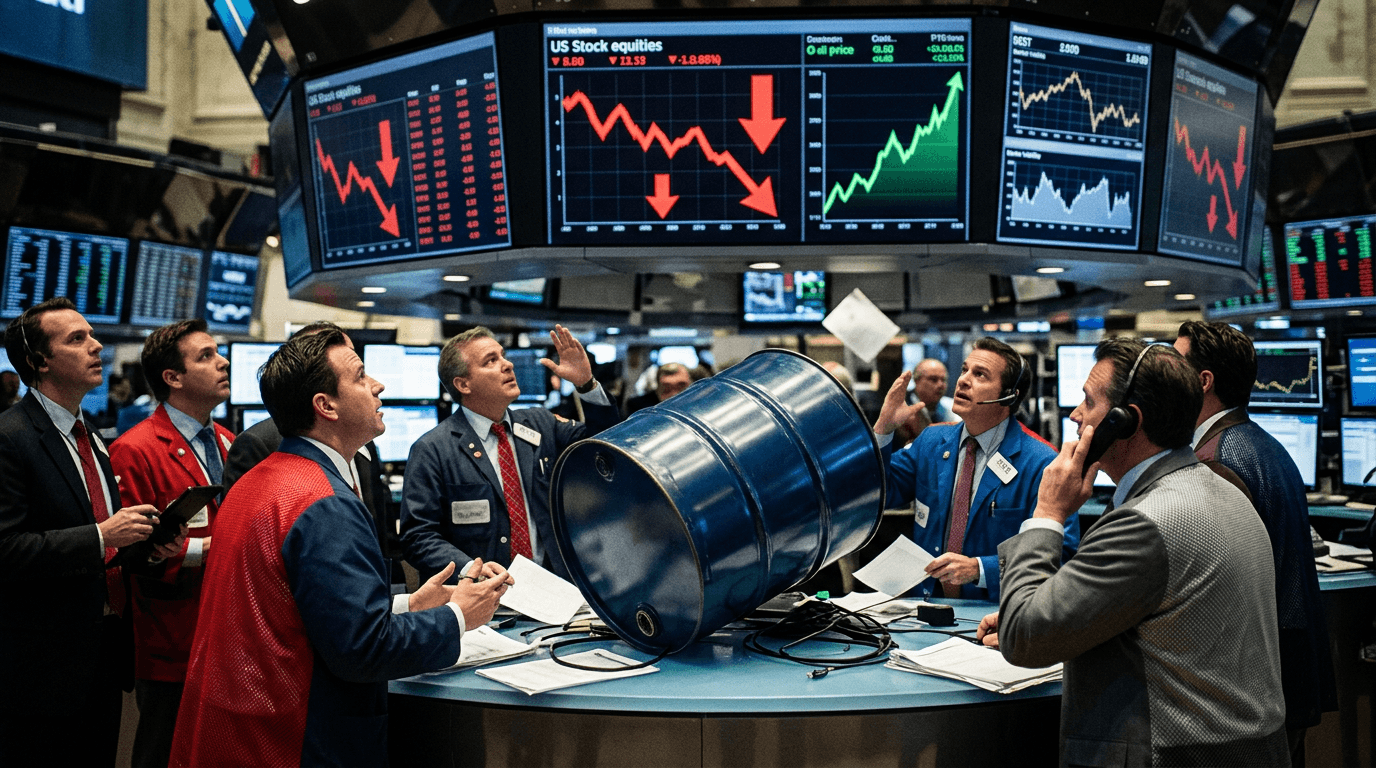
U.S. stocks have already begun to feel the pressure from elevated oil prices and renewed inflation concerns. Energy sector stocks may see temporary strength from higher crude valuations, but this is outweighed by broader market headwinds. Companies with high operational leverage to energy costs—transportation, logistics, consumer discretionary retailers—face margin compression from elevated fuel expenses. Meanwhile, sectors sensitive to interest rates, including technology and growth equities, face pressure from the prospect of sustained monetary tightening.
Traders must evaluate several critical factors in the current environment. First, assess whether current oil price levels adequately compensate for geopolitical risk premiums, or whether additional upside pressure could emerge if tensions escalate further. Second, evaluate portfolio exposure to inflation-sensitive assets and interest-rate-sensitive equities, as the dynamics now pulling in opposite directions could create whipsaw volatility. Third, consider that this is not merely a temporary shock—the evolution of U.S.-Iran military dynamics will continue influencing markets, potentially for weeks or months.
Safe-haven assets including gold and the U.S. dollar are attracting increased demand as investors reassess economic risks. Volatility indices are likely to remain elevated as long as geopolitical uncertainty persists. The convergence of physical supply disruptions, renewed inflation concerns, and limited policy relief tools creates a genuinely uncertain investment environment.
Navigating The Road Ahead
The key takeaway for investors and traders is clear: oil prices are unlikely to return quickly to pre-crisis levels unless geopolitical tensions resolve dramatically. This supply shock is different from previous disruptions because the underlying constraints are real, physical, and geopolitically rooted rather than speculative. Market participants should prepare for sustained volatility, reassess inflation expectations in their portfolio models, and carefully evaluate exposure to both energy-sensitive and interest-rate-sensitive equities. Whether oil stabilizes near current levels or climbs further toward $100 per barrel will largely depend on developments in the Middle East—a factor beyond traditional economic models and one that demands ongoing attention from anyone positioned in 2026's markets.