
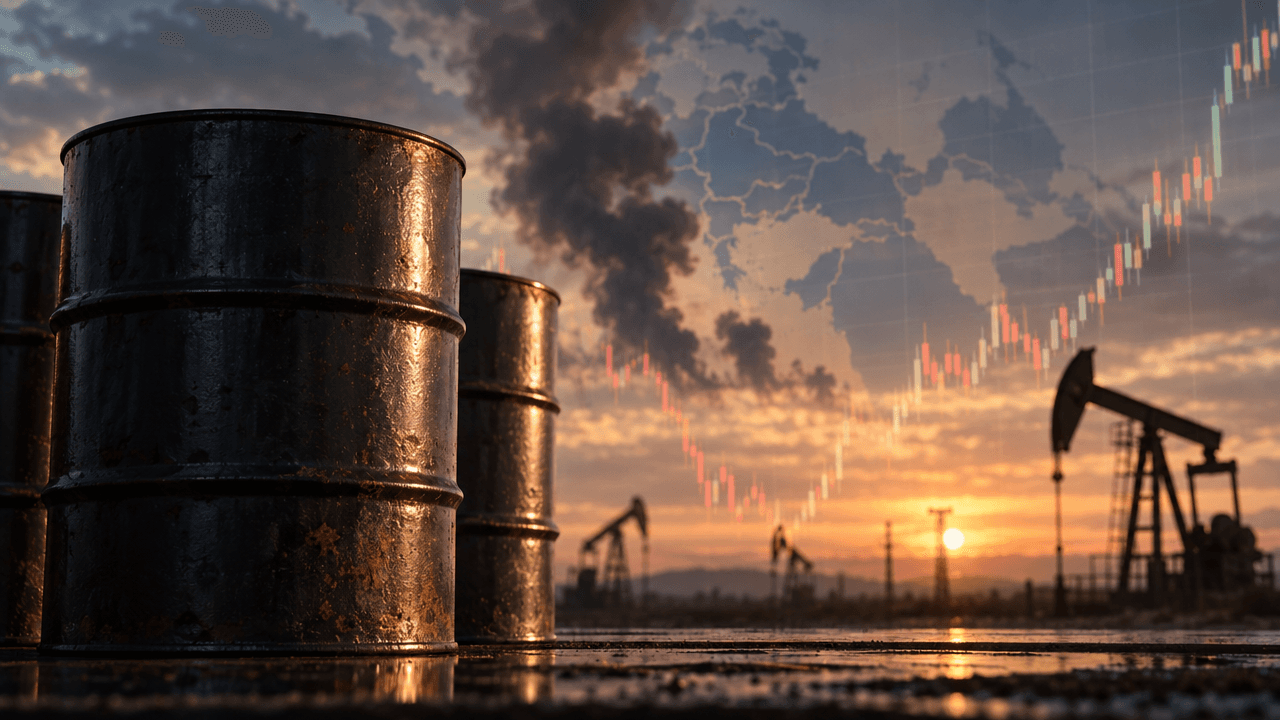
Oil markets jolled higher Thursday as reports of possible renewed U.S.-Israeli strikes on Iran revived fears that a wider Middle East conflict could disrupt global energy supplies. Brent crude climbed roughly 3% to above $112 per barrel, while West Texas Intermediate approached $100. The move represents more than a routine commodity rally: it signals that geopolitical risk has returned as a central force in pricing oil, inflation expectations, equities, and interest rates. [1][4]
Why Oil Surged
The immediate catalyst was reporting that U.S. and Israeli military planners have prepared options for renewed strikes on Iran after next month’s U.S. midterm elections. The reports, attributed to officials familiar with the planning, arrived alongside attacks affecting Saudi Arabia and heightened concerns about energy infrastructure and shipping routes in the Persian Gulf. [9][11]
Oil prices respond not only to current production figures but also to the possibility of future supply disruption. Iran is a major regional producer, and any military escalation could threaten exports, tanker traffic, pipelines, or critical facilities. The Strait of Hormuz is especially important because a significant share of the world’s seaborne oil passes through the narrow waterway.
That makes the market’s reaction partly a risk premium. Traders may bid prices higher even before a single barrel of supply is lost. They are paying for protection against a scenario in which transportation becomes more expensive, insurance costs rise, or production is temporarily suspended.
Brent’s move above $112 placed prices near recent highs, while WTI’s approach toward the psychologically important $100 level added to the sense of urgency. Analysts have warned that crude could remain highly volatile as investors respond sharply to military and diplomatic developments. [3]
The Inflation Connection
Higher oil prices affect the economy through several channels. The most visible is fuel: gasoline, diesel, jet fuel, and heating costs can all rise as crude becomes more expensive. But energy is also an input for transportation, manufacturing, agriculture, chemicals, and countless other industries.
Businesses facing higher operating costs may pass those increases to customers. Consumers then have less disposable income for other purchases, while companies may delay investment or hiring. This combination can create a difficult environment in which inflation rises even as economic growth slows.
That is why the oil rally is attracting attention from central banks. If energy prices push headline inflation higher, policymakers may become more cautious about cutting interest rates. If inflation expectations become unanchored, officials could even face pressure to maintain restrictive policy for longer.
The impact depends on duration. A short-lived price spike may fade without creating lasting inflation. A sustained supply shock, however, can affect wages, contracts, consumer expectations, and business planning. Traders should therefore distinguish between a temporary geopolitical premium and a prolonged energy crisis.
Why Equities May Struggle
Oil’s gains can produce winners and losers across financial markets. Energy producers may benefit from stronger realized prices, particularly if production costs remain stable. Companies involved in exploration, refining, oilfield services, and selected energy infrastructure may also attract buying interest.
The broader equity market faces a more complicated calculation. Higher fuel and input costs can reduce profit margins for airlines, logistics companies, manufacturers, retailers, and consumer businesses. At the same time, higher inflation may lift bond yields and reduce the valuation investors are willing to pay for growth stocks.
This helps explain why stocks can fall even when the economy has not yet experienced an actual supply shortage. Markets price anticipated earnings pressure and tighter financial conditions well in advance. Recent market coverage has linked the oil advance with weaker equities and renewed concerns about the inflation outlook. [2][5]
The relationship is not automatic. Some energy-intensive companies may have hedges, pricing power, or strong balance sheets. Investors should examine sector exposure rather than assuming every stock will respond identically.
A Practical Framework For Traders
First, monitor the headline and structure of the oil market. A sharp rise in front-month futures accompanied by strength across later contracts may indicate broader concern about supply. If only the nearest contracts rise, traders may be pricing an immediate disruption rather than a lasting shortage.
Second, watch the spread between Brent and WTI. Brent reflects international seaborne pricing and may respond more directly to Middle East supply risks, while WTI is more closely tied to North American production, inventories, and transportation. Divergence between the two can reveal how the market is assessing regional risk.
Third, track confirmation beyond social media headlines. Relevant signals include shipping restrictions, attacks on energy facilities, official military statements, inventory data, tanker rates, and currency movements. Rumors can move crude quickly, but durable trends generally require evidence of actual supply or transportation problems.
For SimFi traders, risk management is particularly important during event-driven volatility. Reduce position size when spreads widen, avoid placing stops at obvious crowded levels, and define the maximum loss before entering a trade. A trade based on a geopolitical headline should have a clear invalidation point: for example, diplomatic de-escalation, restored shipping activity, or evidence that production remains unaffected.
What To Watch Next
The next market phase will depend on whether the reports lead to military action, diplomatic negotiations, or no escalation. If tensions ease, some of the risk premium could quickly unwind. If strikes occur or energy infrastructure is damaged, Brent could challenge recent highs and inflation-sensitive assets may face renewed pressure.
Traders should also watch the U.S. dollar, Treasury yields, airline and transportation shares, energy equities, and inflation expectations. A simultaneous rise in oil, yields, and the dollar would suggest tightening financial conditions. A rise in oil alongside falling yields could instead signal growing concern about economic damage.
The central lesson is that oil prices are now carrying information about both supply and policy risk. The most disciplined response is not to predict every headline, but to prepare for multiple scenarios, use defined risk, and separate temporary volatility from a genuine change in the energy landscape.