
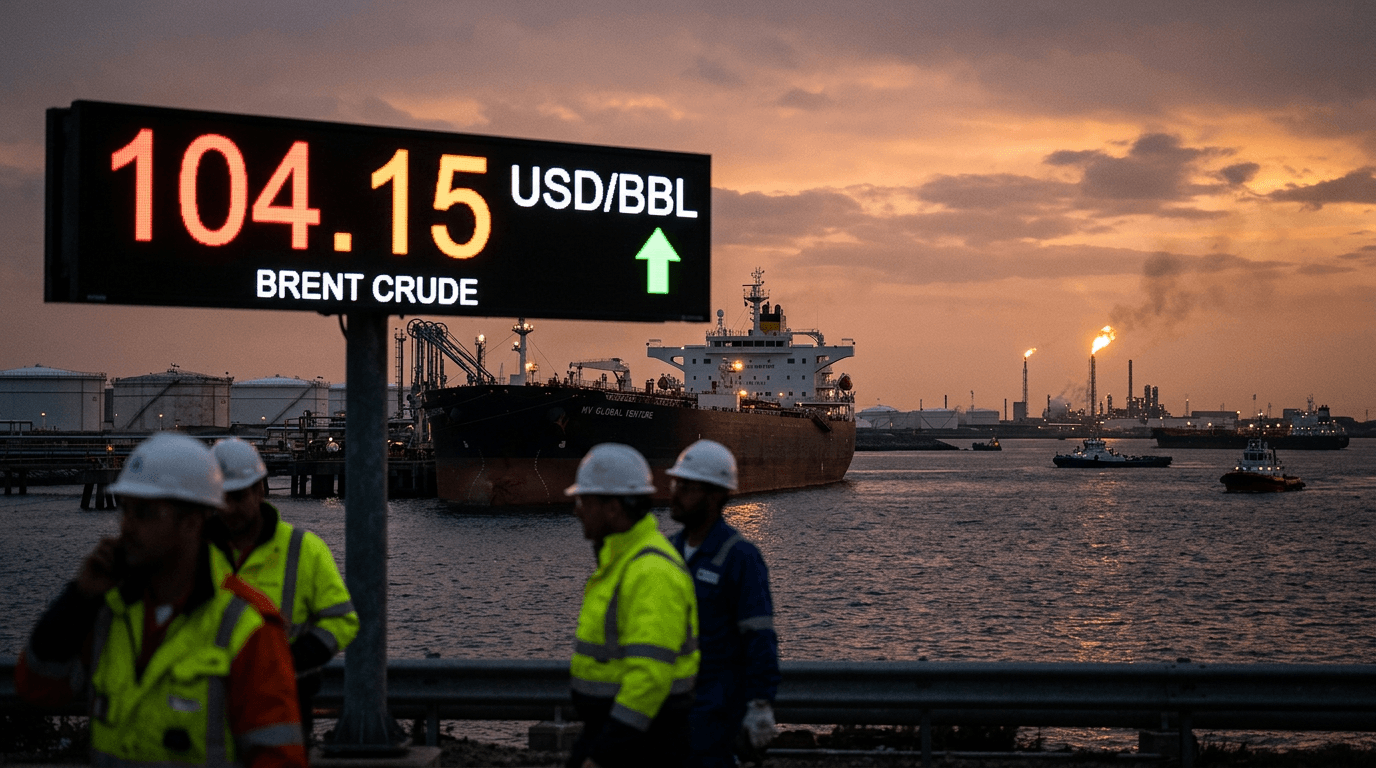
Crude oil has surged past critical resistance levels as geopolitical tensions in the Middle East intensify, with Brent crude trading around $100 per barrel and showing no signs of retreat. The sharp rally reflects growing concerns about supply disruptions through the Strait of Hormuz, one of the world's most critical energy chokepoints, where Iran's escalating military posture threatens to disrupt global oil flows. This convergence of technical breakout and fundamental supply risk has created a powerful momentum that traders are closely monitoring for its next target.
Geopolitical Crisis Drives Oil Higher
The current oil surge is directly tied to escalating tensions between Iran, the US, and Israel in the Middle East. Iran's new Supreme Leader Mojtaba Khamenei recently pledged to keep the Strait of Hormuz effectively shut, a significant statement given that roughly one-third of all seaborne traded oil passes through this waterway. More critically, reports indicate that Iran has begun laying mines in the Strait of Hormuz, creating tangible supply disruption risks that extend beyond rhetoric.
The US response has been swift and visible, with reports confirming that the US is moving a Marine expeditionary unit to the Middle East to counter Iranian aggression. This military positioning reflects the seriousness of the situation and the determination to maintain shipping lanes open, yet each action and counter-action raises the stakes for oil markets. When supply routes face genuine threat, traders immediately price in risk premiums that can propel prices sharply higher.
The combination of Iranian threats, mine-laying operations, and US military mobilization has created an environment where even routine market news triggers significant price swings. Energy prices have moved higher as news headlines continually whipsaw sentiment, though the broader uptrend remains intact despite temporary pullbacks from intraday resistance levels.
Supply Disruption Fears Override Other Factors
Despite some headwinds including a US temporary waiver for Russian oil purchases and negotiations between France, Italy, and Iran regarding safe passage through the Strait, crude prices have recovered losses and turned decisively higher. This demonstrates that supply security concerns currently dominate the market's attention more than diplomatic efforts or policy accommodations.
Brent crude fell slightly to $100.16 USD per barrel on March 13, 2026, down just 0.30 percent from the previous day. Over the past month, Brent's price has risen 45.81 percent, a remarkable surge that reflects the rapid escalation of tensions in the region. Compared to the same time last year, Brent is up 41.91 percent, showing that the current geopolitical premium has added substantial value to the commodity.
The rally has been impressive when measured against longer-term benchmarks. One month ago, Brent traded at approximately $70, meaning the current levels represent a dramatic 43 percent monthly gain. This velocity of price appreciation indicates strong conviction among market participants that supply risks are real and material.
Technical Breakout Aligns With Fundamental Concerns
From a technical perspective, Brent crude has decisively moved above key resistance levels. Analysts had identified $100 as an expected target in previous analysis, representing an important psychological and technical level that the market has now penetrated. The price action suggests that technical buyers have joined fundamental long positions, amplifying the rally's strength.
Overbought conditions are evident in relative strength indicators, suggesting that some profit-taking and consolidation may occur in the near term. However, the dominance of the short-term bullish trend remains intact, with price movements reinforcing upward momentum. Trading Economics global macro models forecast Brent crude to reach $107.05 USD per barrel by the end of this quarter, implying further upside from current levels.
Key Takeaways For Traders And Investors
Several critical factors should guide decision-making in this volatile environment. First, geopolitical developments now act as primary price drivers, making headlines from the Middle East more important than traditional supply-demand data. Second, the Strait of Hormuz remains the critical focal point—any escalation there could send oil significantly higher, while improvements in security could trigger sharp reversals.
Third, current trading levels offer both opportunities and risks. The rally has been swift and powerful, but such rapid moves often create overextension conditions. Support levels around $88 provide potential entry points for traders seeking pullback opportunities, while resistance near $107 represents the next major target for bulls.
Fourth, energy investors should monitor crude oil futures contracts closely, as they offer real-time access to developing situations. The April WTI contract has surged along with Brent, maintaining the traditional spread relationship between the two major benchmarks.
Looking Ahead
The oil market faces a critical juncture where technical momentum meets fundamental uncertainty. Whether Brent reaches the projected $107 level depends heavily on whether Middle East tensions escalate further or begin to stabilize. Traders should prepare for continued volatility while respecting the clear uptrend that has established itself through March 2026.