
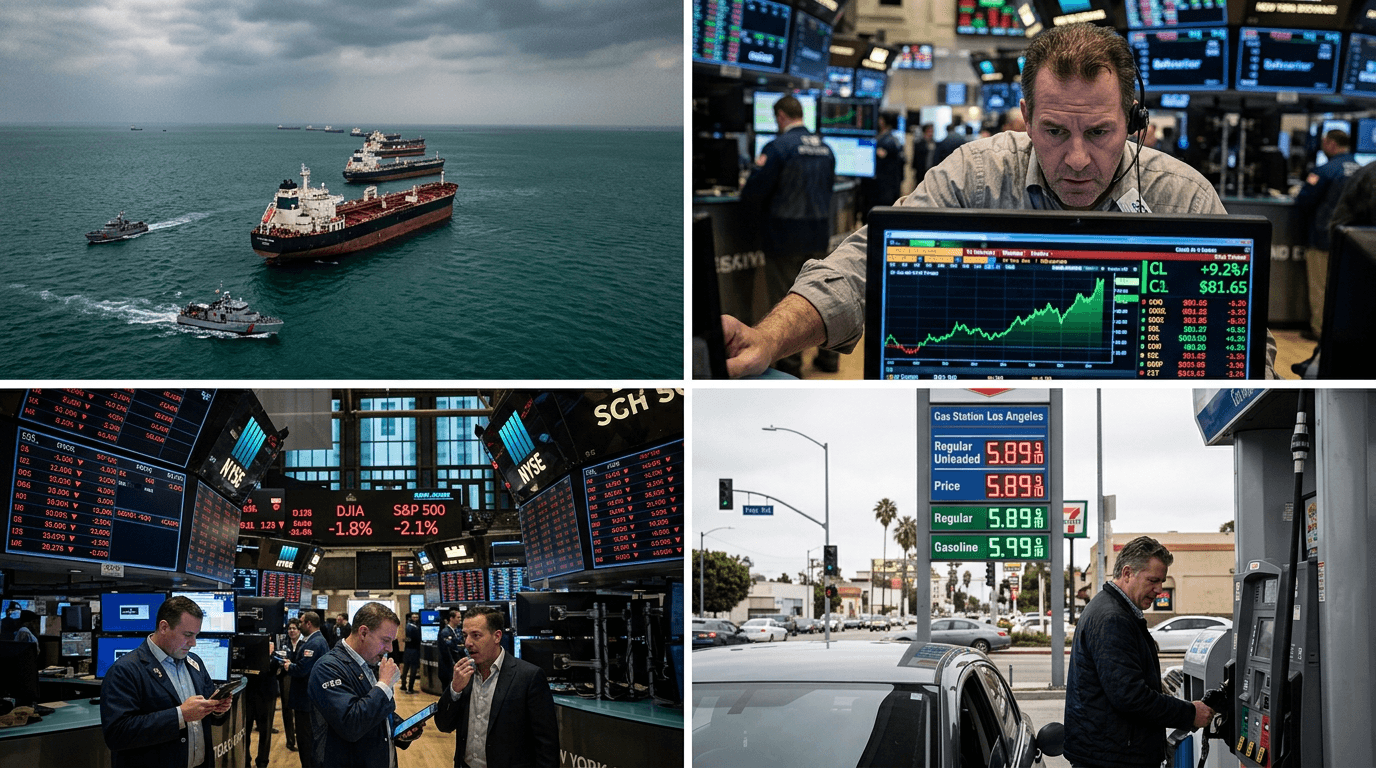
Oil prices have surged nearly 9% to $81.64 per barrel, driven by escalating military tensions between the United States and Iran. West Texas Intermediate crude has hit its highest point since the summer of 2024, while Brent crude has soared to $85.85. This surge is a result of actual supply disruptions rather than market speculation, and it is causing significant ripples across financial markets. The effects are being felt in declining US equities and rising concerns over inflation, which could alter monetary policy expectations for the rest of 2026.
The Geopolitical Catalyst: A Supply Crisis
The spike in oil prices is due to genuine supply disruptions from the Middle East. Iranian attacks on oil infrastructure and vessels, coupled with U.S. airstrikes, have created ongoing uncertainty. The critical development is Iran's de facto closure of the Strait of Hormuz, a crucial channel for about 20% of the world's daily oil supply. This isn't just risk management—it's real infrastructure damage and port shutdowns causing actual supply disruptions.
Analysts indicate that combined military actions by the U.S. and Iran have removed 10 to 11 million barrels per day from the global market, disrupting roughly 10% of the global oil supply. This monumental shock cannot be easily offset by spare capacity or alternative sources. The physical crude oil market shows signs of severe stress, with Asian refiners paying record premiums for alternative supplies. For example, Norwegian Johan Sverdrup crude, a key source of light sweet crude, is trading at a record premium of $11.80 per barrel over Brent, highlighting buyers' desperation.
Inflation Implications: Rapid Transmission
Energy costs rise rapidly, forming one of the quickest channels for inflation to spread into broader consumer prices. This mechanism is already in motion across the U.S. economy. Average gasoline prices have spiked to $3.25 per gallon, reflecting a 9% increase from $2.98 just a week earlier. By mid-March, prices have reached $3.58 per gallon in many regions, representing a 60-cent surge in a single month. Some areas have even seen prices exceed $4 per gallon, levels last seen in August 2022.
This rapid rise in energy prices threatens to rekindle inflation concerns that had been moderating earlier in 2026. Energy shocks affect the entire economy simultaneously, impacting transportation, manufacturing, heating, and consumer goods production. If oil prices continue climbing toward $100 per barrel, analysts warn the global economy could struggle to absorb the impact. This inflation resurgence poses a challenging policy environment for central banks, which had been considering rate reductions.
Equity Market Selloff: Stagflation Concerns
The sharp decline in US stocks reflects concerns about stagflation—a combination of economic stagnation and rising inflation reminiscent of the 1970s energy crisis. Equity markets see oil shocks as detrimental to corporate profit margins and consumer spending. Higher energy costs squeeze margins for transportation and production businesses while reducing consumer purchasing power as households spend more on gasoline and heating.
Market weakness extends beyond energy stocks, with broader indices declining as investors adjust assumptions about economic growth and central bank policy. Previous narratives about gentle monetary policy and continued rate cuts are now challenged by this new inflation shock. Traders are pricing in scenarios where central banks maintain restrictive monetary policies longer than anticipated, affecting growth-sensitive sectors and technology stocks that thrive in low-rate environments.
Government Interventions And Outlook
Authorities are trying to stabilize energy markets through strategic interventions. The International Energy Agency announced a record release of 400 million barrels from strategic reserves, with the US contributing 172 million barrels from its Strategic Petroleum Reserve over four months. This coordinated response aims to offset supply disruptions and moderate price increases.
However, these interventions face timing challenges. Reserve releases occur over months, while geopolitical tensions can change more quickly. Government officials are optimistic about declining oil prices, though no timeline exists for how long military conflict may last. Market participants must watch both geopolitical tensions and government reserve releases to determine whether current elevated price levels persist.
Trading Implications And Takeaways
For traders and investors, several key insights arise from this market environment. First, genuine supply disruptions, not speculation, are driving current oil dynamics, lending credibility to elevated energy costs. Second, inflation implications challenge recent narratives about economic softness and supportive monetary policy. Third, equity market weakness reflects legitimate stagflation concerns rather than temporary volatility. Finally, government interventions provide meaningful support but cannot resolve underlying geopolitical risks, which remain the primary price driver. Monitoring both energy market developments and central bank responses will be essential for navigating the weeks ahead.
---