
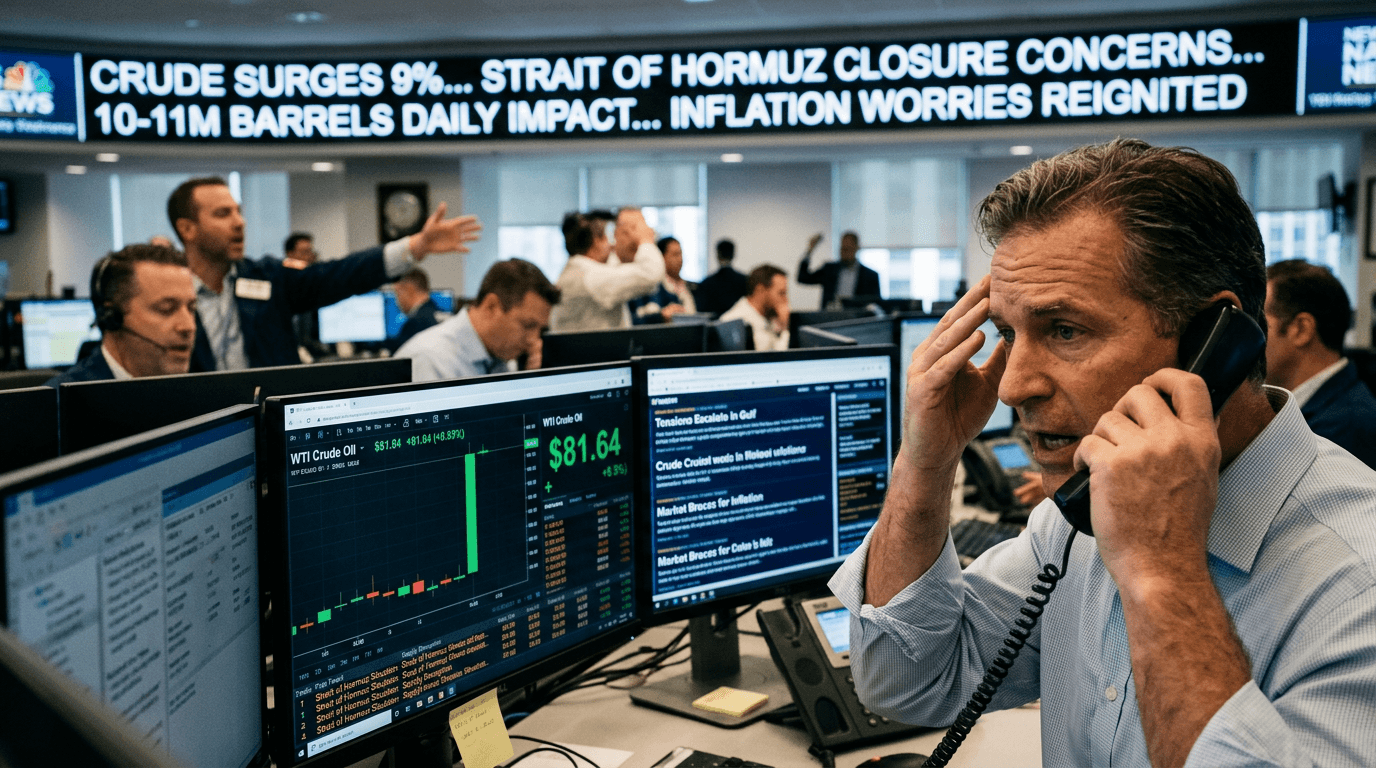
The global oil market is experiencing a seismic shift, with crude prices soaring nearly 9% to hit $81.64 per barrel, the highest level seen since the summer of 2024. This sharp rise is a direct consequence of actual supply disruptions caused by escalating military tensions between the United States and Iran, fundamentally altering market dynamics. Unlike past speculative bubbles, the current oil shock is rooted in tangible disruptions to critical energy infrastructures and key shipping routes, escalating market sentiment from cautious to urgent.
Brent crude has surged to $85.85 per barrel amid the intensifying Middle East tensions. As U.S. airstrikes on Iran roll into their second week, the resulting uncertainty keeps energy markets in turmoil, thwarting any semblance of price stability. The closure of the Strait of Hormuz by Iran, a crucial chokepoint responsible for about 20% of global oil supply, is the primary catalyst for this surge. The situation is far from theoretical; it involves real damage to infrastructure and port shutdowns, which are exacerbating supply anxieties and fueling aggressive trading in energy futures markets.
The Geopolitical Catalyst Reshaping Energy Markets
The dramatic price upheaval is closely tied to the military conflict escalating in the Middle East, where Iranian forces have targeted vital oil infrastructure and vessels in strategic shipping lanes. This situation starkly contrasts with previous oil price hikes, which were largely speculative; the current crisis involves real infrastructure damage and port shutdowns, generating authentic supply concerns that markets cannot overlook. Additionally, Iranian actions have impaired the nation's oil refineries, with facility owners indicating their inability to fulfill existing supply contracts, thereby worsening the crisis.
This geopolitical escalation is reshaping how financial markets price energy assets. Traders are now reacting to concrete, physical disruptions affecting global energy flows rather than betting on abstract scenarios. The uncertainty over the duration of this conflict adds another layer of risk to energy markets, as government officials offer no clear timeline for resolution.
Quantifying The Supply Shock
Analysts estimate that U.S. and Iranian actions have removed 10 to 11 million barrels daily from the market. In a global context where around 100 million barrels are traded each day, this amounts to a roughly 10% disruption of the global oil supply—a significant shock that cannot be easily absorbed by spare capacity or alternative sources. The physical crude oil market is under severe stress, with Asian refiners paying unprecedented premiums for alternative supplies to ensure energy access.
This supply disruption is far from marginal. When one-tenth of the global oil supply is removed from normal trade flows, remaining market participants must fiercely compete for limited available barrels. This desperation is evident in the dramatic widening of premium spreads between oil benchmarks, as buyers scramble for alternative supplies to meet their needs, leading to record-breaking price differentials between crude grades.
Inflation Implications And Market Consequences
The swift increase in oil prices is rippling through the economy, with significant implications for consumers and policymakers. The average U.S. gasoline price has surged to $3.25 per gallon, a 9% rise from $2.98 just a week ago. By mid-March, prices reached $3.58 per gallon—a $0.60 increase within a month, with some regions witnessing prices surpassing $4 per gallon, levels last seen in August 2022.
These rising gasoline prices directly impact consumer purchasing power and inflation expectations. Higher energy costs affect transportation, manufacturing, and logistics sectors, potentially challenging monetary policy assumptions. The inflationary chain reaction from crude prices to consumer gasoline and broader economic growth generates downstream effects that equity markets are beginning to price in, putting pressure on stock portfolios with exposure to energy-intensive sectors as margins compress and operational costs unexpectedly rise.
Government Response And Strategic Interventions
Recognizing the gravity of the situation, authorities are actively working to stabilize energy markets through strategic interventions. The International Energy Agency announced that its member countries would release a record 400 million barrels of oil from strategic reserves, with the United States contributing 172 million barrels from its Strategic Petroleum Reserve over four months. This coordinated policy response is remarkable in scale and aims to offset supply disruptions and temper price increases.
However, these interventions face significant timing challenges. Strategic petroleum reserve releases are spread over months, while geopolitical tensions can escalate or de-escalate in shorter timeframes. The effectiveness of these measures hinges on whether the military conflict de-escalates or persists. Short-term relief from reserve releases may prove inadequate if the underlying geopolitical crisis continues.
Key Takeaways For Traders And Investors
This surge in oil prices highlights how geopolitical shocks translate into immediate financial market ramifications. Genuine supply disruptions, not mere speculation, are driving current dynamics, lending credibility to sustained elevation in energy costs. Positions in energy stocks, transportation sectors, and volatility products will likely experience substantial fluctuations as new developments unfold. Long-term observers should evaluate whether this spike is a temporary shock or signals a prolonged period of elevated oil prices through 2026.
Traders must remain agile, closely monitoring geopolitical developments and government intervention timelines. Volatility is expected to stay high until either military hostilities cease, or markets adjust to higher energy price levels as the new normal.
NEWSIMPACTSCORE: 8