
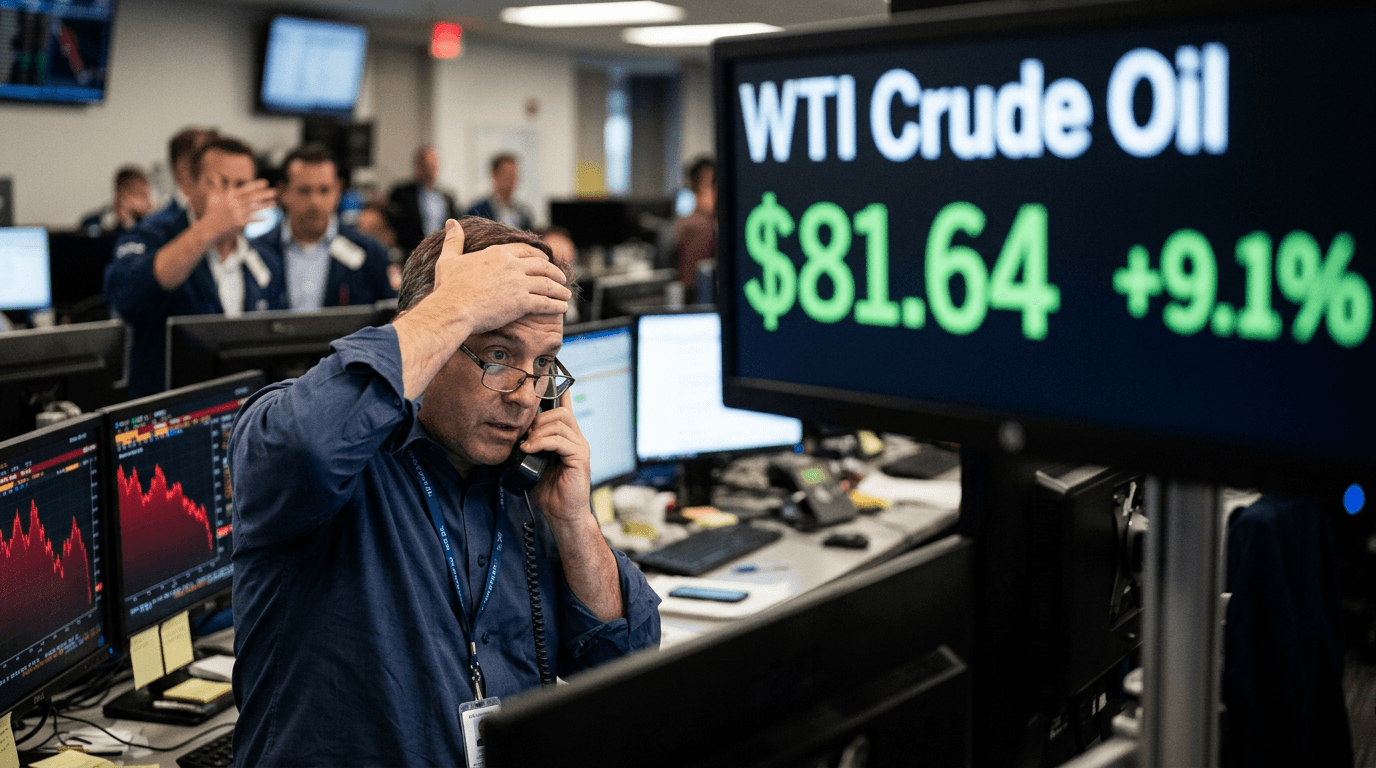
Oil Prices Surge Past $100 Amid US-Iran Tensions: Implications for Stocks and Your Portfolio
Seismic Shifts in Global Oil Markets
The global oil markets are witnessing significant turbulence as geopolitical tensions between the United States and Iran escalate. This has sent ripples through financial markets and inflation expectations. Recent developments in the Middle East have driven crude prices beyond the $100 per barrel threshold, marking a pivotal moment for energy traders and investors worldwide. This surge not only highlights immediate supply concerns but also broader implications for inflation, monetary policy expectations, and equity market performance during an already uncertain economic period.
The Catalyst: Middle East Military Escalation
The recent spike in oil prices stems from active military conflict in the region, with Iranian forces targeting oil infrastructure and vessels in crucial shipping lanes. U.S. airstrikes against Iran have now extended into their second week, creating an environment of sustained uncertainty that has kept oil markets on edge. Most critically, Iran has closed the Strait of Hormuz—a vital energy chokepoint responsible for approximately 20% of global oil supply. Iranian strikes on tankers in regional waters have forced ports to shut down, compounding supply concerns and driving aggressive trading in energy futures.
The immediate market reaction has been dramatic. Brent crude, the international benchmark, has surged past $100 per barrel amid these escalating hostilities. The conflict represents a genuine supply shock rather than speculative positioning, as actual infrastructure has been damaged and shipping routes disrupted. According to reports, Iran's own oil refineries have sustained significant damage, with facility owners indicating they can no longer meet existing supply contracts.
Oil Prices and Inflation Concerns
Higher energy costs represent one of the fastest transmission mechanisms for inflation into broader consumer prices. At the pump, gasoline prices have already jumped substantially, reaching $3.58 per gallon as of mid-March—marking a 60-cent increase over the previous month alone. This rapid acceleration in energy prices threatens to reignite inflation concerns that had been gradually moderating, potentially forcing central banks to maintain restrictive monetary policies longer than previously anticipated.
The inflation implications extend beyond direct fuel costs. Oil price increases ripple through transportation, manufacturing, and production costs across nearly every sector of the economy. Supply chain pressures resurface when energy becomes constrained, and businesses face higher input costs that may be passed to consumers. This dynamic directly conflicts with recent market optimism about falling inflation and potential interest rate cuts, creating a genuine policy dilemma for monetary authorities.
Market Reaction and Equity Impact
Financial markets have responded negatively to the confluence of higher oil prices and elevated inflation expectations. U.S. stock futures have declined as investors reassess profit margins, consumer spending power, and the Federal Reserve's likely policy trajectory. The energy sector itself shows mixed signals—while oil and gas companies benefit from higher commodity prices, broader equities suffer as investors price in lower consumer purchasing power and reduced economic growth potential.
This negative equity reaction reflects a fundamental shift in market sentiment. Earlier optimism about economic resilience and potential rate cuts has given way to renewed stagflation concerns. When oil prices spike due to genuine supply disruptions rather than demand strength, equity investors face the worst-case scenario: higher input costs, lower profit margins, and central banks potentially remaining hawkish on monetary policy. Energy futures markets are pricing in an extended period of elevated oil costs, suggesting traders expect the Middle East situation to persist.
Government and Central Bank Responses
Authorities are actively attempting to stabilize energy markets through strategic interventions. The International Energy Agency announced its member countries would release a record 400 million barrels of oil from strategic reserves, with the United States contributing 172 million barrels from its Strategic Petroleum Reserve starting over a four-month period. This coordinated release represents an extraordinary policy response designed to offset supply disruptions and moderate price increases.
However, these interventions face timing challenges. Strategic petroleum reserve releases operate over months, while geopolitical tensions could escalate or deescalate on shorter timeframes. Government officials have expressed optimism that oil prices will decline, though no definitive timeline has been provided for how long the military conflict may last. This uncertainty itself contributes to elevated volatility and risk premiums in energy markets.
Key Takeaways for Traders and Investors
First, genuine supply disruptions—not merely speculation—are driving current oil price dynamics, lending credibility to sustained elevation in energy costs. Second, the inflation implications challenge recent market narratives about Fed rate cuts and economic softness. Third, equity market weakness reflects legitimate concerns about stagflation risks rather than temporary volatility. Fourth, government interventions through strategic reserve releases provide some price support but cannot resolve underlying geopolitical risks.
For investors and traders, the current environment demands heightened attention to energy markets as a primary driver of broader economic outcomes. Oil prices above $100 per barrel represent a material shock to the global economy, with implications that extend far beyond the energy sector itself. Positioning must account for extended periods of elevated inflation, policy uncertainty, and potentially lower equity valuations in a higher-for-longer interest rate environment.