
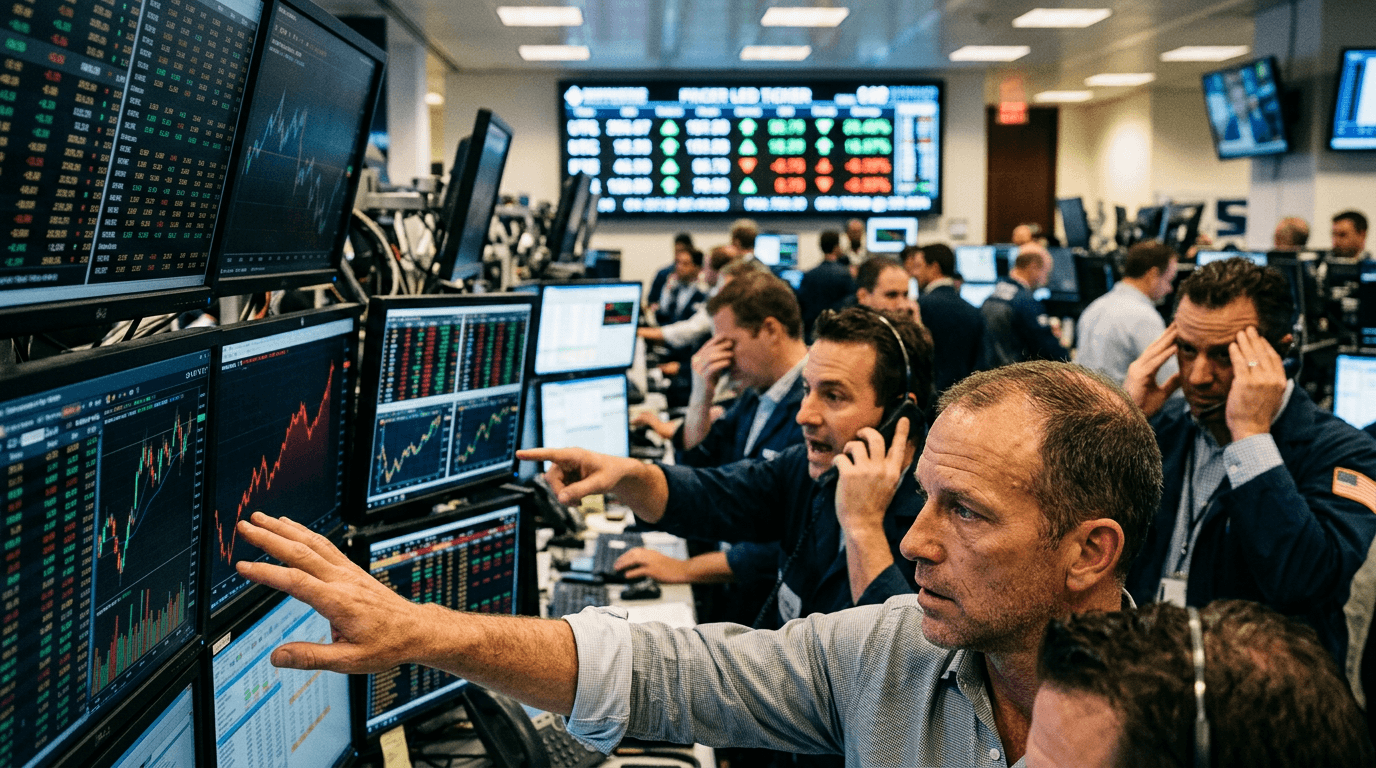
Crude oil futures are on track for their steepest weekly advance since mid-July as escalating clashes between the US and Iran drive a fresh geopolitical risk premium into energy markets.[1] Concerns over disruptions to Middle East supply routes, particularly around the Strait of Hormuz, have pushed benchmark Brent and WTI crude sharply higher and reignited worries about inflation and currency volatility in both oil-importing and exporting economies.[1][2][7][10][11] For traders, this is a vivid reminder that geopolitics can move markets faster than fundamentals alone.
Oil's Biggest Weekly Surge Since Mid-july
Recent price action shows just how quickly sentiment can flip when geopolitical risk intensifies.[1] Brent crude has logged a strong single-week gain, while WTI has risen by an even larger percentage, marking their steepest weekly rise since mid-July.[1] Similar spikes were seen earlier in the summer, when renewed hostilities around key shipping lanes helped drive weekly gains in the double digits for both benchmarks.[2][4][7][9] These moves have lifted prices back toward levels that markets last saw during prior episodes of Middle East tension.[4][7][10]
For context, earlier waves of US‑Iran conflict this year pushed Brent and WTI higher by roughly 11–16% in a single week as risks to tankers transiting the Gulf intensified.[2][7][9] In some of those episodes, Brent briefly traded near or above the 90‑dollar mark, underscoring how quickly supply fears can be priced into futures curves.[4][7] The current rally is smaller than the most extreme surges but still significant enough to reshape expectations for near‑term volatility, term structure, and macro spillovers.[1][11]
From a trader’s perspective, the key point is that these are not slow, gradual trends but sharp weekly repricings driven by event risk. In just a few sessions, option implied volatilities can climb, calendar spreads can invert or steepen, and risk models calibrated on quieter regimes may underestimate tail risk. Understanding the drivers behind such moves is essential for building robust strategies, whether in live markets or a simulated finance (SimFi) environment.
HOW US‑IRAN TENSIONS TRANSLATE INTO PRICE RISK
The link between US‑Iran tensions and oil prices runs primarily through perceived threats to physical supply and transport routes.[2][4][7][9][11] Iran sits astride the Strait of Hormuz, the narrow chokepoint through which a large share of global seaborne crude flows.[2][4][7][9] When hostilities escalate—through direct attacks, sanctions, or threats to shipping—markets quickly price in the risk of disrupted flows, higher insurance and freight costs, and potential knock‑on effects across the region.[2][4][7][9][11]
Several recent flare‑ups have involved attacks on tankers and military strikes near key Gulf infrastructure, raising fears that traffic through Hormuz or nearby routes could be restricted.[2][7][9][10] At times, policymakers have also floated the possibility of broader sanctions impacting Iranian exports or partners, adding an additional layer of supply uncertainty.[5][11] Even if actual physical volumes are not immediately curtailed, traders anticipate the possibility of future disruption and bid up prices accordingly.[1][11]
This is why geopolitical risk tends to show up first in front‑month futures and options: the market is paying for insurance against near‑term shocks. Longer‑dated contracts usually move as well, but the biggest reaction is often concentrated in the nearest expiries and volatility surfaces. For E8 Markets users, tracking how different parts of the curve respond to news can be a powerful way to understand where the market sees the greatest risk.
Ripple Effects: Inflation, Currencies And Policy
Higher energy prices feed directly and indirectly into inflation data, complicating the job of central banks already grappling with post‑pandemic price pressures.[10][11] Analysts estimate that a sustained jump in crude toward triple‑digit levels could add several tenths of a percentage point to global inflation, depending on duration and pass‑through.[11] That, in turn, can influence expectations for interest rates, yield curves, and risk assets more broadly.[10][11]
Currency markets also react quickly when oil spikes.[10][11] Net importers, such as many European and Asian economies, tend to see their currencies weaken as higher energy bills weigh on trade balances and growth expectations.[10][11] Exporters and energy‑linked currencies—think Canada, Norway, or some Middle Eastern economies—can receive a relative boost, although the effect is nuanced and depends on broader risk appetite.[10][11] In several recent episodes, the US dollar has firmed as a safe haven, even as oil rallied sharply on war‑related supply fears.[10][11]
For macro‑focused traders, these linkages create a web of potential trades: oil versus inflation expectations, energy equities versus cyclicals, petrocurrencies versus import‑heavy economies. But they also introduce regime shifts. A market that had been pricing a benign disinflation path can suddenly reprice for stickier energy‑driven inflation, changing correlations and risk premia across asset classes.
Implications For Traders And Simulated Finance
In a SimFi environment like E8 Markets, the current US‑Iran‑driven rally is an ideal case study in trading geopolitical shocks. Because outcomes are uncertain and paths can be nonlinear, simulated trading allows participants to stress‑test ideas without capital at risk, while still engaging with realistic price behavior and volatility.
Several practical angles are worth exploring. One is event‑driven trading: building frameworks that map specific geopolitical scenarios to directional oil trades, options structures, or spread trades across different maturities. Another is cross‑asset positioning, where traders analyze how equity indices, bond yields, and FX pairs typically react when oil spikes on supply fears rather than on pure demand strength.[10][11] A third is risk management: testing how portfolio drawdowns change when energy volatility jumps and correlations between assets shift.
SimFi platforms can also help traders practice discipline during fast markets. Headlines around military clashes and sanctions can trigger strong emotions and FOMO. Working through simulated playbooks—predefined entries, exits, and position sizes for different scenarios—helps traders build habits they can later apply in live environments.
PRACTICAL TAKEAWAYS FOR NAVIGATING OIL‑DRIVEN VOLATILITY
First, treat geopolitical risk as a recurring feature of oil markets, not a one‑off anomaly. Events in the Middle East, and specifically involving the US and Iran, have driven multiple large weekly moves this year alone.[1][2][4][7][9][10][11]
Second, focus on the mechanisms, not just the headlines. Ask how each development affects physical supply, transport routes, sanctions risk, and policy responses. The more directly an event threatens flows through chokepoints like the Strait of Hormuz, the larger and more persistent the potential price impact.[2][4][7][9][11]
Third, watch the cross‑asset signals. Moves in inflation expectations, bond yields, and currency pairs can confirm or challenge the story told by oil futures.[10][11] For example, an oil rally accompanied by rising breakeven inflation and a stronger dollar suggests markets are trading the move as a stagflationary shock, not simply a growth signal.[10][11]
Fourth, build and test scenarios in a simulated environment. Map out benign, moderate and severe escalation paths, with assumptions for oil prices, volatilities, and macro spillovers in each. Then design and back‑test strategies—directional, options‑based, and relative‑value—that perform across those regimes. The goal is not to predict the future perfectly but to be prepared for a range of outcomes.
Conclusion: Turning Geopolitical Shocks Into Learning Opportunities
The latest steep weekly gain in oil, driven by US‑Iran tensions and renewed supply worries, is another reminder that markets are constantly repricing geopolitical risk.[1][2][4][7][9][10][11] For traders and investors, the challenge is to move beyond reacting to headlines and toward structured analysis of how such events affect prices, macro variables and correlations.
By studying recent episodes of conflict‑driven oil surges and practicing response strategies in a SimFi setting, market participants can turn volatility into a learning opportunity rather than a source of uncontrolled risk. Geopolitical shocks will continue to come and go, but a disciplined framework for understanding and trading them can remain a durable edge.