
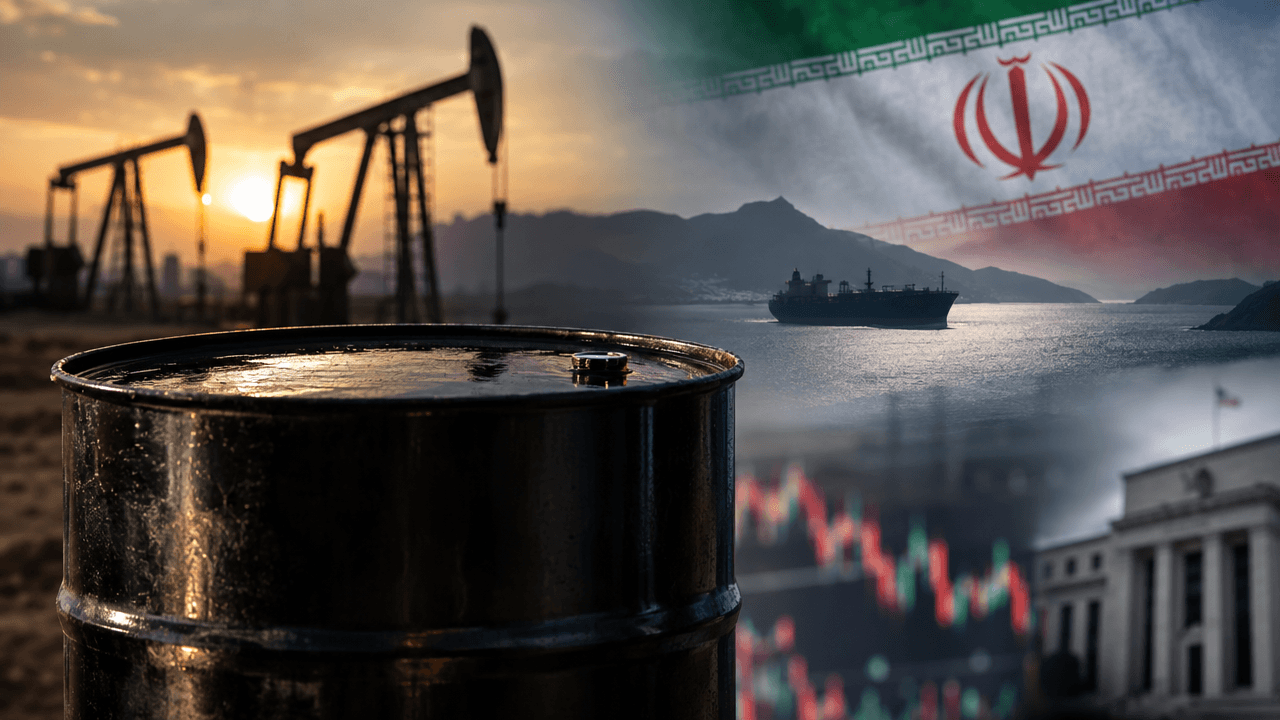
Oil remains volatile as traders balance two opposing forces: hopes that the Iran conflict could move toward a diplomatic settlement and fears that another escalation could disrupt critical energy supplies. The sharp price swings show how quickly geopolitical expectations can reshape crude markets, even when physical inventories and demand conditions have not changed overnight.
Prices fell sharply after the 2026 U.S. midterm elections, as Democrats won control of both chambers of Congress. Investors interpreted the result as potentially increasing pressure on President Donald Trump to pursue negotiations with Tehran rather than authorize a broader military campaign. Brent crude dropped more than 8% in one session to around $94.62 a barrel, while West Texas Intermediate fell to approximately $88.12. [9]
That decline did not mark a clean return to stability. Oil recovered part of its losses as traders recognized that election results alone cannot guarantee de-escalation. Reports of continued attacks on ships and uncertainty around the Strait of Hormuz have kept a significant risk premium embedded in energy prices. Brent subsequently rebounded above $96, demonstrating how quickly sentiment can reverse when markets receive fresh evidence of supply risk. [2]
The Geopolitical Risk Premium
Oil prices are currently responding less to a single confirmed event than to changing probabilities. If Washington and Tehran move toward a durable agreement, traders may expect shipping routes to reopen, threatened infrastructure to receive greater protection, and some disrupted crude and liquefied natural gas flows to resume. Those developments would reduce the premium investors have attached to barrels exposed to the Persian Gulf.
The opposite scenario could be considerably more disruptive. Renewed strikes, attacks on tankers, or restrictions involving the Strait of Hormuz would threaten one of the world’s most important energy corridors. Analysts have warned that a short escalation could send Brent toward the $110-to-$125 range, while other estimates have placed a temporary peak near $130 because inventories are relatively tight. [8][12]
This asymmetry matters. A diplomatic breakthrough could gradually push prices lower, but a sudden military escalation could produce a much faster rally. For traders, that means headline risk is not evenly distributed: an apparently calm session can still contain substantial upside exposure.
Why The Market Reacted To The Midterms
The election result influenced oil through expectations about future policy rather than through an immediate change in production or consumption. A Congress controlled by Democrats may seek to limit funding for military operations or encourage negotiations, creating the perception that a full-scale escalation is less likely. Market participants therefore reduced some of the risk premium that had accumulated during the conflict. [5]
However, political expectations are not the same as diplomatic progress. Negotiations can stall, military decisions can change rapidly, and regional actors may act independently of Washington’s preferred strategy. The market’s initial interpretation may also prove incomplete if congressional pressure fails to alter the administration’s policy.
This is why oil has remained volatile even after the post-election decline. Traders are watching mediation efforts, shipping activity, infrastructure damage, official statements, and signs of whether crude exports can move normally. Each new development can shift expectations for both supply availability and military risk.
The Inflation And Central-bank Connection
Oil’s importance extends well beyond energy markets. Crude affects gasoline, diesel, aviation fuel, transportation costs, petrochemicals, and many manufactured goods. A sustained increase in oil prices can therefore make inflation more persistent, especially if higher fuel costs spread through supply chains.
That creates a challenge for central banks. If oil rises because of a temporary geopolitical shock, policymakers may look through the initial increase while monitoring whether inflation expectations become unanchored. But if energy prices remain elevated for months, households and businesses may face broader cost pressures. Central banks could then become more cautious about cutting interest rates, even if economic growth is slowing.
A de-escalation would have the opposite effect. Lower crude prices could ease headline inflation and give policymakers more room to support the economy. The timing is important: central banks typically respond to sustained inflation trends, not to every daily move in futures markets. Still, a rapid oil rally can influence bond yields, currencies, consumer sentiment, and expectations almost immediately.
What Traders Should Watch Next
The first priority is confirmation rather than assumption. Traders should distinguish between reports of talks and an agreement that changes actual behavior. Evidence of a ceasefire, safer shipping, reopened routes, or restored exports would carry more weight than general statements expressing optimism.
Second, monitor the structure of the oil market. Tight physical supplies, falling inventories, and strong prompt-month pricing can indicate that participants are competing for near-term barrels. In contrast, a weakening structure may suggest that traders expect the disruption to fade.
Third, track volatility and position size. When prices can fall more than 8% in one session and rebound soon afterward, leverage can turn a correct long-term view into a damaging short-term loss. Wider stops, smaller positions, and predefined risk limits are especially important during event-driven markets.
Finally, consider cross-market signals. Bond yields may reveal whether investors see oil as a temporary shock or a persistent inflation threat. The U.S. dollar can affect crude affordability for international buyers, while equity-market performance may indicate whether traders view the conflict as a contained energy event or a broader economic risk.
Conclusion
Oil’s current volatility reflects a market caught between diplomatic hope and military uncertainty. The post-election selloff shows how quickly prices can respond when traders believe de-escalation is becoming more likely, but the rebound highlights the danger of treating political signals as guaranteed outcomes. [1]
For SimFi traders, the key lesson is to manage scenarios rather than predict a single headline. A negotiated settlement could remove a substantial risk premium, while renewed attacks could send prices sharply higher. Until there is clear evidence that supply routes and regional security have stabilized, oil is likely to remain highly sensitive to every diplomatic, military, and inventory update.