
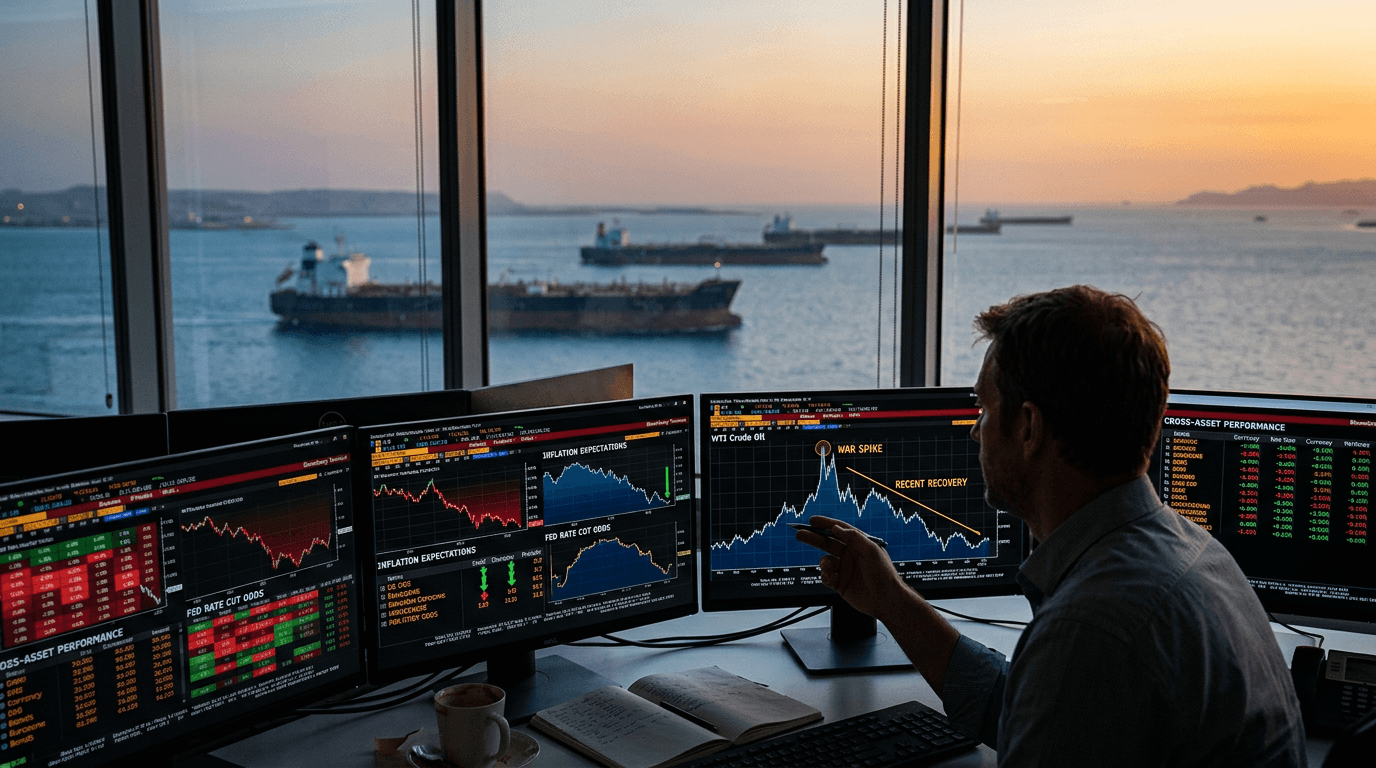
Crude markets have quickly rewound their wartime surge as tanker traffic through the Strait of Hormuz recovers, easing immediate fears of a prolonged supply crunch[5][8]. After trading above $100 a barrel at points during the conflict, benchmark prices have slid back toward pre-war levels as vessels that were stuck for months finally begin to move, stripping away much of the geopolitical risk premium embedded in oil futures[5][8]. For traders, this is not just a story about energy—it’s a pivot point for inflation expectations, interest-rate bets, and cross-asset positioning.
Why The Strait Of Hormuz Matters
The Strait of Hormuz is one of the world’s most critical energy chokepoints, handling roughly a fifth of global seaborne oil flows in normal times[7]. When conflict disrupted the passage, daily volumes reportedly collapsed from typical levels near 20 million barrels to a fraction of that, leaving dozens of tankers stranded and forcing some cargoes to reroute on longer, more expensive paths around the Cape of Good Hope[2][4]. That combination of constrained supply and heightened war risk drove crude sharply higher, as markets priced in the possibility of a prolonged shutdown.
In recent days, tanker throughput has climbed to its highest level since the conflict began, as U.S.–Iran negotiations and regional diplomacy have opened the way for more vessels to transit the strait[1][5][8]. Tankers that had been anchored for months are finally loading and discharging, and more Middle Eastern crude is reaching global refiners[1][5]. While mines reportedly remain in parts of the central channel, shipping companies and navies have established corridors that allow traffic to resume under tight security[1][6]. The key takeaway: Hormuz is not “back to normal,” but it is open enough that traders have sharply marked down the probability of catastrophic supply disruption.
Oil Prices Give Back Their Wartime Premium
As the physical flow of oil normalizes, prices are surrendering the war-driven spike. During the height of the crisis, Brent crude briefly traded above $100 per barrel, a level that reflected both real supply tightness and the market’s fear of further escalation[5][8]. With tanker traffic recovering, benchmarks have eased into the $70s, and spreads between Middle Eastern grades and other crudes, such as North Sea Forties, have compressed, reflecting improved availability[1][5].
This move is fundamentally about the “disruption premium” being repriced. When shipping lanes were uncertain, traders bid up futures to compensate for the risk that cargoes would not arrive on time or at all. Now that more than 19 million barrels have reportedly crossed Hormuz in a single day, the highest throughput since the conflict began, the market sees that worst-case scenarios are less likely and adjusts prices accordingly[4][5][8]. The takeaway for traders: geopolitical risk premia can inflate prices quickly—but they can also evaporate just as fast once logistics start to improve.
For physical players and hedgers, this shift matters in several ways. Refineries facing earlier concerns about feedstock availability now see more stable supply chains, potentially allowing them to run closer to planned utilization. Producers who locked in high prices during the spike may find new hedges less attractive, while consumers and airlines have an opportunity to reassess their fuel hedging at lower levels. Volatility has compressed from crisis highs, but remains elevated compared with calmer periods, offering both opportunity and risk for options strategies.
Inflation Expectations And Rate-cut Odds
Energy prices are a direct input into headline inflation, so the retreat in crude feeds straight into macro expectations. The wartime surge had pushed market-based inflation expectations higher, as traders anticipated more expensive fuel filtering into transport, food, and goods prices. With oil now off those highs, breakeven inflation rates and inflation swaps are starting to reflect a less severe energy shock, easing some of the pressure on central banks.
Lower oil prices tend to support the case for rate cuts in economies where policymakers were worried about persistent inflation. As crude normalizes, some of the justification for keeping policy “higher for longer” weakens, especially if core inflation is already trending down. Markets are therefore nudging up the implied probabilities of rate cuts over the next few meetings, particularly in energy-importing regions such as Europe and parts of Asia.
Bond markets feel this shift quickly. Inflation-sensitive bonds—like inflation-linked sovereigns—can underperform when expectations roll over, while nominal bonds often benefit from reduced inflation risk and renewed hopes for easier monetary policy. Yield curves may steepen as front-end yields price in more potential easing, even as long-dated yields stabilize or fall. The takeaway: the Hormuz story is a live macro input, not just an energy headline, and rate expectations can move meaningfully as the oil narrative evolves.
Currency And Equity Market Ripple Effects
Commodity-linked currencies, such as the Canadian dollar and Norwegian krone, often move with broad energy trends. The wartime spike supported these currencies as their terms of trade improved, but the recent pullback in oil can relieve some upward pressure, particularly if local economies are not as strong as the earlier price strength implied. Conversely, major energy importers—like Japan and parts of the euro area—may see their currencies benefit from improved trade balances as fuel import costs drop.
In equities, energy producers and service companies were among the clear winners of the wartime spike. Rising prices supported cash flows, boosted free cash generation, and, in some cases, drove share buybacks and dividend hikes. As crude prices retreat, the market is reassessing earnings expectations and capital spending plans, leading to a more nuanced view of the sector. High-cost producers or companies with aggressive growth budgets may look less attractive than integrated majors with diversified income streams and stronger balance sheets.
Inflation-sensitive sectors, including utilities, consumer staples, and transport, experience the reverse dynamic. Lower fuel costs can improve margins for airlines, shipping firms, and logistics companies, and ease pressure on households, potentially supporting discretionary spending. Equity investors watching the Hormuz story should be thinking in terms of relative winners and losers rather than a simple “oil up/oil down” narrative.
What Traders Should Watch Next
For active traders—whether in live markets or simulated environments—the Hormuz development offers a case study in how geopolitical risk flows through price action, positioning, and macro expectations. Several factors deserve close attention in the coming weeks:
First, watch the sustainability of tanker flows. While current throughput is the highest since the conflict began, mines and ongoing military tensions mean the risk of renewed disruption has not disappeared[1][6][8]. Any new incident involving a tanker or naval vessel could quickly reprice risk premia.
Second, monitor inventory data and refinery runs. Rising tanker traffic should show up as higher arrivals at major hubs and potentially rebuilding inventories. If stockpiles climb faster than demand, that would reinforce downward pressure on prices. Conversely, stronger-than-expected demand could stabilize or even lift crude despite the improved logistics.
Third, track the behavior of volatility. Crisis-driven implied volatility often declines as immediate fears recede, but it can remain structurally higher if the underlying geopolitical issues are unresolved. This makes option strategies and volatility trading especially relevant.
Finally, connect energy moves to macro and cross-asset signals—inflation expectations, rate futures, commodity currencies, and sector rotations in equities. The Hormuz story underlines how quickly a single chokepoint can move not only oil, but the broader risk landscape.
The broader lesson is that markets are continuously repricing risk as new information arrives. When tankers were stuck, traders had to assume the worst; now that vessels are moving again, they must reassess. For disciplined traders, the opportunity lies in understanding how these repricings ripple through different asset classes, and in using both real and simulated markets to practice responding to fast-changing geopolitical conditions with structured, risk-aware strategies.