
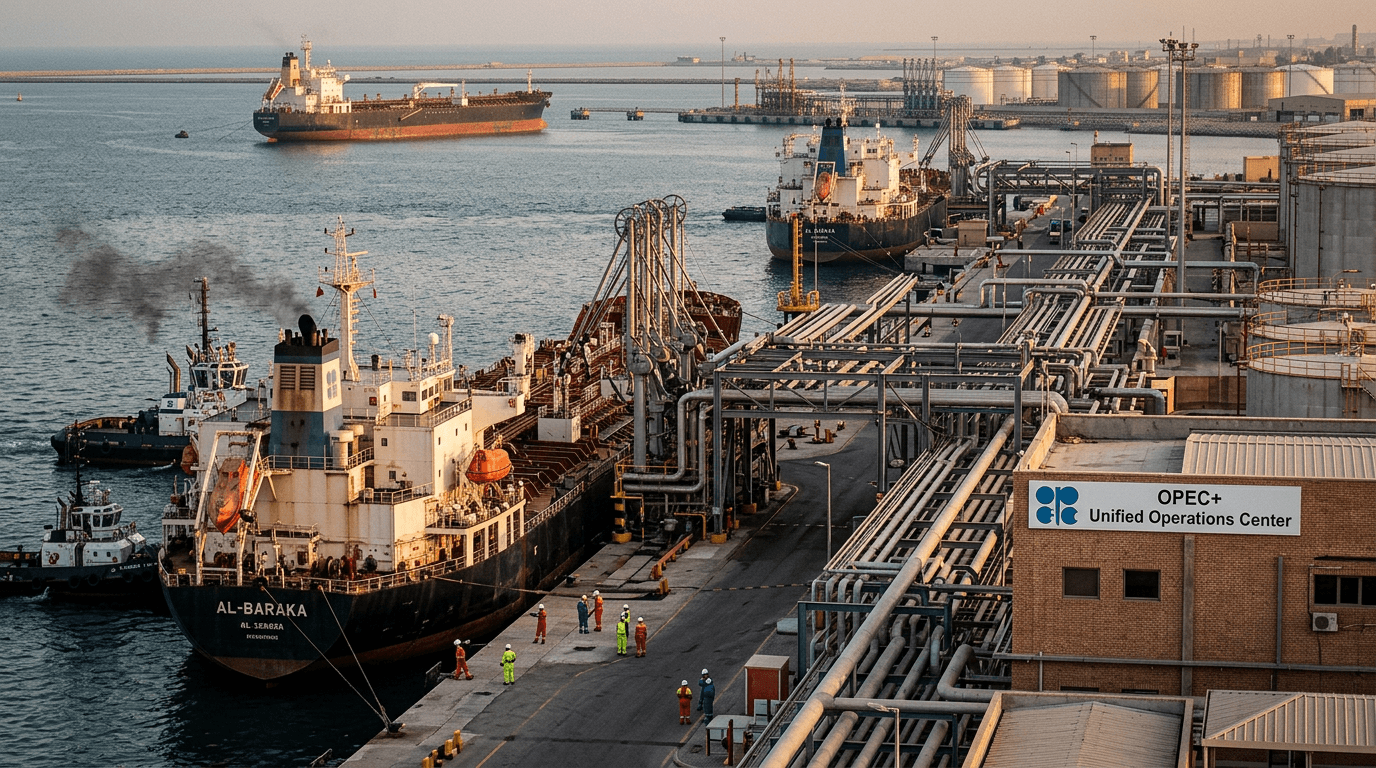
Geopolitical tensions in the Middle East have once again placed oil markets under intense scrutiny. In response to recent U.S. and Israeli military actions against Iran, OPEC+ is stepping up to prevent any supply disruptions from destabilizing global energy markets. On March 1, 2026, the organization announced a strategic move to increase oil production by 206,000 barrels per day starting in April. This decision reflects OPEC+'s confidence in stabilizing prices and ensuring the world remains adequately supplied, even as regional risks intensify.
Navigating Geopolitical Challenges
The backdrop to OPEC+'s decision is a landscape of escalating tensions that have already rippled through the energy sector. With U.S. and Israeli strikes raising concerns about the security of the Strait of Hormuz—a critical shipping route accounting for roughly 20% of global crude and refined product flows—Brent crude prices have climbed to approximately $73 per barrel. This reflects market fears of potential supply interruptions in an already complex geopolitical environment.
OPEC+'s measured approach is noteworthy. Instead of a drastic production surge that might flood markets and depress prices, the organization has opted for a meaningful increase of 206,000 barrels per day. This adjustment marks an acceleration from the 137,000-barrel-per-day increments introduced late in 2025, underscoring OPEC+'s readiness to tighten supplies in response to market conditions.
Spare Capacity: The Key to Flexibility
A critical element of OPEC+'s strategy is its reliance on spare production capacity, particularly within its most influential members like Saudi Arabia and the UAE. Together, these nations hold approximately 2.5 million barrels per day of spare capacity, serving as a vital buffer against potential supply shocks. This allows them to swiftly adjust output in response to market stress.
Recently, Saudi Arabia, Iraq, Kuwait, and the UAE have begun ramping up exports to reassure global markets of a manageable supply despite heightened risks. However, the sustainability of these export gains depends heavily on conditions in the Strait of Hormuz, where commercial shipping has slowed due to precautionary measures. While some vessels continue to transit the strait, any further deterioration could lead to a significant supply reduction.
Phased Production Restoration
OPEC+ remains flexible in its approach to restoring production previously curtailed for demand management. With over 1 million barrels per day withheld from markets, the group plans to gradually return this supply through late 2026. This phased approach allows OPEC+ to adapt its strategy to changing market conditions, geopolitical developments, and demand patterns.
The organization is set to convene again on April 5, providing an opportunity to reassess the situation and make necessary adjustments. This regular review process highlights OPEC+'s commitment to active market management, as opposed to a static production policy.
Stable Demand Fundamentals
Despite geopolitical uncertainties, underlying demand fundamentals offer some reassurance. OPEC projects global oil demand to grow by 1.38 million barrels per day in 2026, reaching 106.5 million barrels per day. Non-OECD countries, particularly China and other Asian nations, are expected to drive this growth through continued economic expansion.
This demand outlook suggests that the world can absorb additional supply from OPEC+ without triggering a price collapse. Before the recent Iran escalation, analysts had anticipated a potential supply surplus, which the current geopolitical situation and OPEC+'s measured response may help prevent.
Impact on Consumers and Traders
In the U.S., gasoline prices currently average around $3 per gallon, with expectations of rising to $3.20-$3.25 in the coming weeks, even without new supply disruptions. Any disruption to Strait of Hormuz shipping could exacerbate these increases, although significant, lasting disruptions are considered unlikely due to robust defenses around key oil facilities.
For traders and investors, the key takeaway is that OPEC+ is ready and able to act proactively in the face of geopolitical risks. The organization's production increase, combined with its substantial spare capacity and measured supply restoration timeline, suggests that while oil price volatility may remain heightened, a true supply crisis is unlikely. As with any geopolitical situation, uncertainty prevails, and market participants should stay vigilant in the weeks ahead.
Headline: OPEC+ Boosts Output by 206,000 BPD to Offset Iran Crisis Impact Summary: OPEC+ increases production to counter potential disruptions in the Strait of Hormuz following Iran strikes, ensuring stable energy supply amid geopolitical tensions.