
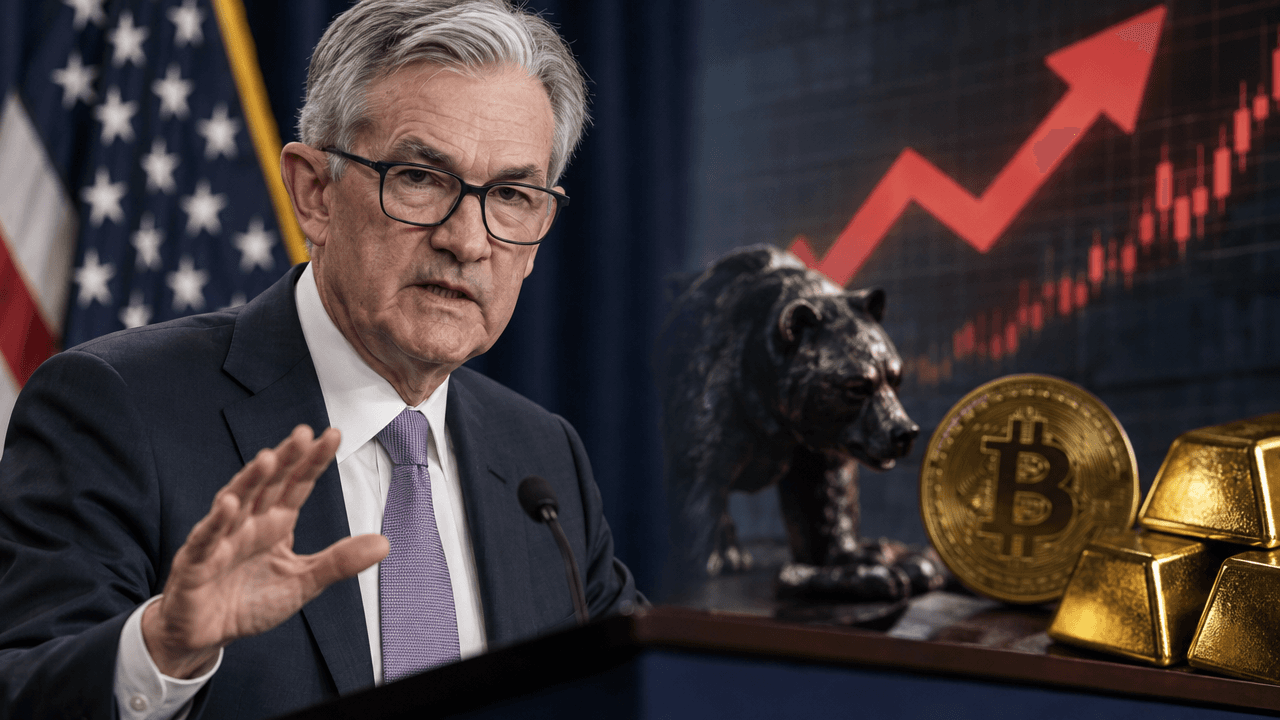
Inflation is once again moving to the center of the Federal Reserve’s policy debate. Recent comments from Fed officials Michelle Bowman and Christopher Waller suggest that policymakers are increasingly concerned that price pressures are proving more durable than expected. The message has prompted markets to reconsider the possibility of faster or larger interest-rate increases, creating fresh pressure across equities, cryptocurrencies and gold while supporting the U.S. dollar.
The shift is important because financial markets had been looking for evidence that inflation was steadily cooling. Instead, officials are warning that underlying price growth may remain elevated into the end of the year. For traders, the main question is no longer simply whether the Fed will raise rates in December, but how aggressively it may respond if inflation data remain firm.
INFLATION REMAINS THE FED’S CENTRAL CONCERN
Fed Vice Chair for Supervision Michelle Bowman said inflation has been more persistent than she previously anticipated and has shown signs of broadening. She pointed to several forces contributing to current price pressures, including energy costs, tariffs, artificial intelligence-related demand and the lingering effects of earlier inflation shocks. [1]
Bowman also noted that labor-market conditions appear to be firming. A resilient labor market can make it easier for businesses to pass higher costs to consumers and may allow households to continue spending despite elevated prices. That combination can make inflation more difficult to bring down without a meaningful slowdown in economic activity.
However, Bowman did not explicitly call for a specific rate increase. She emphasized that tighter financial conditions, including falling stock prices, higher bond yields and a stronger dollar, could create risks for interest-sensitive areas of the economy. Her remarks reflect the difficult balance facing the Fed: policymakers must control inflation without unnecessarily damaging growth, employment or financial stability. [7]
Why A 50-basis-point Hike Is Back On The Table
Christopher Waller delivered a more direct warning. He said he was leaning toward supporting a 25-basis-point rate increase at the December Federal Open Market Committee meeting, even if October inflation improved. But if core consumer prices rose by around 0.3% month over month or more, Waller said a stronger response could be necessary, including consideration of a 50-basis-point hike. [3]
A 50-basis-point increase would be twice the size of a conventional quarter-point move. Such an action would signal that the Fed believes inflation is not merely temporarily elevated, but sufficiently persistent to require a faster tightening of financial conditions.
The proposal does not guarantee that a half-point hike will occur. It does, however, change the market’s perception of the range of possible outcomes. Reports indicated that the implied probability of a 50-basis-point December increase rose from zero to approximately 11% in a short period. [5] Even a relatively small probability can cause major repricing when investors had previously assumed that outcome was effectively off the table.
Market Implications For Traders
The most immediate beneficiary of a more hawkish Fed outlook is typically the U.S. dollar. Higher expected interest rates can increase demand for dollar-denominated assets, particularly when investors believe U.S. yields will remain above those available in other major economies. A stronger dollar can also tighten global financial conditions because many international borrowers and companies conduct business in dollars.
Equities face a more complicated environment. Higher rates increase the discount rate used to value future corporate earnings, which can weigh particularly heavily on growth stocks and technology companies. Businesses with high borrowing needs may also face greater interest expenses, while consumers may reduce purchases if credit becomes more expensive.
For these reasons, a hawkish repricing can pressure broad stock indexes even when the economy remains relatively strong. Investors may rotate toward companies with stable cash flow, lower debt and pricing power. Defensive sectors can become more attractive, although no segment is completely insulated from a significant tightening cycle.
Cryptocurrencies may also struggle when real yields rise. Digital assets are often treated as risk-sensitive investments, and higher interest rates reduce the appeal of assets that do not generate conventional cash flows. A stronger dollar can add another headwind by making dollar-priced crypto assets more expensive for international buyers.
Gold faces a similar challenge. Gold does not pay interest, so rising bond yields can increase the opportunity cost of holding it. A stronger dollar can further weigh on demand. Nevertheless, persistent inflation and uncertainty about economic growth may continue to support gold as a hedge, creating a tug-of-war between inflation protection and higher real rates.
What Traders Should Watch Next
The next major focus is inflation data, especially core measures that exclude volatile food and energy prices. Waller’s comments place particular importance on the monthly pace of core inflation. A reading near or above 0.3% could strengthen expectations for a larger December move, while a softer report might reduce—but not eliminate—the pressure for additional tightening. [2]
Traders should also monitor Treasury yields, Fed communications and market-based expectations for the policy rate. A rising two-year Treasury yield would suggest that investors are pricing a more restrictive near-term Fed stance. Currency traders should watch the dollar index, while equity and crypto traders should pay attention to whether risk assets fall alongside rising yields.
Risk management is especially important during this type of repricing. Traders may want to reduce excessive leverage, define exit levels before entering positions and avoid assuming that a single data release will produce a predictable market reaction. Inflation news can affect bonds, currencies, stocks, commodities and crypto simultaneously, but the size and direction of each move can vary.
The Bigger Picture
The Fed’s latest messaging does not necessarily mean that a major rate increase is certain. It does show that policymakers are unwilling to declare victory over inflation. Bowman’s caution and Waller’s willingness to consider a half-point move both reinforce the same broader message: interest rates may need to remain restrictive for longer than markets previously expected.
For investors, the environment favors flexibility over strong assumptions. A cooler inflation trend could revive demand for equities, crypto and gold, while another firm reading could extend dollar strength and pressure risk assets. Until the data provide clearer evidence that inflation is returning sustainably toward the Fed’s target, markets are likely to remain highly sensitive to every inflation release and every central-bank comment.
The practical lesson is straightforward: follow the direction of inflation, not just the headline rate decision. A persistent inflation trend can reshape expectations before the Fed ever changes policy, and those expectations may be enough to move markets sharply.