
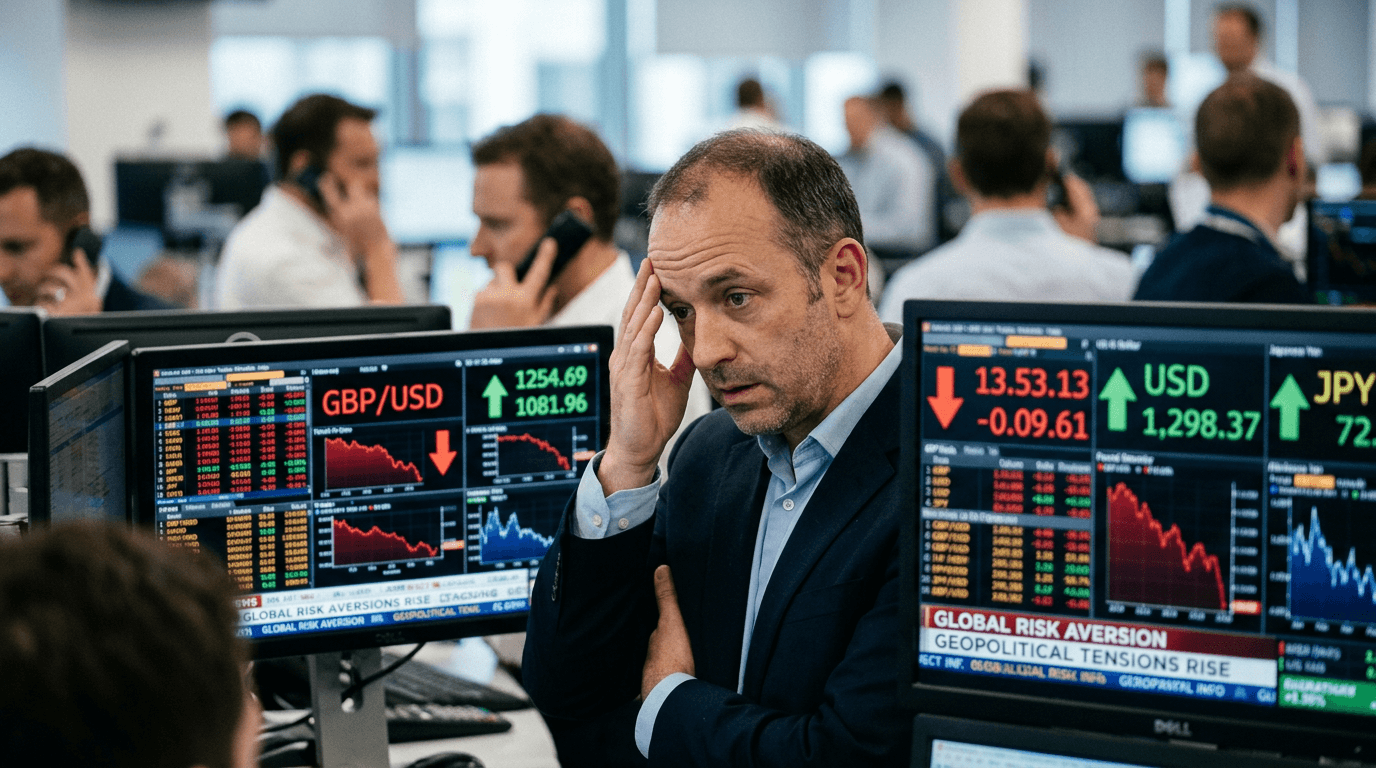
Sterling’s latest slide is a textbook example of how geopolitics can overwhelm domestic fundamentals in the FX market. As tensions around Iran and the wider Middle East have escalated, investors have shifted rapidly into safe-haven currencies, leaving the pound weaker against the dollar and other perceived refuges.[1][2] Rather than signaling a specifically “UK problem,” the move reflects global risk aversion and a repricing of geopolitical risk across asset classes.[1][7]
Safe-haven Rush: Iran Conflict Reprices Risk
Geopolitical shocks tend to trigger the same first-order response in markets: reduce risk, raise cash, and seek safety.[2][7] Recent developments involving Iran and regional actors have intensified uncertainty, with investors reassessing the potential impact on energy supplies, trade routes, and broader global stability.[2][7]
In FX, that has meant renewed demand for traditional safe-haven currencies such as the U.S. dollar, Swiss franc, and Japanese yen.[2][4][6] The dollar index has been trading near multi-week highs as traders rotate out of risk-sensitive currencies and into the relative security of the world’s reserve currency.[2][4] Swiss franc strength has similarly underscored the market’s desire for safety as the Iran war rages.[6]
Importantly, this is not just about headlines—it is about portfolio construction. Asset managers and hedge funds have been actively rebalancing their exposure, cutting positions in higher-beta currencies and regions while increasing allocations to havens that historically hold up better during periods of heightened geopolitical tension.[2][7] FX volatility has risen as options markets price in a wider range of possible outcomes.[2]
Why The Pound Is Under Pressure
Sterling has weakened for a second straight session as part of this broader risk-off move.[1] The pound is typically more sensitive to global sentiment than ultra-defensive currencies because it is tied to an open economy, heavily exposed to trade and energy imports.[1][7] With oil prices supported by conflict-related risks in the Middle East, currencies of energy-importing economies, including the UK, come under pressure as higher energy costs threaten growth and the current account.[1][7]
Domestic UK factors are not the primary driver this time. In fact, recent market pricing has shown investors scaling back expectations for imminent Bank of England rate cuts, reflecting a slightly more supportive backdrop for sterling from a monetary policy perspective.[1] Sluggish growth and political noise remain medium-term considerations, but the current leg lower in GBP has much more to do with global risk sentiment than with a sudden deterioration in UK-specific data.[1]
For traders, that distinction matters. A move driven by UK fundamentals might invite a closer look at domestic indicators—GDP, inflation, labor markets, or BoE communications. A move driven by geopolitics and safe-haven flows, by contrast, demands more attention to cross-asset risk indicators: oil prices, equity volatility, credit spreads, and the broader dollar trend.[1][2][7]
Broader Market Ripple Effects
The pressure on sterling does not occur in isolation. It is part of a wider pattern of repositioning that spans currencies, commodities, and equities.[2][7]
Higher perceived risk around Iran and the Strait of Hormuz has reinforced elevated energy prices and kept markets focused on supply disruptions.[3][7] That creates a negative growth impulse for energy-importing regions such as Europe and the UK, while supporting energy exporters and sectors tied to oil and gas.[1][7]
Safe-haven currencies have generally benefited. The dollar has approached recent highs as investors look for liquidity and stability, supported not only by geopolitical demand but also by a comparatively resilient U.S. growth outlook and expectations that the Federal Reserve may keep rates higher for longer.[2][3] The Swiss franc and yen have also firmed, reflecting their longstanding status as defensive assets.[4][6]
Equity markets, meanwhile, have seen bouts of volatility linked to war headlines, with swings often driven more by rapid unwinds of hedges and speculative positioning than by immediate changes in fundamentals.[7] This pattern—risk assets under pressure, havens bid—is consistent with past episodes of elevated geopolitical risk, and the current pound weakness fits neatly into that broader narrative.[1][2][7]
What Safe-haven Demand Means For Fx And Simulated Traders
For traders operating in live or simulated environments, the key lesson is that FX trends can turn quickly when geopolitical risk spikes. Even if domestic data appear stable, a change in the global risk backdrop can push a currency like sterling sharply lower against the dollar.[1][2]
Several practical implications follow
First, risk management has to adapt to regime shifts. When markets move from “risk-on” to “risk-off,” correlations change. Currencies that normally trade with local fundamentals may suddenly trade almost entirely on global risk sentiment, and volatility clusters around event headlines.[2][7] Position sizing, stop-loss levels, and scenario planning need to reflect this shift.
Second, traders should monitor a broader set of indicators. In a geopolitically driven FX move, watching only GBP-specific data is not enough. Dollar strength, safe-haven demand in the franc and yen, oil prices, and measures of implied volatility all help build a more complete picture.[2][4][6][7]
Third, simulated trading platforms are an ideal environment to practice navigating such conditions. By replaying periods of conflict-related volatility and testing strategies across different currency pairs—GBP/USD, EUR/USD, USD/CHF, USD/JPY—traders can learn how safe-haven flows propagate through the market and stress-test their risk frameworks without real capital at stake.[2][6][7]
Key Takeaways For The Current Fx Landscape
The pound’s latest retreat underscores a few enduring principles of FX trading.[1][2][7]
Geopolitics can dominate. Even when monetary policy and domestic data are relatively stable, conflict headlines like those around Iran can reprice currencies abruptly as investors seek safety.[1][2][7]
Dollar strength is about more than the U.S. economy. In risk-off environments, the dollar’s role as the primary reserve currency magnifies safe-haven flows, pulling capital away from risk-sensitive units like sterling.[2][3][4]
Safe-havens are a barometer of fear. Moves in the Swiss franc and yen, alongside the dollar, offer a real-time read on how nervous markets are about geopolitical developments.[4][6]
For both new and experienced traders, recognizing these dynamics early can make the difference between being caught on the wrong side of a fast-moving market and using volatility as an opportunity to apply disciplined, well-tested strategies. The current pound weakness is less a verdict on the UK alone and more a reflection of a world repricing risk—one headline at a time.[1][2][7]