
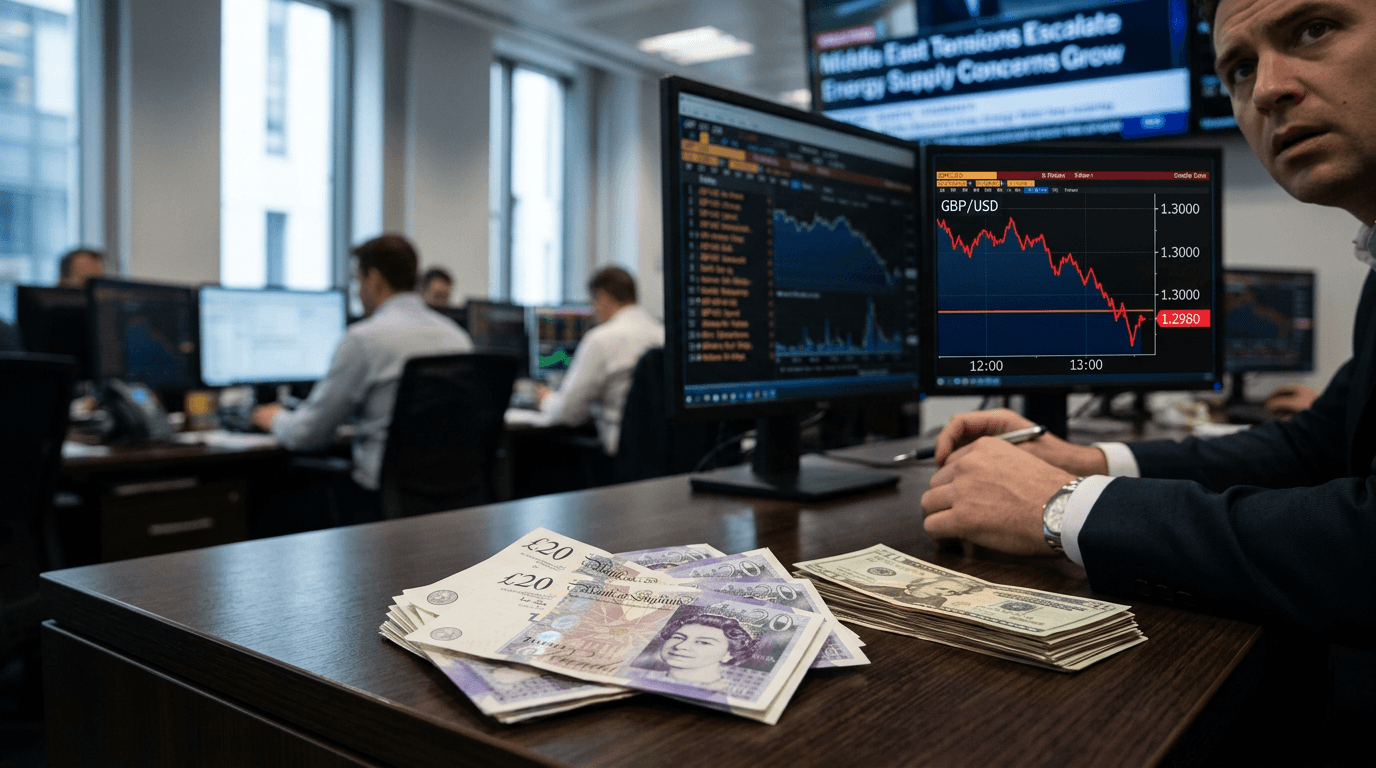
Pound Under Pressure Amid Middle East Tensions: What Traders Need to Know
The British pound is feeling the heat, dropping to three-month lows against the US dollar as escalating tensions in the Middle East reshape market dynamics and investor risk appetite. Currently, GBP/USD has dipped below the 1.30 mark, testing support at 1.3250. This reflects traders' recalibration of regional geopolitical risks on currency valuations and overall economic stability. Concerns are mounting over potential energy supply disruptions, inflation pressures, and the broader economic fallout of Middle East instability for the UK and global markets.
Backdrop of the Middle East Crisis
Recent developments in the Middle East have intensified, creating a geopolitical storm that’s echoing through financial markets. Iran’s targeting of commercial shipping and infrastructure, alongside the blocking of the Strait of Hormuz, marks a major escalation in tensions. In response, the UK has permitted the US to use British military bases for defensive operations to neutralize missile sites threatening vessels in this critical waterway.
This move underscores the gravity of the situation and the West's commitment to maintaining free navigation through one of the world's crucial maritime chokepoints. For currency traders and investors, the takeaway is clear: geopolitical uncertainty typically funnels capital toward safe-haven assets, diverting it from higher-yielding, vulnerable currencies like sterling.
Economic Impact on the UK
The pound's current weakness signals real economic concerns about the Middle East's turmoil affecting the British economy. Energy supply disruptions pose an immediate threat, given the UK's dependence on global energy markets. Any interruption in oil and gas supplies through the Strait of Hormuz would likely escalate energy prices for UK consumers and businesses.
Higher energy costs would feed into inflation dynamics, constraining consumer spending and business investment. The UK's inflation environment, already challenging, could worsen with a spike in energy prices due to regional instability. Additionally, trade disruptions through affected shipping lanes increase insurance costs and delivery times, creating broader economic hurdles. These factors make sterling a less attractive asset for international investors, especially those wary of long-term economic growth.
Market Dynamics and Currency Valuation
Financial institutions are scrutinizing the sustained impact of Middle East tensions on currency valuations. Market analysis suggests sustained pound strength is unlikely if the conflict lingers and energy supply disruptions continue. This reflects a recalibration of risk factors influencing FX markets.
As geopolitical risks rise, capital typically shifts toward safe havens, particularly the US dollar. The dollar benefits from its status as the world's reserve currency and the relative stability of US economic fundamentals. Conversely, currencies from economies more exposed to energy shocks and trade disruptions, like sterling, face downward pressure. The GBP/USD fall below 1.30 indicates market participants are accounting for a prolonged period of elevated geopolitical risk.
Trader Considerations and Outlook
Several key insights emerge for traders and investors. Firstly, geopolitical developments can quickly overshadow traditional economic fundamentals in driving currency movements. Even if UK data remains solid, external shocks can dominate price action. Secondly, the correlation between risk sentiment and GBP performance has tightened, making broad market sentiment a crucial indicator.
Thirdly, energy prices should be closely watched as a leading indicator of sterling weakness. If crude oil prices climb due to supply concerns, expect additional pressure on GBP. Conversely, any de-escalation signs could swiftly reverse recent weakness as risk-off flows subside. Finally, broader USD strength driven by safe-haven flows should be monitored, as dollar strength often accelerates sterling weakness in uncertain environments.
Looking Ahead
The UK government has signaled a commitment to de-escalation and collaboration with international partners to safeguard regional shipping. However, near-term geopolitical risks likely remain high, suggesting the pound may face challenges until tensions ease. Traders should stay vigilant regarding developments in Middle East hostilities, energy market disruptions, and broader risk sentiment shifts.
Sterling's current weakness reflects genuine economic concerns rather than irrational market reactions. Until geopolitical stability improves and energy supply concerns diminish, the pound will likely remain under pressure relative to safe-haven currencies like the dollar.
---
NEWS IMPACT SCORE: 7