
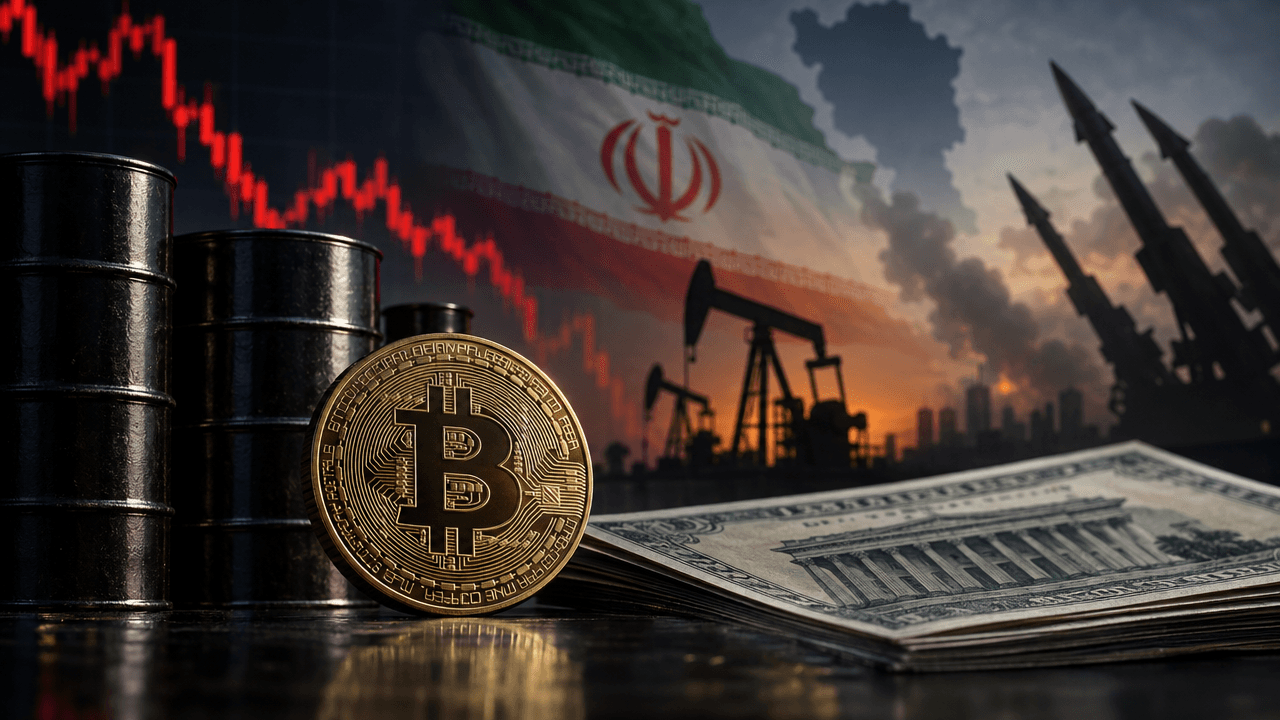
Markets are being squeezed by a difficult combination: higher U.S. Treasury yields, rising oil prices, and renewed geopolitical uncertainty. Together, these forces are reducing appetite for risk across equities, cryptocurrencies, and other growth-sensitive assets. Bitcoin has traded under pressure, while the U.S. dollar has attracted demand as investors prioritize liquidity and perceived safety.
Recent market moves illustrate how quickly macroeconomic conditions can change. Bitcoin fell toward the $84,000 area as Brent crude approached or moved above $100 a barrel, while the 10-year Treasury yield climbed near 5.3%. [1] The pressure has extended beyond crypto, with technology stocks and other assets that depend heavily on future growth also facing a more challenging environment.
Why Rising Yields Matter
Treasury yields represent the return investors can receive from holding U.S. government debt. When yields rise, safer assets become more competitive with stocks, cryptocurrencies, and other investments that offer no guaranteed income.
Higher yields also raise borrowing costs throughout the economy. Businesses face more expensive financing, consumers may reduce spending, and investors often lower the valuation they are willing to pay for companies whose profits are expected far into the future. This is especially important for growth stocks, where much of the expected value depends on earnings several years ahead.
Bitcoin is also sensitive to this shift in opportunity cost. It does not produce interest or dividends, so a higher risk-free yield can make holding the asset less attractive at the margin. Recent market commentary has identified yields around 5.25% and oil above $100 as important headwinds for non-yielding assets such as Bitcoin. [2]
For traders, the key lesson is that a strong asset-specific narrative may not be enough to overcome a broad tightening in financial conditions. When capital becomes more expensive, correlations between risk assets can rise and diversification may provide less protection than expected.
Oil, Inflation, And Central Bank Expectations
Oil prices affect markets through both inflation and economic growth. A sustained increase in crude costs raises expenses for transportation, manufacturing, electricity generation, and many consumer goods. If businesses pass those costs on to customers, headline inflation can accelerate.
That creates a problem for central banks. Higher inflation may discourage policymakers from cutting interest rates, or even increase expectations of future tightening. Those expectations can push bond yields higher before a central bank actually changes policy.
The latest oil move has been linked to attacks on shipping and concerns about possible disruption through the Strait of Hormuz, a strategically important route for global energy supplies. Brent crude climbed above $100 after tanker attacks in the region, intensifying fears that a wider conflict involving Iran could threaten shipments. [2]
Oil shocks can also weaken economic activity if they persist. Households have less disposable income after paying for fuel and energy, while companies must absorb higher operating costs. Markets therefore face a difficult combination: inflationary pressure on one side and slower growth on the other.
Geopolitical Risk Drives A Flight To Safety
Geopolitical uncertainty often produces an initial flight to safety. Investors may reduce exposure to equities, crypto, and emerging-market assets while increasing allocations to cash, the dollar, and government securities. The recent rise in the dollar alongside higher Treasury yields reflects this defensive positioning. [1]
The dollar’s strength can create additional pressure on global risk assets. Because many commodities and financial obligations are priced in dollars, a stronger greenback can tighten financial conditions for borrowers outside the United States. It can also make dollar-priced assets more expensive for international investors.
For cryptocurrency traders, geopolitical headlines can be particularly disruptive because digital assets trade continuously and react quickly to changes in sentiment. A sudden escalation in the Middle East can trigger liquidations, widen spreads, and push prices through technical support levels before traditional markets fully adjust.
Still, geopolitical risk is not automatically bearish forever. If tensions ease, shipping resumes normally, and oil prices retreat, some of the pressure on yields and risk assets could reverse. The challenge is that markets often price the possibility of disruption well before its economic consequences become measurable.
What Traders Should Watch
The most important indicators are the U.S. 10-year Treasury yield, Brent crude, the dollar index, inflation expectations, and credit-market conditions. Watching these markets together can provide a clearer picture than focusing on Bitcoin’s price alone.
If oil remains elevated and yields continue to rise, traders may favor smaller positions, wider invalidation levels, and lower leverage. A move in Bitcoin that appears bullish on a short-term chart may be less reliable if the broader macro environment continues to tighten.
Economic data will also matter. Inflation reports, employment figures, consumer spending, and central-bank communications can shift expectations for interest rates. A softer inflation reading could reduce yields and support risk assets, while evidence of persistent price pressure could prolong the current defensive tone.
SimFi traders can use this environment as a practical training exercise. Build scenarios for oil at different price levels, compare Bitcoin’s reaction to changes in the 10-year yield, and record how the dollar behaves during risk-off sessions. The goal is not to predict every headline, but to understand how markets transmit shocks from energy and bonds into crypto and equities.
Conclusion
Rising yields and elevated oil prices are weighing on risk assets because they increase the appeal of safer income-producing investments, raise borrowing costs, and revive inflation concerns. Geopolitical tensions involving Iran and the Strait of Hormuz have amplified those pressures by creating uncertainty around energy supplies and strengthening demand for the dollar.
The most effective response is disciplined observation rather than emotional reaction. Traders who monitor bonds, oil, currencies, and central-bank expectations alongside price charts are better positioned to recognize whether a pullback is temporary or part of a broader change in market conditions. In a macro-driven market, understanding the connections between asset classes can be just as important as identifying the next technical setup.