
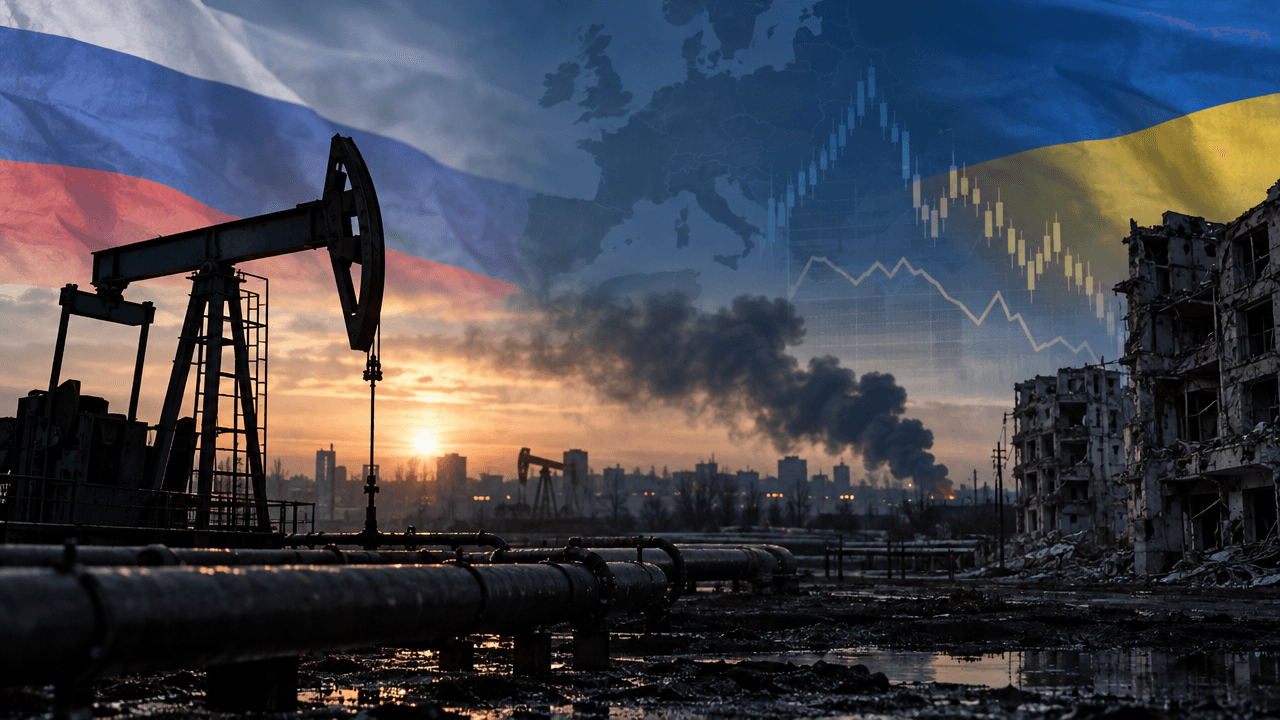
A ceasefire designed to protect energy infrastructure should reduce uncertainty across oil, power and European markets. Instead, the latest Russia–Ukraine announcement has produced the opposite effect. President Donald Trump said Russia and Ukraine had agreed to an energy ceasefire taking effect immediately, but the statement offered few operational details. Kyiv said it had not been informed in advance, while Moscow had not publicly confirmed the agreement. [1][3]
That gap between announcement and implementation is the central market issue. Traders are not pricing a fully verified de-escalation. They are weighing the possibility of fewer attacks against evidence that strikes continued after the announcement. The result is a fragile news environment in which every reported drone attack, refinery outage or official statement can quickly change expectations.
What The Energy Ceasefire Is Supposed To Do
The proposed arrangement focuses on energy infrastructure rather than a complete end to hostilities. The apparent objective is to stop attacks on facilities such as oil refineries, power plants, heating systems and other assets that directly affect fuel supplies and civilian electricity.
This distinction matters. A limited energy truce could reduce damage without resolving the wider political and military dispute. For Ukraine, protection of power and heating infrastructure is especially important as the country faces the ongoing risk of blackouts and disruptions to essential services. For Russia, the removal of Ukrainian attacks on refineries could help preserve fuel-processing capacity and domestic supply.
Ukraine has indicated that it would be willing to halt refinery strikes if Russia stops attacking Ukrainian energy facilities. However, Kyiv’s position emphasizes reciprocity and credible guarantees. Without a mechanism to verify compliance, each side has an incentive to interpret the agreement according to its own interests.
The initial reports have already raised concerns about implementation. Ukrainian President Volodymyr Zelenskyy said Russian forces continued attacking energy infrastructure, including a power plant in Kyiv and facilities in the Kharkiv region. [2][4] These reports do not necessarily establish the full legal status of the proposed ceasefire, but they clearly undermine confidence in its immediate effectiveness.
Why Credibility Matters To Markets
Markets respond not only to events, but also to the reliability of information about those events. A confirmed and monitored ceasefire could reduce the geopolitical risk premium embedded in oil and European assets. A disputed announcement can increase volatility because traders must assign probabilities to several opposing outcomes.
If the truce holds, the direct threat to Ukrainian power infrastructure and Russian refining capacity could decline. That could ease concerns about regional fuel shortages, reduce some supply-risk premiums and support more stable European risk sentiment.
If attacks continue, the market may focus on the possibility of further damage to refining and electricity infrastructure. Ukrainian strikes on Russian refineries can reduce the availability of processed fuels, while Russian attacks on Ukrainian power plants can intensify electricity shortages and humanitarian pressure. Either development can raise uncertainty around regional energy flows.
The uncertainty also affects currencies, bonds and equities. European assets may weaken when investors seek safety or anticipate higher energy costs. Oil prices can become more volatile even when the immediate physical supply impact is limited, because traders must consider how quickly the conflict could escalate. The direction of the first price move may therefore be less important than the size of the intraday swings.
Key Market Signals To Watch
The most important signal is formal confirmation from both governments. A social media announcement from one leader is less powerful than coordinated statements from Moscow and Kyiv describing the scope, start time and enforcement process.
Traders should also monitor whether reported attacks involve new incidents or operations that began before the ceasefire was announced. Timing can determine whether an event represents a direct violation, delayed damage or an unrelated military action. This distinction may be politically significant but difficult for markets to establish immediately.
The next signal is physical data. Watch refinery utilization, export schedules, fuel inventories, pipeline activity, power-generation availability and regional electricity prices. These indicators can reveal whether the ceasefire is changing real-world supply conditions rather than simply changing headlines.
Finally, pay attention to diplomatic language. Words such as “immediate,” “reciprocal,” “temporary” and “verified” carry different implications. A ceasefire without monitoring, defined targets or consequences for violations may provide only temporary relief.
Trading The Uncertainty In Simfi
For SimFi traders, this event is a useful case study in managing headline risk. The first impulse may be to buy oil on reports of new strikes or sell European assets when the ceasefire appears to fail. That approach can be dangerous when the information is incomplete and contradictory.
A more disciplined framework begins with scenario planning. Build at least three cases: a verified ceasefire, a partial and unstable truce, and a rapid breakdown. Estimate how each scenario could affect crude oil, European indices, natural gas, government bonds and relevant currencies.
Position sizing should reflect uncertainty rather than confidence. When official confirmation is absent, smaller exposure and wider awareness of volatility may be more appropriate than an aggressive directional trade. Traders should also define invalidation levels before entering and avoid treating every headline as confirmation of a lasting trend.
Correlation risk is another concern. Oil, European equities and risk-sensitive currencies may move together during geopolitical shocks, creating more exposure than a portfolio appears to have. A trader holding several positions tied to European growth and energy prices may be making one large macro bet rather than several independent trades.
The Broader Lesson
The Russia–Ukraine energy ceasefire illustrates why markets distinguish between an announcement and a verified agreement. A potential reduction in attacks can be constructive, but credibility depends on public confirmation, reciprocal action and observable compliance.
Until those elements emerge, volatility is likely to remain elevated. The most reliable approach is to separate headline reaction from evidence: confirm who has agreed, identify what assets are covered, examine whether attacks have stopped and track the physical market data.
For traders, the opportunity is not simply predicting whether peace will hold. It is learning to manage uncertainty when political statements, military events and market prices are moving at different speeds. In an environment where one unconfirmed announcement can shift oil and European assets, process and risk control are often more valuable than a fast opinion.