
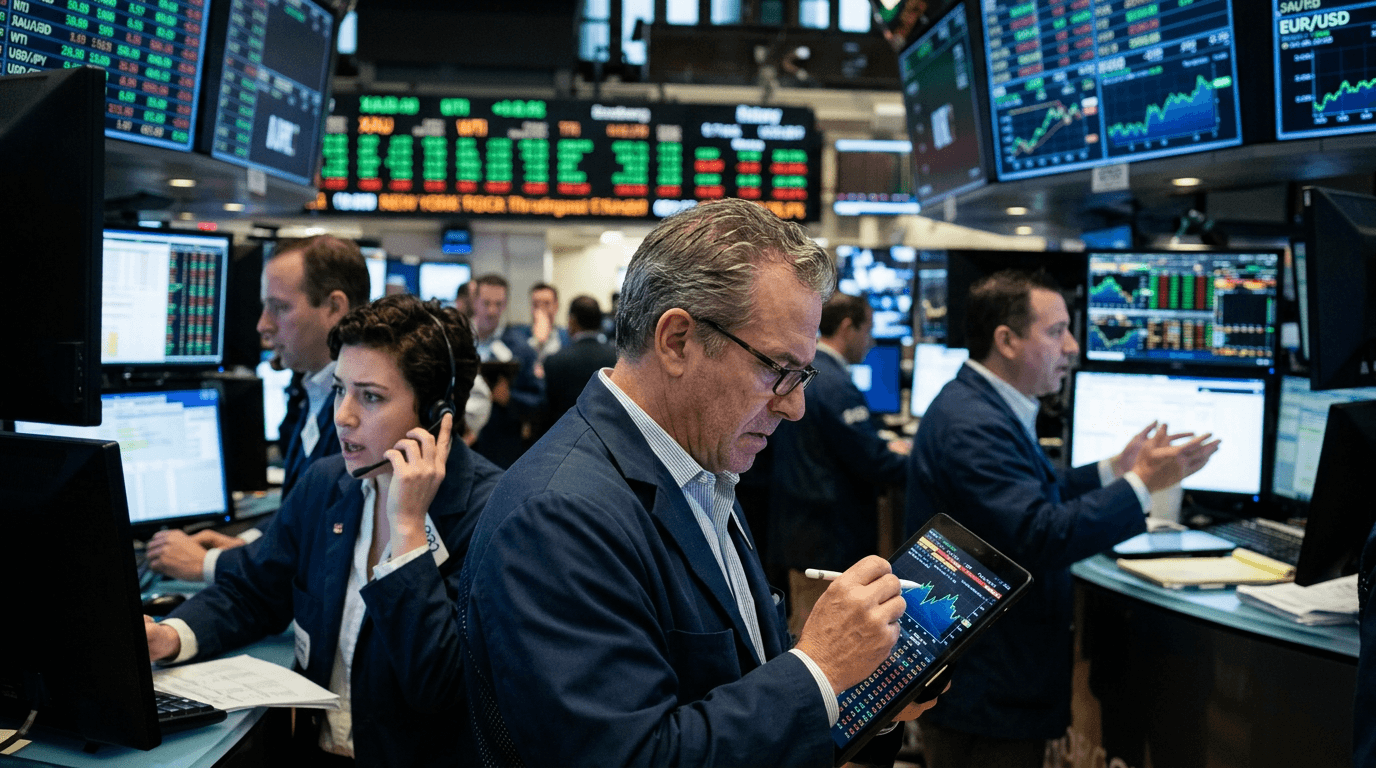
Safe-haven flows have snapped back into focus as investors grapple with another flare-up in Middle East tensions, sending gold sharply higher and keeping oil elevated. Rising energy prices are feeding fresh inflation worries just as markets had grown comfortable with a steady path toward easier policy from the Federal Reserve, forcing traders to rethink rate-cut timelines, reprice commodity futures curves, and reassess positioning in inflation‑sensitive FX pairs and emerging markets.[1][4]
Safe-haven Flows Return To Precious Metals
Gold has quickly reclaimed recent losses as investors move capital away from risk assets and into traditional safe havens.[1][5] Heightened tensions involving the US and Iran have amplified geopolitical risk premia, driving spot and futures prices back above key psychological levels around $5,000 per ounce as haven demand reasserts itself.[4][5]
Gold is benefitting from its dual role as both a crisis hedge and an inflation hedge. When geopolitical uncertainty rises, investors typically rotate out of equities and higher‑beta assets into instruments with a long track record of holding value in turbulent regimes—gold is usually at the top of that list.[1][3] At the same time, if higher energy prices keep headline inflation sticky, gold becomes a way to protect real purchasing power, particularly for investors who worry that nominal yields may not fully compensate for renewed inflation risk.[1][10]
Other precious metals are moving in sympathy. Silver, platinum, and palladium have seen renewed interest as part of a broader bid for real assets amid geopolitical stress and a softer dollar at the margin.[5][7] These moves can be more volatile than gold, but they often reinforce the message that market participants are seeking insurance outside of traditional fixed income when macro uncertainty spikes.
For traders in a simulated environment, these dynamics highlight why gold remains a core macro asset. It responds not only to economic data and Fed expectations, but also to shifts in risk sentiment, the dollar, and cross‑asset volatility. Understanding which of those drivers is dominant at any given time is key to building robust trade ideas around precious metals.
Middle East Tensions, Oil, And The Inflation Channel
On the energy side, crude prices have pushed higher as markets price in the risk of supply disruption from a region that remains critical to global oil flows.[1][4] Even modest production or shipping disruptions in the Middle East can have an outsized impact on near‑term prices, especially when inventories are not excessively high and OPEC+ spare capacity is uncertain.
Higher oil matters because it is the most direct input into headline inflation. Elevated energy costs can quickly filter through into gasoline, transport, and ultimately goods prices. Recent moves in Brent and WTI have therefore reignited concerns that the disinflation trend could stall or partially reverse, complicating the “clean” path to lower policy rates that markets had been pricing in earlier this year.[1][7]
This is precisely the kind of shock that forces central banks—and the Fed in particular—to distinguish between temporary, supply‑driven spikes and broader, demand‑driven inflation. If higher oil proves persistent, inflation expectations can drift higher, particularly in inflation‑sensitive markets and FX pairs, pressuring central banks to stay cautious on easing. If it fades quickly, policymakers may look through it. For now, uncertainty around that distinction is itself a source of volatility.
How The Fed Outlook Is Being Pressured
Before the latest flare‑up, investors had grown more confident that cooling data would allow the Fed to cut rates gradually over the coming quarters. Weaker jobs reports and softer producer prices had already pushed markets toward expecting more accommodative policy over time.[6] The renewed energy‑price shock has complicated that story.
Higher oil feeds into inflation expectations, and those expectations help set the tone for Fed communications and bond yields. As tensions in the Middle East have intensified, analysts have noted that the inflation risk channel is becoming more prominent, even as safe‑haven flows also push some investors into Treasuries.[7][10] The result is a tug‑of‑war: safe‑haven demand for bonds tends to lower yields, but rising inflation worries and the possibility of “higher for longer” policy work in the opposite direction.
Gold sits right at the intersection of these forces. Safe‑haven inflows and inflation‑hedging demand are supportive, but expectations for slower or smaller rate cuts limit the upside because higher real yields raise the opportunity cost of holding a non‑yielding asset like gold.[1][10] That helps explain why gold can be volatile even when geopolitical risk is clearly rising—its price reflects the net effect of competing macro narratives, not just one.
For traders, the key takeaway is that the Fed story can shift rapidly when commodities move. Rate expectations, real yields, and the US dollar are all being repriced in response to the latest developments, and those shifts are just as important for gold and oil as the underlying headlines themselves.
Ripple Effects Across Commodity Curves And Fx
The impact is visible not only in spot prices but also along the futures curves. In oil, heightened near‑term supply risk often steepens backwardation—near‑dated contracts trade at a premium to longer‑dated ones—as buyers pay up for immediate barrels.[1] In gold, spikes in volatility can drive increased activity in shorter‑dated futures and options as traders hedge headline risk and adjust timing around Fed meetings and data releases.
These moves spill over into FX. Currencies that are sensitive to inflation dynamics and rate differentials, such as the euro and certain commodity‑linked or emerging market currencies, can see heightened volatility. A firmer US dollar can cap gold rallies, while a softer dollar tends to provide an additional tailwind to precious metals.[5][6] Oil importers may face pressure on their currencies as higher energy bills worsen trade balances, whereas some exporters can benefit from improved terms of trade, at least initially.
In practice, this creates a rich landscape for cross‑market strategies. Traders can look at gold–oil relationships—for example, periods when oil surges but gold lags—as potential relative‑value opportunities if they expect inflation or geopolitical risk to persist.[1] Others might express a view via FX, using baskets that differentiate between energy importers and exporters, or between economies with more or less policy flexibility in the face of rising inflation expectations.
Practical Takeaways For Traders
For both live and simulated traders, the current environment underscores the importance of scenario planning and risk management. One practical approach is to map out a few clear geopolitical scenarios—escalation, controlled de‑escalation, or a prolonged stalemate—and outline how gold, oil, yields, and key FX pairs would likely react in each case.[1] This helps prevent emotional, headline‑driven decisions and instead encourages disciplined responses when markets move quickly.
It is also crucial to monitor the macro calendar. Data releases on inflation, labor markets, and growth, along with Fed communications, can either amplify or offset the market impact of geopolitical news. A hotter‑than‑expected CPI print alongside rising oil, for example, will have very different implications from a soft inflation report that suggests the energy shock is not yet propagating broadly.
Finally, position sizing and risk control matter more than ever when several powerful forces are colliding. Safe‑haven flows, inflation fears, Fed repricing, and geopolitical risk can all drive gaps and sharp intraday moves. Using simulated environments to test how strategies perform across these regimes can help traders refine entries, exits, and hedging approaches before committing real capital.
Safe‑haven demand for precious metals and elevated oil prices are sending a clear message: the macro regime is fluid, and the Fed’s path is less straightforward than markets had hoped. For traders willing to do the work on cross‑asset relationships and scenario planning, this volatility creates both risks and opportunities across gold, oil, rates, and FX—making thoughtful, well‑researched strategies more valuable than ever.