
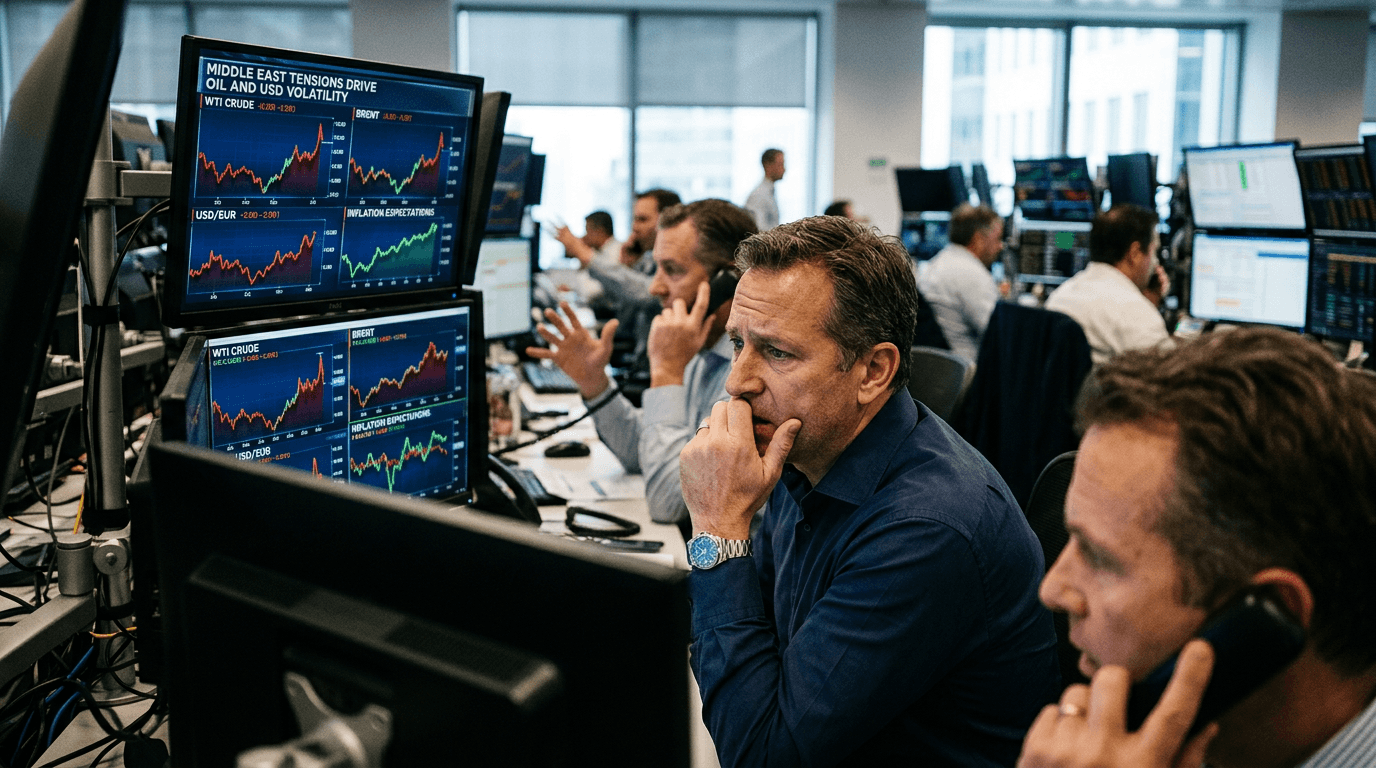
Renewed tensions in the Gulf and wider Middle East are keeping the U.S. dollar on the front foot as investors seek shelter from geopolitical risk. As shipping disruptions and security threats around the Strait of Hormuz persist, markets are leaning into the dollar’s safe‑haven status, with swings in oil prices spilling across foreign exchange, energy futures and inflation expectations[9][12][16]. For traders, this is a reminder that geopolitics can quickly eclipse traditional drivers like economic data and central bank guidance.
Safe-haven Flows Back In Focus
The dollar has reasserted itself as a core refuge whenever headlines from the Middle East turn more threatening[7][11]. In recent episodes of escalation, the dollar index (DXY) has pushed higher as risk‑off flows gather pace, with investors rotating out of risk assets into the relative safety and liquidity of U.S. cash markets[1][8][16].
What’s notable in the current environment is how consistently geopolitics is dominating the macro narrative. Reports of missile activity, military operations, and fraught U.S.–Iran diplomacy have driven traders to prioritize event risk over routine data releases[9][10][16]. Even solid or stable labor market figures have at times been discounted as markets focus instead on conflict‑related uncertainty and the potential for energy shocks[11][16].
Other traditional safe havens, such as the Japanese yen and gold, have shown mixed behaviour across recent bouts of tension, occasionally lagging or even retreating while the dollar holds firm[2][15]. That underscores an important point: in periods of stress linked to global trade, sanctions, and energy security, the depth and liquidity of U.S. markets can give the dollar an advantage over alternative shelters[7][11][16].
Strait Of Hormuz: A Critical Choke Point
The Strait of Hormuz sits at the heart of today’s risk narrative. This narrow corridor off Iran and Oman is one of the world’s most important oil and gas transit routes, and repeated security incidents there have instant market consequences. When shipping attacks, vessel seizures or closures are reported, oil markets tend to react swiftly with price spikes and higher volatility[9][12][16].
Recent developments have reinforced these dynamics. Washington’s response to fresh attacks on ships in the Gulf, including revoking a key Iranian license and seizing cargo, has intensified concerns around freedom of navigation and supply reliability[9][12]. Each step that raises the perceived risk of disruption to flows through Hormuz feeds directly into higher energy prices, inflation worries and, in turn, safe‑haven bids for the dollar[9][12][16].
The uncertainty surrounding any potential U.S.–Iran arrangement adds another layer of complexity. Markets recognise that a durable agreement could ease tensions, stabilise shipping and relieve some upside pressure on oil. But as long as negotiations appear fragile or stalled, traders tend to price a risk premium into energy and maintain a supportive bias toward the dollar[10][12][14]. In practical terms, that often means the greenback stays underpinned even during phases when risk assets are attempting to rebound.
How Oil And Fx Interact Under Geopolitical Stress
When Middle East tensions flare, the transmission channel from oil to FX and broader markets is fast and powerful. Escalating conflict or threats to shipping drive crude prices higher, prompting fears of a sustained energy shock[9][11][16]. Those higher oil prices can raise global inflation expectations, complicate central bank policy paths, and reshape relative growth prospects across energy‑importing and energy‑exporting economies[11][14][16].
For currency traders, several patterns commonly emerge in these episodes:
First, the dollar tends to firm against major peers such as the euro, sterling and commodity‑linked currencies, as investors seek the liquidity and stability of U.S. assets[1][8][11][16]. At the same time, currencies of large net energy importers can come under pressure as markets anticipate weaker growth or more difficult inflation trade‑offs[9][14][16].
Second, yield dynamics interact with the safe‑haven theme. In recent tensions, U.S. Treasury yields have sometimes edged higher even as the dollar rallies, reflecting shifting rate expectations and complex flows between bonds and cash[11][16]. This creates a powerful combination for the greenback: risk‑off sentiment plus relatively attractive yields.
Third, cross‑asset relationships can become less predictable. Gold and government bonds, for example, have occasionally delivered muted or even counter‑trend moves in the face of geopolitical risk, forcing investors to rely more heavily on the dollar as a reliable hedge[11][15][16]. The result is a market environment where FX and energy often lead, while other havens follow.
Trading Implications In Simulated And Live Markets
For traders operating in both live markets and simulated environments like SimFi platforms, these conditions offer a valuable real‑time case study in geopolitics‑driven volatility. The current Middle East backdrop illustrates several practical lessons.
Risk management needs to be calibrated for sudden gaps and headline‑driven moves. When conflict news or Hormuz‑related incidents hit the tape, prices in oil, major FX pairs and indices can move sharply in seconds, often before scheduled data or central bank events[9][12][16]. Practising position sizing, protective stops and scenario analysis in a simulated framework helps build discipline for these conditions.
Event‑aware strategy design becomes critical. Rather than relying solely on technical setups or routine calendar events, traders should incorporate geopolitical milestones—such as ceasefire talks, sanctions announcements, or reports of shipping incidents—into their playbook[9][10][16]. In FX, that may involve favouring dollar‑positive structures when escalation risks are high, and planning for mean‑reversion if credible de‑escalation emerges.
Cross‑market vigilance is essential. Monitoring DXY, front‑end and 10‑year U.S. yields, key energy benchmarks and volatility gauges provides a more complete picture of risk sentiment[1][9][16]. Sharp concurrent moves in the dollar and oil often signal a regime shift that can ripple into indices, credit and emerging‑market FX.
Key Takeaways For Traders
Several clear takeaways emerge from the latest stretch of Middle East and Strait of Hormuz risk:
Safe‑haven demand for the dollar remains robust when geopolitical tensions centre on energy security and global trade routes[7][11][12][16]. This is unlikely to change as long as shipping disruptions and U.S.–Iran uncertainty persist.
Oil‑driven inflation fears can amplify FX moves. Higher crude prices do not just affect energy futures; they also influence central bank expectations, yield curves and the relative attractiveness of different currencies[9][11][14][16].
Headline risk is the dominant driver. In this environment, unscheduled news from the Gulf can matter more than scheduled data releases. Traders who track these developments and prepare scenario responses are better positioned to manage volatility[9][10][12][16].
Finally, simulated trading offers a low‑risk way to rehearse decisions under stress. By running strategies through geopolitical shock scenarios—ranging from further disruptions in Hormuz to the announcement of a credible ceasefire—traders can refine their approach before committing real capital.
In a world where geopolitics can reshuffle market priorities overnight, understanding how safe‑haven flows, energy shocks and FX dynamics intersect is no longer optional. The current Middle East backdrop is a reminder that the dollar’s role as a refuge is deeply tied to global risk perception—and that traders who respect that relationship stand a better chance of navigating whatever the next headline brings.