
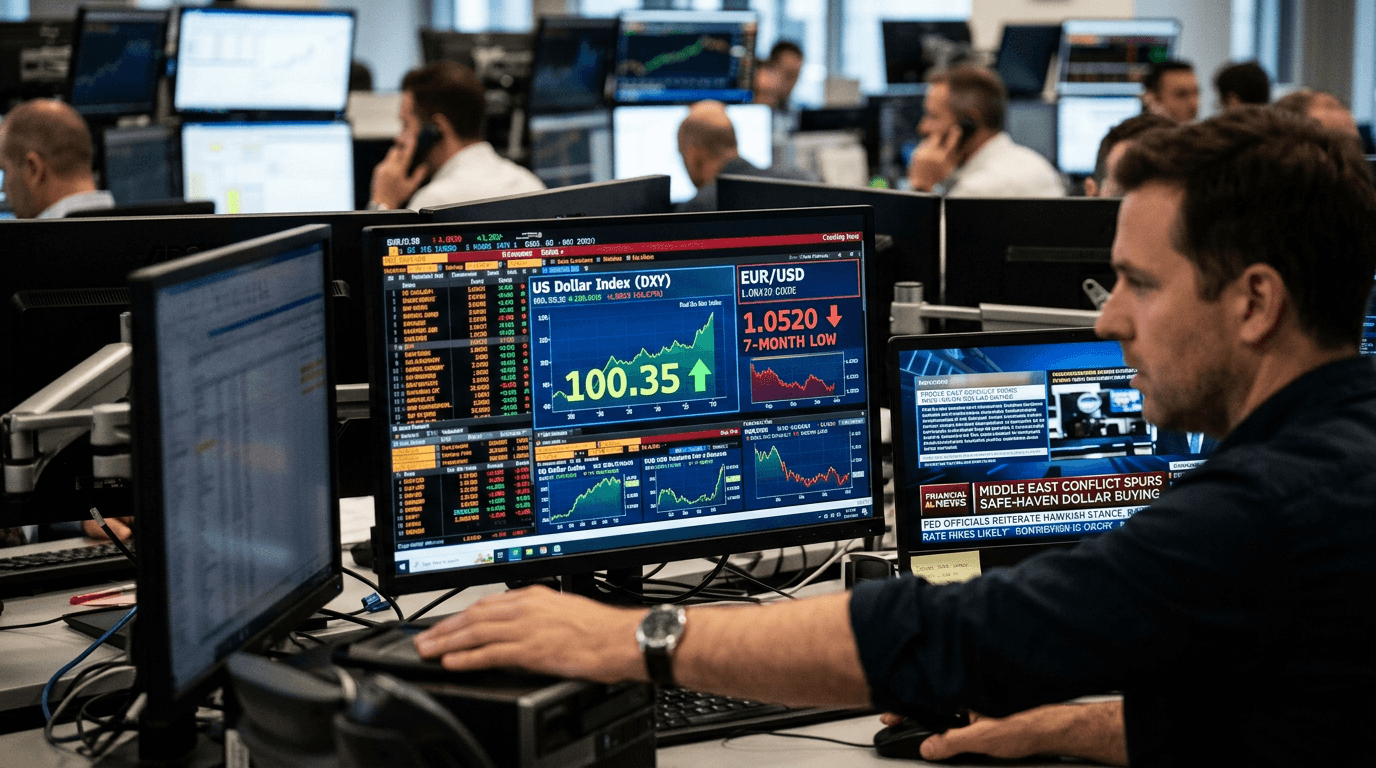
When geopolitical tensions rise and markets become defensive, the US dollar historically emerges as the go-to safe haven for institutional investors and traders. In March 2026, this pattern is unfolding with striking intensity. As tensions in the Middle East escalate and global economic uncertainties deepen, the US dollar has reclaimed its status as the world's leading safe-haven asset, surging above 100 on the Dollar Index and pushing EUR/USD to seven-month lows. For traders and portfolio managers, deciphering the forces behind this dollar resurgence is crucial for navigating current market conditions.
The dollar's strength is no coincidence. It stems from two powerful and interconnected forces reshaping foreign exchange markets. First, the Federal Reserve's unexpectedly hawkish stance has undermined expectations for rate cuts. Second, escalating geopolitical turmoil is prompting a classic flight to safety, with the greenback emerging as the preferred currency. These dynamics have created an environment where the dollar is formidable, and betting against it is increasingly risky.
The Rate Cut Surprise That Changed Everything
At the start of 2026, market consensus anticipated steady Federal Reserve rate cuts throughout the year. The CME FedWatch tool suggested monetary easing was imminent. However, that narrative has crumbled. Markets now assign only a 4.7% probability of a rate cut at the March 17-18 FOMC meeting, and expectations for the entire year have dwindled to just one 0.25% rate cut, likely in September.
What prompted this dramatic shift? The answer lies in persistent inflation dynamics and labor market resilience. While core inflation has moderated, stubborn services inflation resists the Fed's tightening efforts. Unemployment remains near cyclical lows, and wage growth concerns policymakers. This data-dependent approach means the threshold for rate cuts has risen significantly, leading markets to anticipate prolonged monetary tightening instead of the expected accommodation.
For currency traders, this has direct implications. When the Federal Reserve cuts rates more slowly than other major central banks, US Treasury yields remain elevated relative to foreign instruments. This interest rate differential creates a structural incentive for international investors to hold dollar-denominated assets. The relative yield advantage translates into consistent support for the greenback, independent of sentiment swings or headlines.
Geopolitical Risk Driving The Safe-haven Rush
While monetary policy divergence underpins dollar strength, geopolitical developments amplify the effect dramatically. Escalating tensions in the Middle East, particularly concerning Iran, have created an environment where traditional safe-haven assets command a premium. Despite questions about the dollar's safe-haven status in recent years, risk-off episodes consistently demonstrate that international investors still view the greenback as the most liquid and reliable currency for shelter.
Oil prices have risen alongside these geopolitical developments, creating a complex dynamic for currency markets. While higher crude prices typically support commodity-linked currencies like the Canadian dollar and Mexican peso, they simultaneously heighten global economic uncertainty, driving investors toward dollar safety. The balance between these forces has decisively shifted toward the safe-haven bid for the greenback during most risk-off episodes.
Notably, geopolitical support for the dollar can override traditional rate dynamics. In normal market environments, a central bank cutting rates would pressure its currency. But when geopolitical risks are elevated, safe-haven flows often outweigh rate considerations. The combination of hawkish Federal Reserve messaging and elevated tail risks has created a robust support system for the dollar that's proving difficult to challenge.
Central Bank Divergence Creates Structural Opportunities
The dollar strength narrative gains further traction when considering global monetary policy divergence beyond just the Federal Reserve. While the Fed maintains caution, other central banks signal unexpected moves. For instance, the Reserve Bank of Australia hints at a potential rate hike in March, creating a stark contrast with the Fed's inaction. This widening policy gap between the Fed and other major central banks is creating distinct trends in currency pairs, moving away from earlier consolidation.
Currency traders increasingly price this divergence into major pairs, with the Australian dollar showing particular weakness as the RBA's hawkish surprise contrasts with the Fed's stance. These structural shifts in relative monetary policy create opportunities for longer-term positioning, while short-term volatility from geopolitical headlines and economic data continues to dominate.
What This Means For Traders And Investors
The current environment presents both opportunities and risks. Range-bound trading conditions are likely to persist, with clearly defined support and resistance levels offering tactical hedging opportunities. For businesses with foreign exchange exposure, the USD/CAD range of 1.3500 to 1.3900 reflects the tug of war between safe-haven dollar demand and oil-supported Canadian strength. The EUR/USD weakness to 1.1411 levels demonstrates how decisively markets are repricing relative monetary policy and risk dynamics.
However, this environment remains data-dependent and sentiment-driven. Markets could reprice quickly if economic data softens or geopolitical tensions ease. Traders should monitor upcoming labor data and Fed communications closely while remaining mindful of oil markets and Middle East developments as critical variables shaping near-term dollar direction.
The dollar's current dominance is built on a foundation of higher relative yields and safe-haven demand. Until either geopolitical tensions ease significantly or the Federal Reserve signals a shift toward rate cuts, expect the greenback to maintain its commanding position in currency markets.