
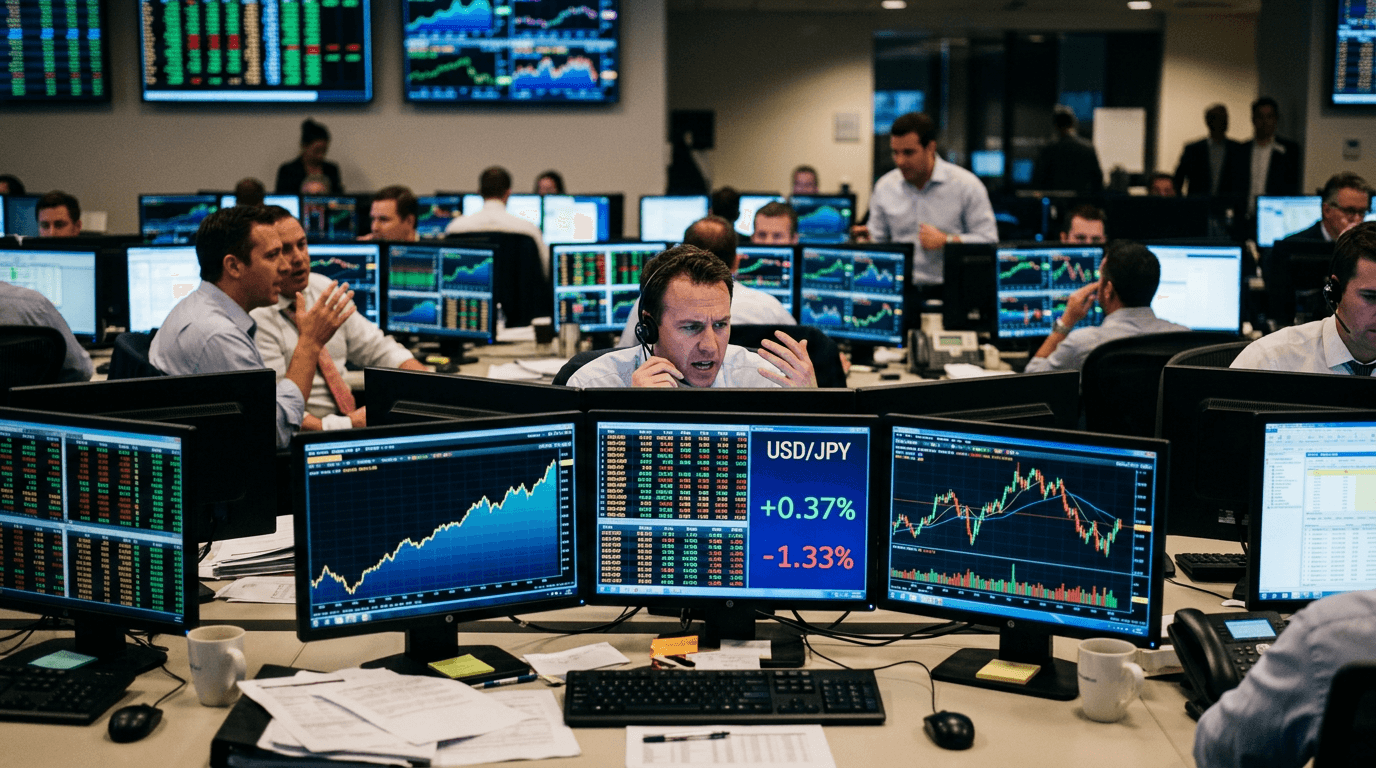
Safe-haven currencies are back at the center of global FX as traders confront a powerful combination of macro risk and geopolitics: a pivotal US Nonfarm Payrolls (NFP) release and escalating tensions around the Gulf and Iran. Safe-haven demand is lifting the US dollar, yen and other defensive assets, while major pairs like EUR/USD, USD/JPY and GBP/USD trade with elevated volatility as markets rapidly reprice interest-rate expectations and geopolitical risk across FX, gold and oil futures.[2][6]
Safe-haven Flows Back In Focus
In uncertain markets, capital tends to migrate into so-called “safe-haven” assets—currencies and instruments historically seen as more resilient in periods of stress. The US dollar, Japanese yen and Swiss franc frequently play this role, alongside gold and high-grade government bonds.[1][4] These flows are not purely emotional; they reflect institutional mandates to protect capital when visibility on growth, inflation and conflict deteriorates.
Current Middle East tensions, especially around Gulf shipping lanes and Iran-related risks, have revived memories of previous episodes where geopolitical shocks triggered rapid, defensive FX positioning.[1][4] Headlines that point to rising conflict risk can quickly translate into selling in higher-beta currencies and emerging markets, while the dollar and yen catch a bid as traders seek liquidity and perceived safety.
Key takeaway: When geopolitical risk rises, safe-haven FX flows often reassert themselves, amplifying volatility in major pairs and rewarding traders who understand how defensive positioning works.
Why Nfp Sets The Tone For Dollar And Risk Sentiment
Nonfarm Payrolls is one of the most closely watched US data releases because it provides a timely snapshot of labor-market strength, which in turn shapes expectations for Federal Reserve policy.[6][8] NFP measures the number of paid US workers in nonfarm businesses; surprises in hiring, wages or unemployment can significantly shift the perceived trajectory of growth and inflation.[8]
Historically, a strong NFP print supports the dollar by reducing expectations of rate cuts or even reviving the possibility of future hikes.[6] Conversely, a weak report—especially when combined with rising unemployment—can push traders to price in more aggressive easing, weighing on the dollar and boosting assets sensitive to lower yields, such as gold and some high-yielding currencies.[1][4] Markets have seen episodes where a downside surprise in payrolls led to sharp moves in rate futures and a rapid reversal in the dollar index within minutes.[1]
Into this release, traders are already on edge. The dollar holding near recent highs reflects positioning for a potentially firm jobs report, but also a defensive stance in the face of geopolitical headlines. That dual motive—macro and geopolitical—is what makes the upcoming NFP particularly potent for FX volatility.[2][6]
Key takeaway: NFP is not just another data point; it is a recurring stress test for dollar sentiment and Fed expectations, and its impact is magnified when released into an already risk-sensitive environment.
Geopolitical Risk, Gold And Oil: A Connected Story
Middle East tensions rarely stay confined to FX. They ripple across commodities, especially oil, given the region’s importance for global supply, and gold, which is a classic defensive asset in times of war risk and policy uncertainty.[3][4] Rising conflict concerns can push oil prices higher on fears of supply disruption, while simultaneously lifting gold as investors seek an insurance asset against tail risks.[3][4]
These cross-asset moves feed back into currencies. Oil-sensitive currencies and import-dependent economies may weaken as higher energy costs threaten growth and trade balances. Meanwhile, safe-haven currencies and gold-related plays tend to benefit from the flight to safety.[4] When NFP arrives in the middle of this dynamic, the result can be layered volatility: traders are not just reacting to the jobs print, but also to how that data interacts with shifting commodity prices and risk sentiment.
For FX traders, understanding this web of relationships is crucial. A stronger dollar on NFP might coexist with a firmer gold price if geopolitical fears are dominant, or it might cap gold if the market pivots back toward growth and higher yields as the key narrative.[3][4]
Key takeaway: FX, gold and oil do not move in isolation around NFP and geopolitical shocks—cross-asset correlations can shift quickly, and monitoring them is essential for informed trade ideas and risk control.
Trading Implications: Volatility Management In Major Pairs
For EUR/USD, USD/JPY and GBP/USD, the intersection of NFP risk and Middle East tensions implies wider intraday ranges and the potential for abrupt reversals. A strong NFP could extend dollar strength against the euro and sterling, particularly if it reduces the odds of near-term Fed easing relative to the European Central Bank or Bank of England.[6] In USD/JPY, the picture is more nuanced: strong US data can lift yields and support the pair, but spikes in geopolitical risk often trigger yen-buying as global investors hedge risk, sometimes capping upside or even driving a counterintuitive move lower.[4]
In practice, this environment calls for disciplined volatility management. Many experienced traders prepare scenario maps in advance—bullish, bearish and mixed NFP outcomes—and link each to likely reactions in key pairs and safe-haven assets.[2] Defining these scenarios on paper helps prevent emotional decision-making when prices move sharply in the seconds after the release.[2]
Risk techniques also matter more than usual: smaller position sizes, clearly defined but slightly wider stops, and an awareness of potential gaps around the data release can help reduce the probability of outsized losses.[2] Monitoring option-implied volatility and key technical levels before the event can give additional insight into where the market expects stress to emerge.
Key takeaway: Treat NFP in a geopolitical risk regime as a high-volatility session, and plan scenarios, position sizing and exit rules in advance rather than improvising in real time.
Using Simulated Finance To Navigate Risk Events
Because NFP recurs monthly and geopolitical flare-ups are a regular feature of modern markets, traders have repeated opportunities to practice how they respond to complex risk events. Simulated finance (SimFi) environments are particularly powerful for this: they allow traders to run through different NFP and geopolitical scenarios, test strategies, and experience realistic volatility without putting real capital at risk.[2]
By replaying stress episodes—such as a surprise downside NFP amid Middle East tensions—traders can see how their systems handle slippage, gaps and rapid changes in spreads. They can refine entry timing, adjust risk parameters and learn how cross-asset moves in gold and oil affect their FX positions. Over time, this rehearsal builds the pattern recognition and emotional resilience needed when similar conditions emerge in live markets.[2]
Key takeaway: Using simulated trading to rehearse NFP days and safe-haven regimes can significantly improve execution quality and confidence when real data and real geopolitical shocks hit the tape.
As safe-haven FX flows intensify ahead of US NFP and against a backdrop of Gulf and Iran-related tensions, the key for traders is not predicting every headline, but preparing for how data and geopolitics can combine to reshape the landscape across FX, gold and oil. Understanding safe-haven behavior, the central role of NFP, and the cross-asset connections that drive volatility—then stress-testing strategies in a simulated environment—can turn a daunting risk event into a structured, manageable trading opportunity.