
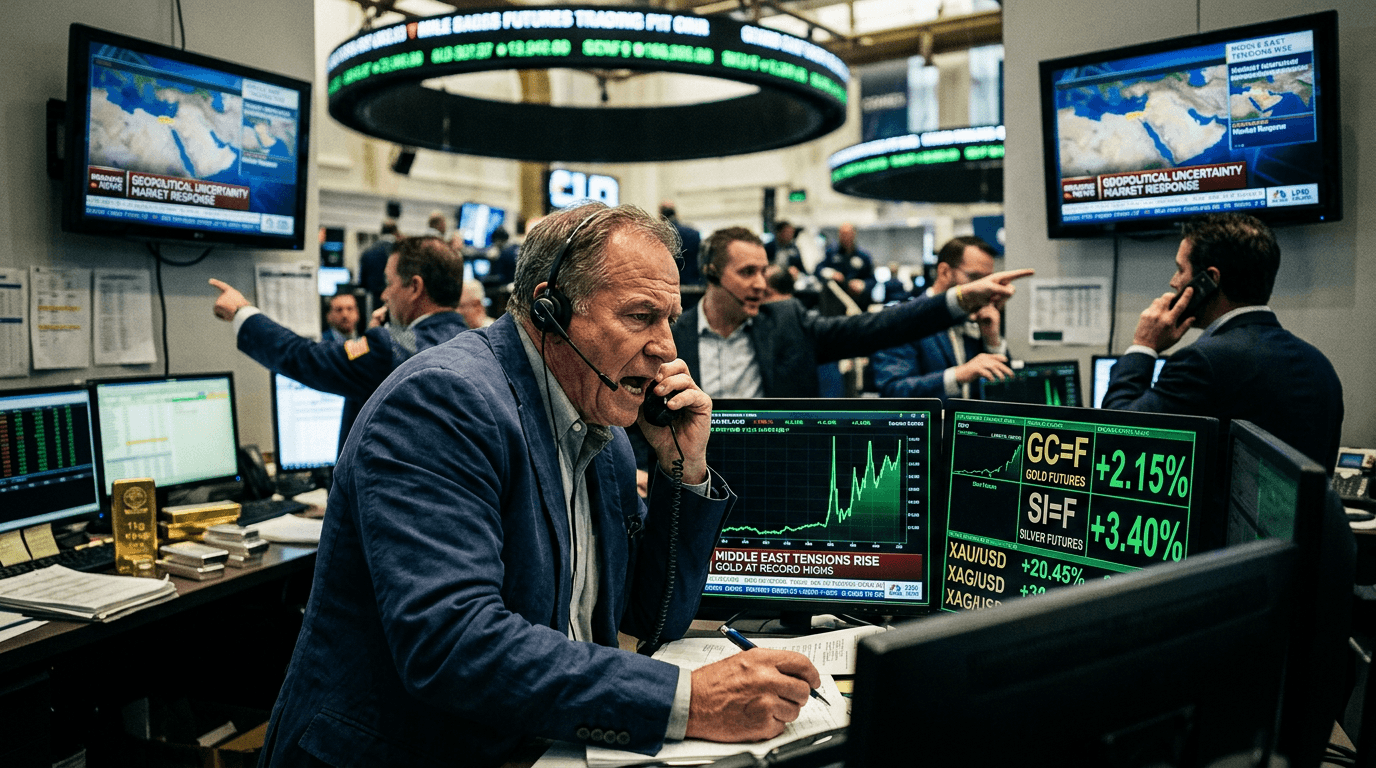
Safe‑haven flows into gold and silver have returned to center stage as the Middle East crisis intensifies, pulling capital out of risk assets and into traditional stores of value[3][8][13]. Silver has surged above $84 and gold remains firmly bid, reflecting investors’ scramble for protection against geopolitical shocks, energy‑price volatility, and shifting expectations for U.S. monetary policy[12][14]. This risk‑off tone is rippling across USD crosses, commodity‑linked FX, and metals futures as traders reassess positioning ahead of key U.S. jobs data[8].
SAFE‑HAVEN FLOWS IN FOCUS
In periods of acute geopolitical stress, gold and silver tend to attract inflows from investors seeking assets that can hold purchasing power through crisis and policy uncertainty[1][3][8]. The latest escalation involving Iran and regional actors has revived this classic pattern, with gold extending gains and silver registering outsized moves as fears over a wider conflict intensify[3][10][13]. Price action has been amplified by algorithmic and momentum strategies that chase breakouts once volatility spikes in precious metals futures[3][14].
Gold’s role as a monetary and reserve asset gives it a unique status in these episodes, drawing demand not only from funds and retail traders but also from central banks looking to diversify away from the dollar[1][10]. Recent analysis has highlighted that some BRIC central banks are gradually reducing dollar‑denominated holdings in favor of gold, a structural tailwind that reinforces cyclical safe‑haven bids during conflict[10]. Silver, while more industrial in nature, often “catches up” to gold as speculative interest builds and traders look for leveraged exposure to the same theme[9][12].
Why The Middle East Crisis Matters For Metals
The current Middle East crisis is not just a geopolitical headline; it carries direct economic implications that feed into the precious‑metals story[3][10][13]. Markets are focused on risks to energy infrastructure and key shipping routes, where disruptions can drive sustained increases in oil and gas prices and, in turn, reignite inflation pressures globally[3][11]. Higher energy prices complicate the path for central banks, potentially delaying rate cuts and keeping real yields elevated, a mixed backdrop for non‑yielding metals like gold[3][11][14].
This tension creates an interesting dynamic: on the one hand, geopolitical risk and inflation concerns support gold as a hedge; on the other, a stronger dollar and higher bond yields can cap upside or trigger sharp corrections when liquidity becomes the priority[3][11][14]. Recent episodes during the Iran conflict have shown that safe‑haven narratives can reverse quickly if investors shift toward cash and high‑yield assets, reminding traders that correlations are regime‑dependent rather than fixed[7][11]. For silver, the link to industrial demand adds another layer; fears of slower global growth can temper enthusiasm even when safe‑haven demand spikes[7][11].
Impact On Usd Crosses, Commodity Fx, And Metals Futures
The risk‑off bid into gold and silver is part of a broader repositioning across currencies and futures markets[3][8]. Heightened Middle East tensions have supported the dollar against several high‑beta and commodity‑linked currencies as investors reduce exposure to risk‑sensitive FX and seek liquidity in major reserve currencies[3][8][11]. This shift is visible in USD crosses, where volatility has increased and carry trades tied to emerging‑market and commodity FX are being pared back[3][8].
Commodity‑linked currencies, particularly those with strong ties to energy exports or imports, are caught between the supportive effect of higher oil prices and the drag from global risk aversion[3][11]. For metals futures, the combination of safe‑haven inflows, shifting rate expectations, and algorithmic activity has produced sharp intraday swings, with gold and silver experiencing rapid rallies and occasional air‑pockets when order books thin out[2][9][14]. Traders on SimFi platforms can use these moves to study how cross‑asset flows propagate: for example, observing how a headline about strikes in the region is followed by moves in crude, then in yields, then in metals and FX[9][10][11].
As volatility rises, term‑structure in futures curves can change quickly. Backwardation or steep contango in metals contracts may reflect hedging by producers, speculative demand, or changes in funding conditions[2][14]. Understanding these curve dynamics is critical for anyone simulating strategies that involve roll yields, calendar spreads, or volatility‑targeting across gold and silver futures[2][9][14].
U.S. JOBS DATA: A KEY TEST FOR THE SAFE‑HAVEN RALLY
The upcoming U.S. jobs report is a crucial catalyst for metals markets because it directly shapes expectations for Federal Reserve policy and interest‑rate trajectories[3][8][11]. Strong employment and wage data could reinforce the narrative of persistent inflation pressures, leading markets to price fewer or later rate cuts, and potentially lifting real yields[3][11][14]. In that scenario, gold and silver may face a tug‑of‑war: geopolitical anxiety supports them, but higher yields and a firmer dollar raise the opportunity cost of holding metals[3][11][14].
Conversely, a weaker‑than‑expected jobs print would likely revive expectations for earlier easing, which tends to favor gold and silver as lower rates reduce the carry disadvantage and weaken the dollar[1][3]. Traders are therefore positioning in advance, using options and futures to express views not only on direction but also on volatility around the data release[8][14]. On a SimFi platform, this is an ideal environment to test scenario‑based strategies: mapping out how different combinations of jobs data and Middle East headlines might impact metals, FX, and equity indices over short horizons[8][11].
Practical Takeaways For Traders
For traders and learners using simulated environments, the current setup offers several actionable lessons drawn from live market behavior[8][11][14].
First, safe‑haven flows are rarely isolated; they are part of a broader cross‑asset reallocation that affects currencies, commodities, and rates at the same time[3][8][11]. Simulating multi‑asset strategies—such as long gold versus short high‑beta FX, or long silver versus short cyclical equities—can help clarify how risk‑off regimes unfold and eventually mean‑revert[7][11][14].
Second, news sensitivity is elevated. Traders should practice building rules for headline‑driven risk management: tightening stops around major data releases, scaling position size to volatility, and planning for gaps that can occur outside regular trading hours[9][11][14]. Scenario analysis that combines geopolitical shocks with macro surprises is particularly valuable, as it mirrors the complexity of real‑world markets[3][8][11].
Third, understanding the difference between structural and cyclical drivers is key. Central‑bank gold buying and long‑term diversification away from the dollar provide a slow‑moving base of demand, while conflicts, energy shocks, and data prints create shorter‑term waves on top of that base[1][10][11]. SimFi strategies that distinguish between these horizons—using longer‑term allocations in gold alongside shorter‑term tactical trades in silver and FX—mirror professional portfolio construction[2][7][14].
Conclusion
The intensifying Middle East crisis has reignited safe‑haven demand for gold and silver, pushing silver above $84 and keeping gold well supported as investors seek protection from geopolitical and macroeconomic uncertainty[3][8][12][13]. These flows are reshaping USD crosses, commodity‑linked FX, and metals futures, while upcoming U.S. jobs data adds a critical macro layer that could either reinforce or challenge the current risk‑off narrative[3][8][11][14]. For traders and learners on SimFi platforms, this environment is a real‑time case study in cross‑asset behavior, regime shifts, and the interplay between geopolitics and monetary policy.
By focusing on multi‑asset relationships, scenario planning, and disciplined risk management, market participants can transform today’s volatility into a learning opportunity rather than simply a source of stress[3][8][11][14]. Safe‑haven rallies in gold and silver will eventually fade or reverse, but the skills developed by studying and simulating these episodes can compound over time—long after this particular crisis has passed[7][11][14].