
Geopolitical Dynamics Shift: A Coalition to Reopen the Strait of Hormuz
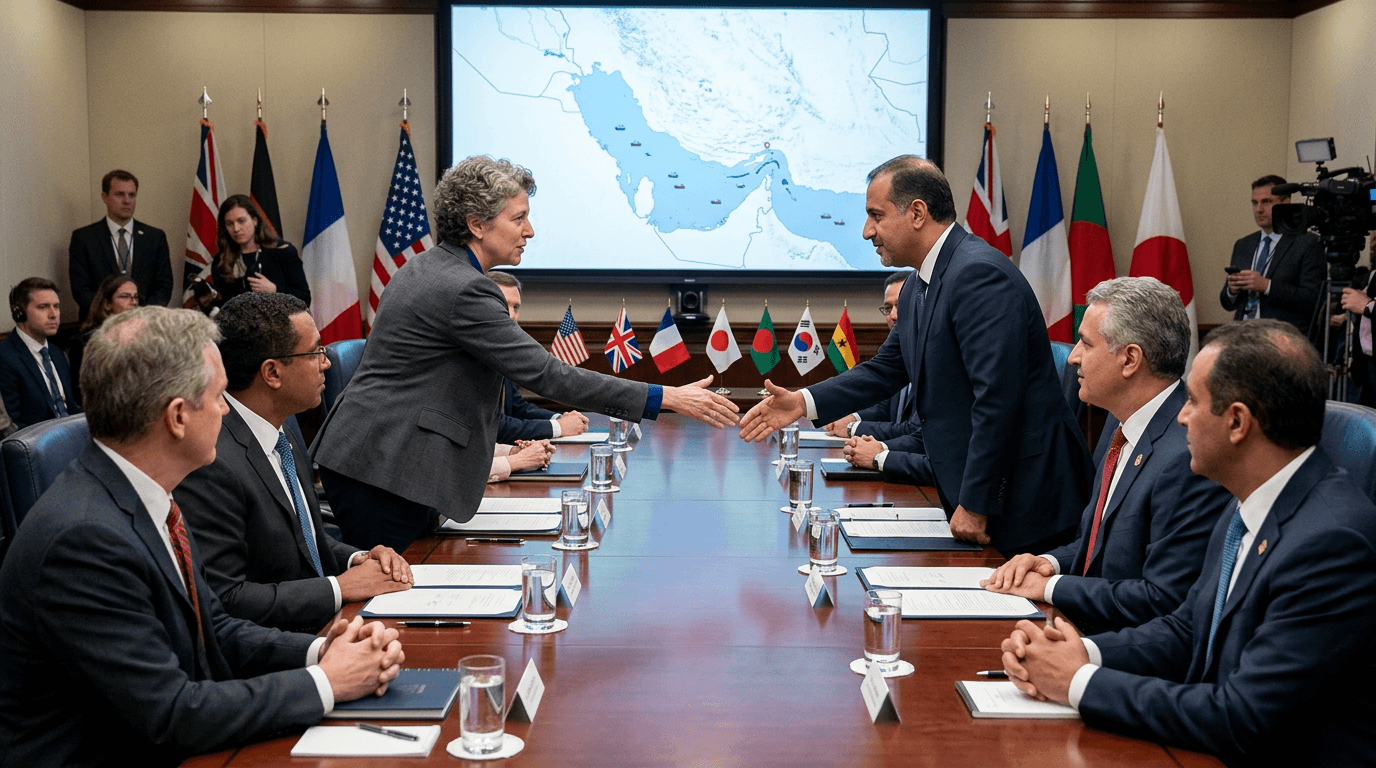
The geopolitical landscape has experienced a notable shift as seven major US allies have expressed support for a coalition aimed at reopening the Strait of Hormuz. This move, unfolding amidst rising tensions, marks a diplomatic effort to tackle a significant crisis for the White House. With nearly 20% of the world's oil supply passing through these waters, the implications for financial markets and traders are immense.
Emerging Coalition: A Symbolic Gesture
On Thursday, seven allied nations—comprising the United Kingdom, France, Germany, Italy, the Netherlands, Japan, and Canada—issued a joint statement endorsing a coalition to secure the Strait of Hormuz for commercial and oil vessels. However, this gesture remains largely symbolic, lacking concrete military commitments like naval deployments. Instead, the allies have pledged "appropriate efforts" and "preparatory planning."
NATO Secretary General Mark Rutte emphasized the growing coalition, now involving at least 22 countries, including NATO members, non-NATO partners such as Japan, South Korea, and Australia, and Gulf states like the UAE and Bahrain. Despite expanding support, discussions around operational timelines and military requirements continue.
Catalyst for Alignment
President Trump has voiced frustration over allied reluctance to secure the strait, warning that inaction could jeopardize NATO's future. This pressure appears to be spurring hesitant allies into action. Iran's blockade of the strait, which has disrupted Gulf oil shipments, serves as the backdrop for this coalition-building. Simultaneously, the US military targets Iranian anti-ship positions to mitigate threats to oil tankers. The White House and State Department are pursuing parallel military and diplomatic strategies to resolve the crisis.
Market Implications and Trader Insights
The coalition's formation carries significant ramifications for commodity and energy markets. Crude oil prices, already pressured by the blockade, may experience heightened volatility with military coordination efforts to reopen the strait. Energy futures traders are keenly observing developments, as successful reopening could ease supply constraints, while military escalation might spike prices.
Safe-haven assets like gold have benefited from geopolitical risks. As uncertainty about the strait's status and potential military actions persists, institutional investors may continue seeking defensive positions. Allied coordination announcements could be seen as signals of either peaceful resolution or impending military action, affecting market interpretations.
The insurance and shipping sectors warrant attention, with elevated freight rates and insurance costs for strait transits. Any concrete military commitments could rapidly alter these dynamics.
Coalition Challenges and Strategic Dynamics
Despite the joint statement, hurdles remain. France, Germany, Italy, and Japan have previously ruled out naval vessel deployments during the conflict. Whether this stance changes following the statement is uncertain. NATO meeting transcripts reveal European allies' cautious stance on the West Asia war, emphasizing military escorts only post-ceasefire.
Trump suggests the US, with Israel and Gulf partners, could reopen the strait, with the broader coalition playing a supporting role. This highlights the complexity of coordinating multinational military operations in active conflict zones.
Key Developments for Traders
For SimFi and real market participants, the crucial aspect is whether the statement leads to concrete military commitments. "Preparatory planning" implies operational details may take weeks to emerge. Monitoring Iranian responses to the coalition's announcement and assessing Tehran's stance on strait openness for non-enemy vessels is vital.
Energy futures markets are poised for dramatic reactions to announcements of vessel deployments or military timelines. Geopolitical risk premiums in commodity prices may adjust based on coalition progress and Trump administration messaging.
While the Strait of Hormuz coalition signifies a diplomatic achievement, market impacts hinge on translating political statements into effective action. Traders should brace for a period of uncertainty extending over the coming weeks.