
1. Output ONLY article content in PLAIN TEXT format first 2. NO preamble, introduction, or meta-commentary 3. Start directly with first paragraph 4. Use ALL CAPS for section headings on their own line 5. Separate paragraphs with blank lines 6. Include 3-5 main sections with clear takeaways 7. At the END, provide TITLE, EXCERPT, NEWSIMPACTSCORE on separate lines 8. No markdown or HTML 9. Plain text format
Looking at the search results: - S&P 500 surged more than 9.5% - Nasdaq 100 surged almost 12% - Dow rallied almost 8% - Trump announced a 90-day pause on reciprocal tariffs (10%) for non-retaliating countries, but excluded China - China's tariffs remain at 84-125% - All 11 S&P 500 sectors rose at least 2.5% - Individual stocks like Delta (15%), AMD (13%), Tesla (11%), Nvidia and chipmakers (10%+) rallied - Only 4 S&P 500 stocks were lower - Retail buying spike of $719 million - Oil and gas dropped due to energy demand concerns - Still 10% tariffs on everything, 25% on Canada and Mexico
I need to write this in plain text, no markdown. Let me structure it with: 1. Opening paragraph with the main story 2. Section on The Market's Strong Response 3. Section on Tariff Details and Uncertainty 4. Section on Sectoral Impact 5. Section on What This Means for Traders 6. Takeaways
Let me write this carefully, making sure it's plain text and starts directly with content.
US equity markets experienced one of their most dramatic rallies in years after President Trump announced a 90-day pause on reciprocal tariffs for most countries, sending the S&P 500, Nasdaq 100, and Dow Jones to significant gains. This announcement came as a major relief to investors who had been bracing for escalating trade tensions, offering what market participants are calling a long-awaited "Trump put" that stabilized sentiment and unlocked pent-up buying pressure across nearly all sectors of the market.
The Magnitude Of The Rally
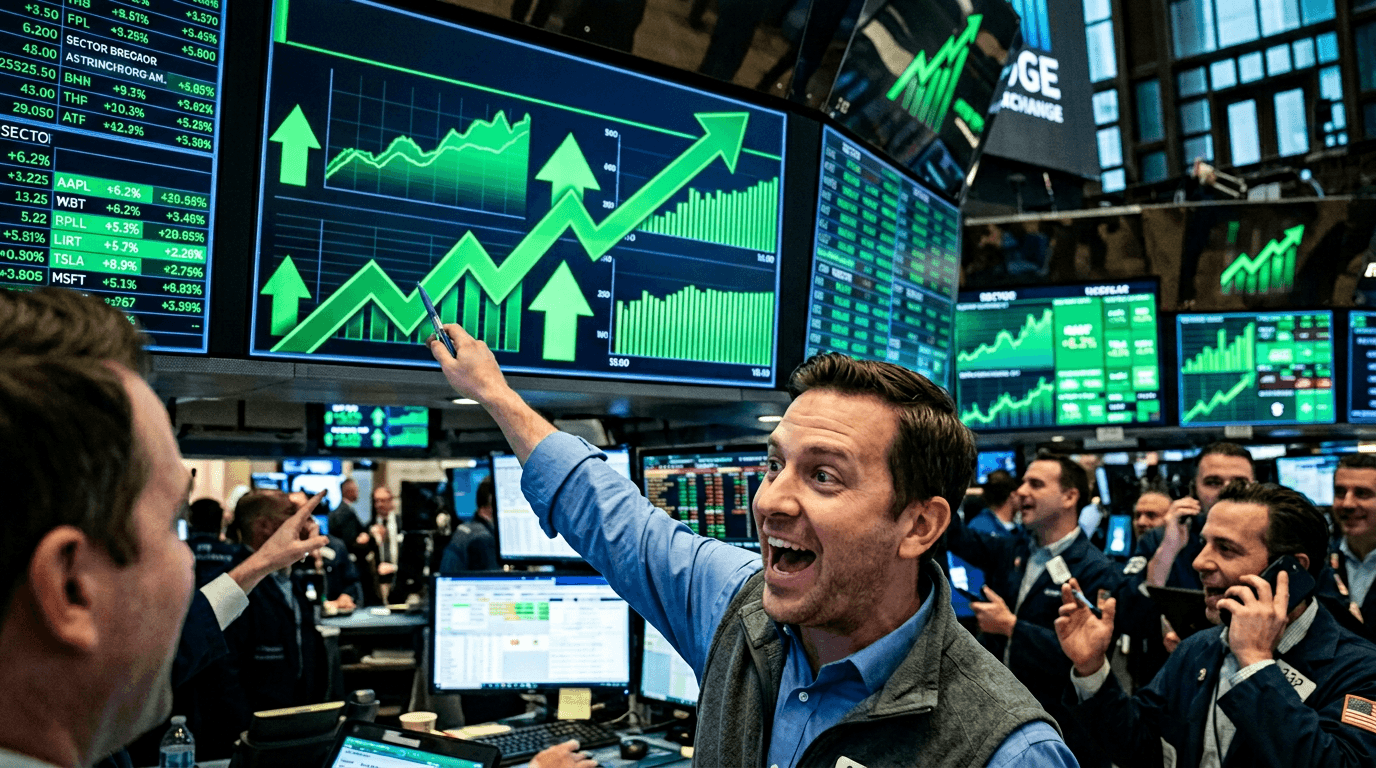
The market's response was staggering. The S&P 500 Index surged more than 9.5% at the close, while the Nasdaq 100 climbed almost 12% and the Dow Jones Industrial Average rallied nearly 8%. This represented the most significant daily jump since March 2020, marking a watershed moment after weeks of declining valuations and mounting recession concerns. Technical analysts noted that only four stocks in the entire S&P 500 closed lower on the day, indicating near-universal buying across the market. All 11 S&P 500 sectors rose at least 2.5%, a remarkably synchronized move that underscored the broad-based nature of the relief rally. The enthusiasm extended to Treasury markets as well, with two-year Treasury yields tumbling to 3.8% before closing at 3.9%, reflecting a significant repricing of rate expectations and risk sentiment.
Understanding The Tariff Pause Details
The specifics of Trump's announcement are crucial for understanding both the market reaction and the lingering uncertainty. The President authorized a 90-day pause with a "substantially lowered Reciprocal Tariff" of 10% effective immediately. However, this relief applies only to countries that have not retaliated against US tariffs, a notably significant carve-out that excludes China. Meanwhile, China faces a raised tariff rate to 125%, underscoring the administration's continued hardline stance toward its largest trade partner. Additionally, existing duties of 25% on Canadian and Mexican imports remain firmly in place, along with the baseline 10% tariff on most goods. This creates a bifurcated trade environment where uncertainty persists for critical trading partners, potentially limiting the longevity and scope of the market's euphoria.
Sector And Stock Winners
The tariff pause sparked dramatic outperformance in specific corners of the market most vulnerable to trade friction. Delta Air Lines surged 15%, reflecting relief from airlines facing supply chain pressures and tariff-driven input costs. Advanced Micro Devices climbed 13%, while semiconductor companies more broadly, including Nvidia and other major chipmakers, rose at least 10%. Tesla rallied 11%, benefiting from reduced concerns about tariff impacts on manufacturing and imported components. Notably, technology and industrial stocks that had been punished during the earlier market selloff led the recovery, suggesting investors were rotating back into growth-sensitive sectors after de-risking earlier in the week. Conversely, oil and gas producers declined Wednesday morning as crude prices fell on concerns that lingering trade tensions could eventually dampen energy demand, illustrating that not all sectors moved in lockstep despite the broad market advance.
Retail Investor Participation And Technical Levels
Market internals revealed aggressive buying from retail investors seeking to capitalize on the oversold conditions. JPMorgan Chase reported that retail traders bought $719 million in the first hour of trading, substantially higher than average monthly volumes. This surge in retail participation suggests that individual investors viewed the market dislocation as an attractive entry point after stocks briefly fell into bear market territory earlier in the week. Technical analysts identified two key support levels worth monitoring: the 4,910 mark, which represents roughly 20% below the S&P 500's February peak and provided support late Tuesday, and the 5,000 level. With the index now recovered significantly, traders are reassessing resistance levels that could constrain further upside momentum.
Implications For Traders And Investors
This episode underscores the continued sensitivity of equity markets to trade policy dynamics and the potential for sharp reversals when sentiment shifts. While the 90-day pause provides breathing room for businesses to adjust and investors to recalibrate risk, the fundamental challenges have not disappeared. Ten percent baseline tariffs remain, tensions with China persist, and relationships with Canada and Mexico remain strained. Traders should recognize that this rally, while genuine in its breadth and magnitude, may face headwinds if the 90-day period fails to produce concrete progress toward trade normalization. The sharp market movements also highlight how technical conditions can amplify volatility in both directions when oversold conditions meet new catalysts.
For longer-term investors, the tariff pause represents a potential inflection point, though confirmation of sustained recovery may require evidence that companies can stabilize margins and outlooks in this uncertain environment. Meanwhile, traders should monitor tariff developments closely and watch for any signals about negotiations during the 90-day window, as announcements in this space appear capable of driving outsized market moves.