
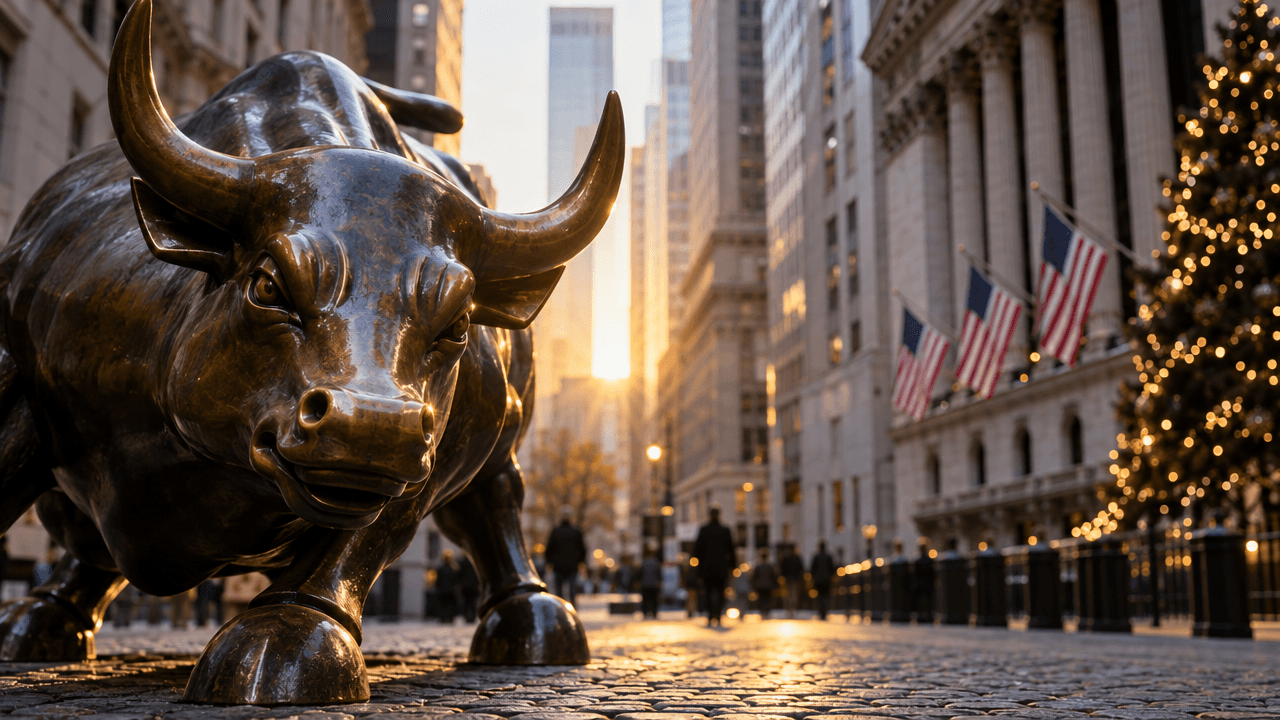
S&P 500 and Nasdaq futures edged higher as US markets prepared to reopen after the Thanksgiving holiday, but the modest gains came against a backdrop of unusually thin trading conditions. S&P 500 futures were up approximately 0.3%, while Nasdaq-100 futures advanced about 0.4%, signaling a cautiously positive start to Friday’s abbreviated session. [1]
The move suggests that investors are attempting to stabilize technology and growth stocks after recent volatility, but it should not be interpreted as a decisive change in market direction. With many traders away from their desks and major exchanges operating on reduced hours, even relatively small orders can have an outsized effect on prices.
Holiday Liquidity Can Magnify Market Moves
The day after Thanksgiving is traditionally one of the quietest sessions on the US trading calendar. The New York Stock Exchange and Nasdaq are scheduled to reopen at 9:30 a.m. Eastern Time and close at 1:00 p.m., three hours earlier than usual. [2]
Lower participation affects the market in several ways. Fewer active buyers and sellers can produce wider bid-ask spreads, meaning traders may pay more to enter or exit positions. Price gaps can also become more common because there may not be enough liquidity to absorb large orders smoothly.
This creates an important distinction between market direction and market quality. A futures contract rising 0.3% in a thin overnight market may reflect genuine buying interest, but it may also be more vulnerable to reversal once cash equities begin trading. Traders should therefore evaluate the strength of the move alongside volume, breadth, and sector participation.
Why Technology Stocks Are In Focus
The Nasdaq-100’s slightly stronger futures performance points to continued interest in large-cap technology and communication-services companies. These stocks have been central to the market’s broader advance in recent years, but they are also particularly sensitive to changes in interest-rate expectations, valuation concerns, and sentiment toward artificial intelligence spending.
Recent reports have described the futures move as part of an effort to recover from pressure on technology and artificial-intelligence valuations. [7] A rebound in Nasdaq futures can indicate that investors are willing to buy the dip, but a single holiday session is not enough to confirm that selling pressure has ended.
For traders, the more meaningful question is whether technology shares can hold early gains after the opening bell. If the Nasdaq-100 rises while Treasury yields remain stable and more stocks participate, the move may have greater credibility. If only a narrow group of highly valued companies advances, the rally may remain fragile.
What Traders Should Watch
The first consideration is the opening reaction. Futures provide an indication of where markets may begin, but they do not guarantee the cash-session outcome. The opening auction can bring a fresh wave of orders from investors who were inactive during the holiday, potentially changing the tone quickly.
The second consideration is market breadth. A healthy advance generally involves a meaningful number of stocks trading higher, rather than gains being concentrated in a handful of index heavyweights. Traders can compare the number of advancing and declining stocks, monitor sector performance, and observe whether the S&P 500 is holding above its opening range.
The third consideration is volatility. Thin markets can generate sharp but temporary moves in either direction. Rather than chasing an early rally, traders may choose to wait for confirmation through a retest of support, a sustained move above the opening range, or improving volume.
Overnight futures activity should also be interpreted carefully. CME equity-index futures operate on a holiday schedule, with trading ending early on the Friday after Thanksgiving. One published schedule lists a 12:15 p.m. Central Time close for CME futures, while cash equities close at 1:00 p.m. Eastern Time. [3] Traders should verify contract-specific hours with their broker before placing orders.
Practical Takeaways For Simfi Traders
For SimFi traders, the session offers a useful environment for practicing risk management without treating a small futures gain as a high-conviction signal.
First, reduce position size when liquidity is expected to be limited. Smaller exposure can help prevent a temporary price spike from turning into an outsized loss.
Second, use clearly defined invalidation levels. If a bullish setup depends on the S&P 500 holding above its opening range, decide in advance where the trade thesis fails. This is more reliable than moving a stop after the market begins to fluctuate.
Third, avoid confusing activity with opportunity. A quick move in a thin market can appear attractive, but fast price changes may reflect poor liquidity rather than strong institutional demand.
Finally, record the session in a trading journal. Note the futures direction, opening gap, volume, breadth, and the behavior of the Nasdaq relative to the S&P 500. These observations can help traders recognize how holiday conditions differ from normal sessions.
The Bigger Market Message
Friday’s higher futures point to a cautiously constructive tone, but the signal is limited by the holiday calendar. The advance may reflect a relief bounce in technology stocks, positioning ahead of the weekend, or simply low-volume price action.
The most useful conclusion is not that a new rally has begun, but that markets are testing whether buyers remain willing to support recent weakness. Confirmation will likely require stronger participation, sustained gains beyond the shortened session, and continued evidence that interest-rate and valuation concerns are easing.
For now, discipline matters more than prediction. In a thin holiday market, protecting capital and waiting for reliable confirmation can be more valuable than forcing a trade based on a modest futures move.