
Stock Markets Surge on U.S.-Iran Ceasefire: Caution Amid Fragile Optimism
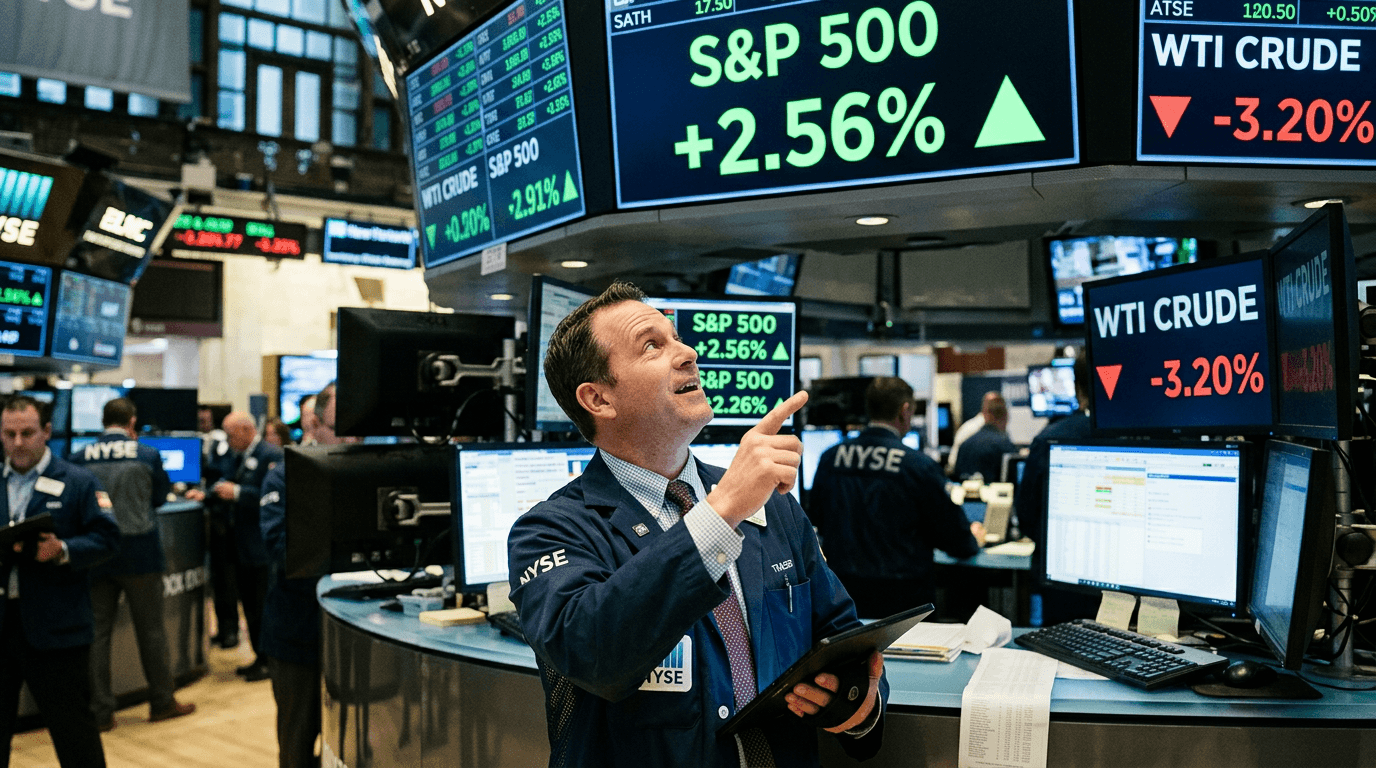
The U.S. stock market experienced a robust relief rally this week, spurred by the announcement of a two-week ceasefire between the United States and Iran. The S&P 500 climbed 2.56%, while the Nasdaq Composite surged 3.46%, reflecting traders' reassessment of immediate risks to global oil supplies and economic stability. This dramatic upward movement marks one of the most significant single-day rallies in recent months, driven by a swift shift in risk sentiment across equity markets.
Understanding the Relief Rally
Wednesday's market activity exemplified a classic relief rally, rather than a fundamental market reset. Anticipating potential escalation in Middle East tensions, traders had been bracing for severe downside risks, with oil prices reflecting fears of supply disruptions. When the ceasefire was declared, these fears dissipated almost instantaneously. Crude oil prices plummeted, with WTI crude falling 18% to $92 a barrel and Brent crude decreasing by 13%, removing a significant obstacle for consumers and corporate profit margins.
The stock market's reaction mirrored this oil price collapse. With energy costs no longer threatening economic growth, investors quickly shifted to risk assets. The speed and intensity of this move highlight the profound impact geopolitical tensions had on market psychology in recent weeks. The losses accumulated in March were nearly erased by this single event, underscoring the substantial influence of geopolitical risks on equity valuations.
The Fragile Nature of the Ceasefire
Despite the surface-level optimism, a critical reality lingers: the ceasefire is already showing signs of strain. Within hours of the announcement, Israeli military officials reported ballistic missile attacks from Iran, and the UAE along with several Gulf states noted incoming drones and missiles. This immediate breakdown indicates the deal's fragile foundation and suggests the market's euphoria may be premature.
The ceasefire is merely a temporary halt in hostilities, not a comprehensive resolution to the strategic tensions at play. This distinction is vital for investors assessing risk. While markets have factored in a scenario where the ceasefire holds, they have not fully accounted for the potential downside if negotiations falter and hostilities resume. This creates an asymmetric risk profile, where further gains from sustained peace are limited, while the risk of a breakdown remains significant and undervalued by current market conditions.
Divergent Regional Market Reactions
Different markets responded variably to the ceasefire news, reflecting their distinct economic ties to Middle East energy supplies. Asian and European markets outperformed U.S. equities, primarily driven by relief from the threat of a severe energy supply shock. For these regions, the Strait of Hormuz is a crucial economic artery, and fears of a prolonged blockade had driven energy prices to record highs. The ceasefire directly alleviated this immediate concern.
In contrast, U.S. markets, while benefiting from lower oil prices, remained cautious, focusing on the fragility of the agreement and unresolved strategic issues. This divergence highlights American investors' skepticism regarding the agreement's durability and concerns about the unresolved drivers of the conflict. Additionally, traders began factoring in expectations for Federal Reserve rate cuts, with markets predicting 14 basis points of easing by year-end, compared to essentially zero before the ceasefire announcement.
Key Catalysts and Considerations Ahead
The path forward hinges on several imminent events. The first major test involves scheduled talks between U.S. and Iranian delegations in Islamabad on Friday, April 11, 2026. These discussions will determine whether the fragile truce can extend into a longer-term agreement. This meeting represents the market's first significant reality check on the potential for diplomatic progress, or whether the ceasefire merely postpones a return to conflict.
For investors, vigilance is crucial. Despite the impressive rally, stock prices remain below pre-war levels, indicating market skepticism about a lasting resolution. The risk-reward ratio favors caution, as the potential upside from sustained peace is already reflected in the current market surge, while the downside from a deal collapse is underappreciated. Traders should maintain disciplined risk management and be ready for swift reversals if diplomatic efforts falter.
Conclusion: A Cautious Approach to Market Optimism
The S&P 500's rise on ceasefire news reflects rational behavior in response to reduced geopolitical risk. However, investors should approach this rally with caution, given the fragile nature of the agreement and unresolved tensions. Monitor the Islamabad negotiations closely and be vigilant for any signs of escalating rhetoric or military actions that could indicate the ceasefire's deterioration. The market has priced in an optimistic scenario—whether this optimism is warranted will be tested in the coming weeks.
---
NEWSIMPACTSCORE: 8