
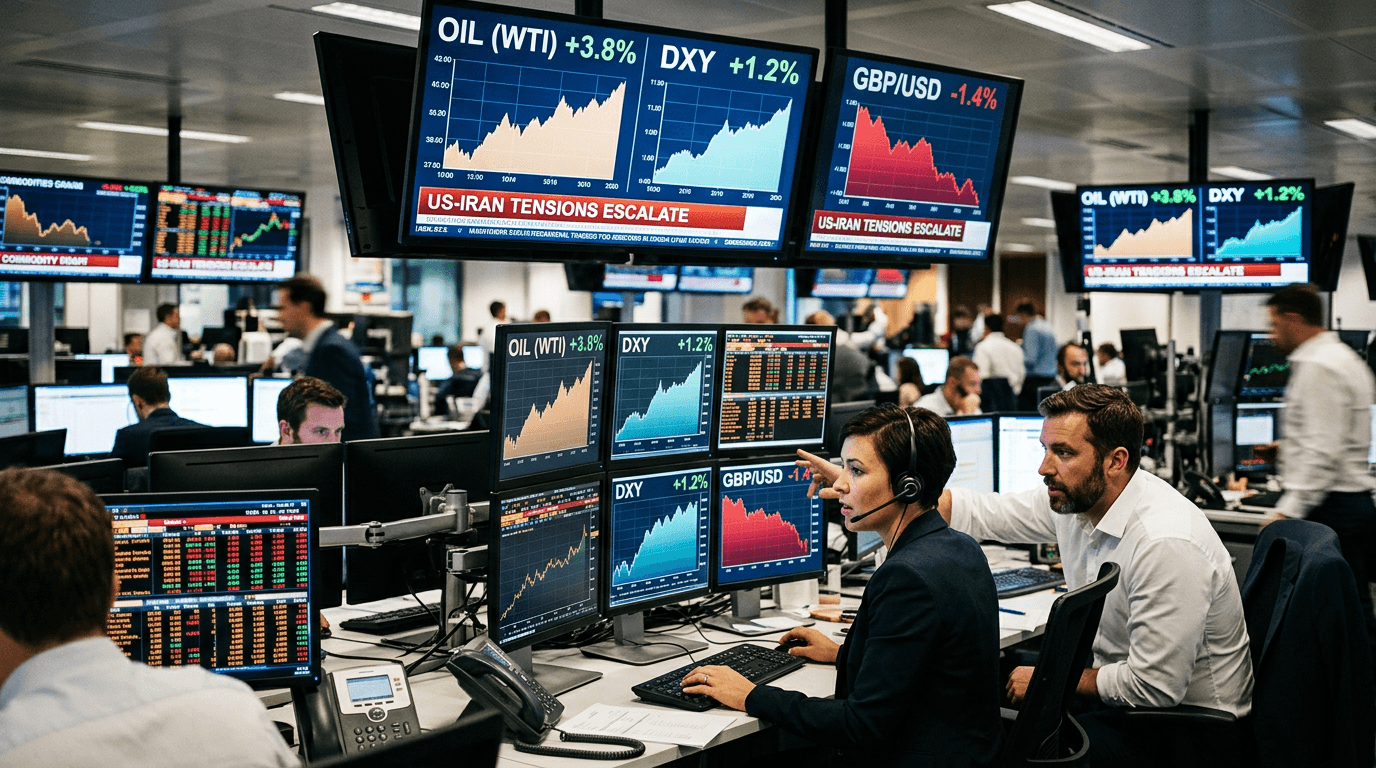
Renewed tensions between the U.S. and Iran have rippled quickly through global markets, pushing oil prices higher, strengthening the U.S. dollar and leaving sterling on the back foot[1][2][10]. For FX and energy traders alike, this episode is a vivid reminder of how geopolitics, commodities and currencies are tightly interlinked – and why risk management around such events is no longer optional but essential.
Market Reaction: Sterling Softens, Dollar Firms
The British pound has edged lower against the U.S. dollar as traders price in higher energy costs and a flight to safety in the wake of new strikes and a breakdown in Iran-related diplomacy[1][2][3]. Recent prints show GBP/USD trading slightly softer in the mid‑1.33s, with moves modest in size but significant in signal: investors are leaning toward the dollar when uncertainty rises[2][8].
Oil prices have jumped on renewed hostilities and the re‑imposition or tightening of sanctions on Tehran, with Brent crude reportedly surging over 3% on the latest headlines[10]. Higher oil has historically supported the dollar via two channels: reinforcing its safe‑haven status and raising global demand for dollar liquidity in energy trade.
Risk sentiment has deteriorated, but not collapsed. Equities are wobbling rather than plunging, and sterling’s decline is measured rather than disorderly[1][4]. That tells traders this is a meaningful shock, but not yet a full‑blown crisis – a nuance that matters when sizing positions and setting stop‑loss levels.
Why Oil And Fx Move Together
Understanding why a Middle East shock can weaken sterling and bolster the dollar starts with the role of oil in the global macro mix. When crude rises sharply, importers like the UK face a negative terms‑of‑trade shock: more pounds must be spent to buy the same barrel of oil, widening trade deficits and squeezing real incomes.
Higher oil feeds directly into headline inflation via fuel, transport and input costs, and indirectly via second‑round effects on wages and services. For an economy already wrestling with above‑target inflation and sluggish growth, another energy spike complicates the policy calculus for the Bank of England[1][6].
For the U.S., the picture is more mixed. It is now a major energy producer, so higher prices can support parts of the economy even as consumers face higher gasoline costs. At the same time, global risk aversion typically drives investors into dollar‑denominated assets – Treasuries, money‑market instruments and cash – reinforcing the dollar’s strength in periods of geopolitical stress[2][7].
The result is a familiar pattern: oil up, dollar up, oil‑importing currencies under pressure, particularly when their domestic economies are already fragile. For traders, recognizing this pattern early can be the difference between reacting late and positioning proactively.
Inflation, Monetary Policy And The Pound
The key macro question now is how central banks respond. For the Bank of England, an oil‑driven inflation shock is uncomfortable: it raises headline CPI at a time when policymakers are trying to guide inflation back to target without stalling the recovery[1][6].
If energy prices remain elevated, markets may reassess the expected path of UK interest rates. On one hand, higher inflation could delay any future rate cuts, supporting gilt yields. On the other, if growth weakens due to higher costs for households and businesses, the BoE may ultimately face pressure to ease policy. That tug‑of‑war can translate into choppy, range‑bound trading in GBP/USD rather than a one‑way trend.
The Federal Reserve faces its own balancing act, but the dollar currently benefits from the perception that U.S. assets offer relative safety and yield. As long as the Fed is seen as either steady or slightly hawkish compared with its peers, dollar strength in risk‑off episodes is likely to persist[6][7].
For sterling, the combination of geopolitical risk, higher imported inflation and uncertain domestic growth argues for caution. The currency can recover if tensions ease and oil retreats – as seen in prior episodes when progress on Iran negotiations pushed crude lower and lifted GBP[5] – but in the near term, downside risks dominate.
Trading And Risk Management Implications
For active traders, this environment demands a clear framework, not only for directional views but also for risk limits.
In FX, GBP/USD and other sterling pairs are now more sensitive to energy headlines and broader risk sentiment. Short‑term traders may focus on intraday volatility around news flow, while swing traders watch key technical levels in the mid‑1.33 area as potential pivot points[2][8]. Correlation strategies that link GBP to oil or to broader risk indices may also become more attractive.
Oil‑linked FX pairs – such as CAD, NOK or certain emerging‑market currencies – are likely to exhibit stronger moves as crude re‑prices geopolitical risk. While the UK is not an oil exporter like Canada or Norway, sterling can still be affected via its exposure to global risk appetite and its own inflation dynamics.
Risk management is critical. Spreads can widen on surprise headlines, and slippage around key events can erode returns for traders who are over‑leveraged or under‑hedged. Position sizing, diversification across asset classes, and the disciplined use of stop‑loss orders and take‑profit levels should be front‑of‑mind.
How Simulated Finance Traders Can Learn From This Move
For SimFi traders on platforms like E8 Markets, episodes like this are ideal live‑fire drills in a risk‑controlled environment. Geopolitical shocks test not only trade ideas but also discipline and emotional control – areas where simulated trading offers real educational value.
By tracking how sterling, oil and the dollar respond across multiple timeframes, traders can deepen their understanding of cross‑asset relationships. For example, they might:
- Build and test strategies that link GBP/USD moves to changes in Brent or WTI prices.
- Practice scenario analysis: what happens to their portfolio if oil spikes another 5–10%, or if tensions suddenly ease?
- Explore hedging techniques, such as balancing FX exposure with commodity positions or equity indices sensitive to energy prices.
Because the capital is simulated, traders can experiment with different approaches to position sizing and risk limits without jeopardizing real funds. That freedom to learn by doing is particularly valuable when markets are driven by complex, fast‑changing narratives rather than a single data release.
A Thoughtful Conclusion
Sterling’s recent softness, driven by Iran‑related oil gains and a stronger dollar, underscores how quickly global events can reshape the trading landscape[1][2][10]. For market participants, the message is clear: currencies do not move in isolation, and energy prices, geopolitics and central bank expectations are now inseparable parts of the macro puzzle.
Whether you are trading live or in a simulated environment, the priority is the same – understand the drivers, respect the risks, and build frameworks that can adapt as conditions change. Oil will not rise forever, nor will the dollar dominate every day, but the lessons from this episode about correlation, safe‑haven flows and inflation dynamics will remain highly relevant long after the headlines fade.