
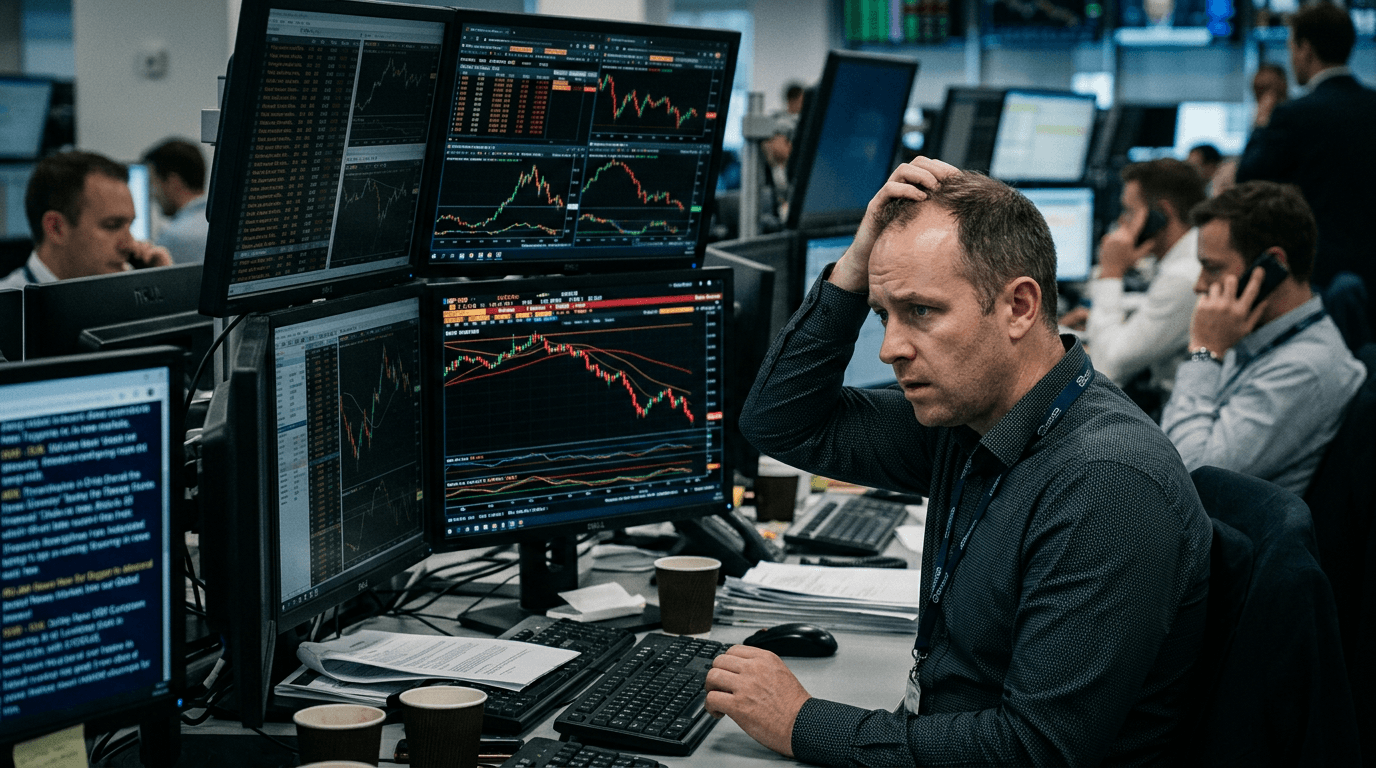
Sterling’s latest slide is a reminder that geopolitics can move currencies as quickly as economic data. As the Iran-related conflict in the Middle East widens, investors have shifted aggressively into safe-haven assets, leaving the British pound under pressure for a second consecutive session and weighing on broader FX sentiment.[4][3] For traders, the message is clear: risk-off flows matter as much as rate expectations when markets turn defensive.[4][7]
Market Reaction: Sterling Under Pressure
In recent sessions, sterling has slipped against the US dollar as headlines from the Middle East dominate risk appetite and overshadow domestic UK data.[4][7] Reuters reports the pound down around 0.15% on the day versus the dollar, trading near $1.3335 and on track for a weekly loss of just over 1%, underlining how quickly sentiment can shift when geopolitical risks rise.[4]
The move is not isolated to GBP/USD. The pound has been broadly steady against the euro, while both currencies have weakened versus the dollar as investors seek safety in the world’s reserve currency.[4] At the same time, the franc and the yen have attracted renewed attention as traditional safe havens, and cross-asset flows into government bonds and gold have reinforced the risk-off tone.[5][8]
For sterling, the combination of higher perceived geopolitical risk, volatile energy prices, and uncertainty around the Bank of England’s next steps creates a fragile backdrop. Analysts note that earlier strength in the pound was driven largely by a repricing of BoE policy after the Iran conflict began, but that resilience may now be giving way to modest weakness as the war drags on.[13]
Safe-haven Flows And Risk-off Dynamics
Safe-haven flows are essentially a collective risk-management decision. When geopolitical tensions escalate, investors tend to reduce exposure to “risk” assets such as cyclical currencies and equities, and increase allocations to assets perceived as more stable or liquid.[5][8] In FX, that often means selling currencies like GBP, AUD, and NZD in favor of USD, CHF, and JPY.
The current Middle East conflict has added a layer of complexity because it interacts directly with energy markets. Concerns about disruptions to Gulf shipping lanes and energy infrastructure create uncertainty around future oil and gas prices, which in turn affects inflation expectations in import-reliant economies like the UK.[5][11] That uncertainty can dampen growth prospects and heighten volatility, making sterling less attractive when investors are seeking predictability.
Risk-off episodes typically share several characteristics: lower equity prices, tighter financial conditions, stronger safe-haven currencies, and higher demand for high-grade sovereign debt. GBP/USD has exhibited this classic pattern, softening in response to headline risk while volatility spikes and traders pare back leverage.[3][6][9] Understanding these dynamics is crucial for anyone trading FX, whether in live markets or a simulated environment.
IMPLICATIONS FOR GBP/USD TRADERS
For GBP/USD traders, the immediate impact of the conflict is a shift in the balance of drivers: geopolitical risk and energy prices now matter as much as traditional indicators like UK inflation releases or BoE speeches.[7][13] With markets focused on global risk rather than domestic data, even in-line economic prints may have limited ability to support the pound.[7][9]
Short-term price action shows the pair moving lower on risk-off sentiment, with attempts at recovery repeatedly capped by renewed geopolitical headlines.[3][6][12] Positioning data and sentiment indicators suggest that while some traders remain net long, the combination of falling prices and optimistic positioning can be a bearish signal, increasing the risk of forced exits if support levels break.[15]
In practical terms, sterling traders should pay close attention to:
1) Key technical levels in GBP/USD that have recently acted as support or resistance, as breaks in a risk-off environment can be sudden and extended.[12] 2) Intraday correlations with equity indices and oil prices, which often strengthen during geopolitical shocks and can offer additional context for FX moves.[3][9] 3) Event risk around major diplomatic announcements or military developments, which can trigger abrupt repricing as markets reassess the probability of escalation or de-escalation.[7][11]
Broader Fx Sentiment And Cross-asset Signals
The pound’s slip is part of a wider repricing of risk in global markets. The dollar’s firmer tone reflects both safe-haven demand and ongoing debate about the timing and scale of future Federal Reserve rate cuts.[3][6] Expectations of eventual easing by the Fed may cap the dollar’s upside over time, but in the near term, geopolitical stress has overshadowed those rate narratives and reinforced demand for USD.[3][6]
Other currencies and assets provide useful confirmation signals. The Swiss franc, for example, has benefited from its safe-haven status even as analysts note that FX markets have, at times, defied crisis fears by maintaining a degree of resilience.[13] Meanwhile, disruptions to shipping and energy flows in the Gulf have pushed regional economies to coordinate more closely and support diplomatic efforts, highlighting the interconnected nature of geopolitical and economic risk.[5][14]
For FX traders, the lesson is to think in terms of regimes. In a “risk-on” regime, carry trades and higher-yielding currencies may perform well, while in a “risk-off” regime, relative safety and liquidity dominate behavior. GBP currently sits in a grey zone: supported by previously hawkish BoE expectations, but vulnerable to persistent energy and geopolitical uncertainty.[13]
How Simulated Finance Traders Can Respond
For users of simulated finance platforms, episodes like the current sterling sell-off offer a valuable training ground. Because SimFi environments allow traders to test ideas without real capital at risk, they are particularly well suited to stress-testing strategies under different geopolitical and volatility scenarios.
There are several practical exercises worth considering:
1) Build and test a “risk-on vs risk-off” GBP/USD playbook, defining clear rules for position sizing, entry, and exit when volatility and correlations reach certain thresholds. 2) Run scenario analyses that model potential paths for the Middle East conflict—rapid de-escalation, prolonged stalemate, or further escalation—and estimate how each might affect GBP, oil, and global equities. 3) Experiment with diversification across safe-haven currencies and assets, examining how balanced exposure can reduce drawdowns during sudden risk-off shifts.
By documenting how strategies perform under simulated stress, traders can refine their approach to event risk management: tightening stops when headline risk is high, scaling back leverage around key announcements, and avoiding overconfidence in any single macro narrative.
Conclusion
Sterling’s slip as Middle East tensions rise is a timely reminder that FX markets are as sensitive to geopolitics as they are to interest rates and data releases.[4][7] Safe-haven flows into the dollar and other defensive assets have weighed on the pound and shaped broader risk sentiment, reinforcing the importance of understanding risk-off dynamics.[3][5]
For traders, the challenge is not to predict every headline, but to build robust frameworks that account for sudden shifts in risk appetite. Monitoring cross-asset signals, respecting technical levels in GBP/USD, and practicing disciplined risk management—ideally in a simulated environment before committing capital—can turn volatile periods from sources of anxiety into opportunities for learning and strategic refinement.